
In 2020, I read 205 books this year totaling 67,188 pages. I know reading was all over the place for a lot of people, but for me this was my best reading year on record, both in terms of quantity and quality (as evidenced by the plethora of 4 and 5 star ratings). At the same time, I genuinely think I was harsher with ratings than ever before. If I didn’t like something, I felt no pressure to pretend otherwise. If you want to see everything I read in 2020 and follow what I’m reading in 2021, check out my Reading Challenge on Goodreads. Also just be friends with me on Goodreads in general because I want to see what you’re reading and talk about it!!!!
I’m going to start with some stats because I think it’s interesting, but if that’s not your jam, skip down to the book list!
Of the 205 books I read in 2020
156 were Fiction, 46 were Nonfiction, and 3 were Poetry collections.

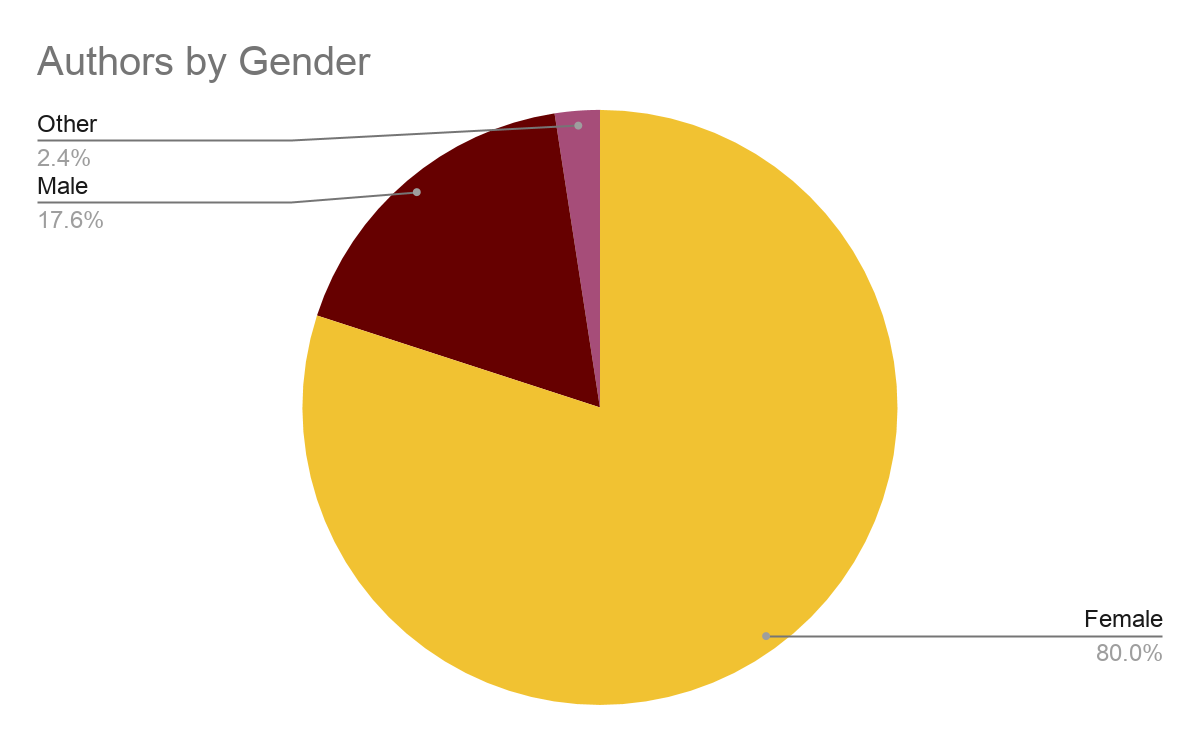
164 were by female authors, 36 were by male authors, and 5 were by nonbinary authors or more than one author.
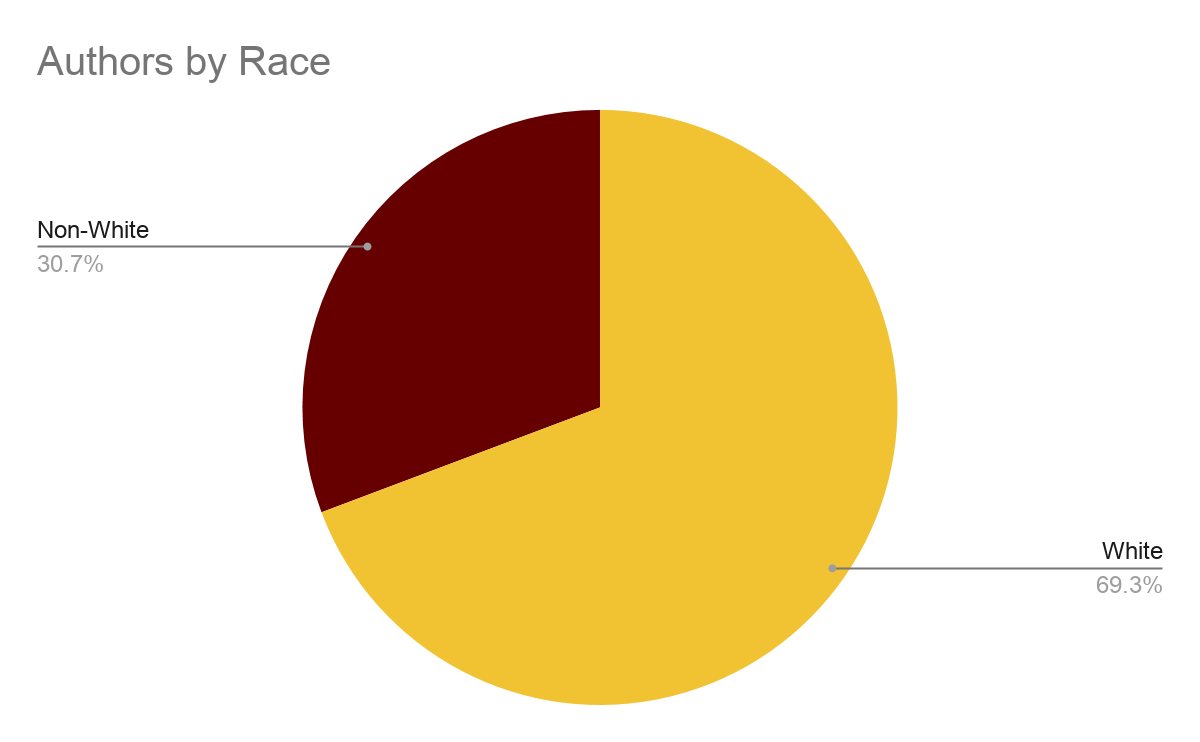
142 were by white authors and 63 were by authors of color
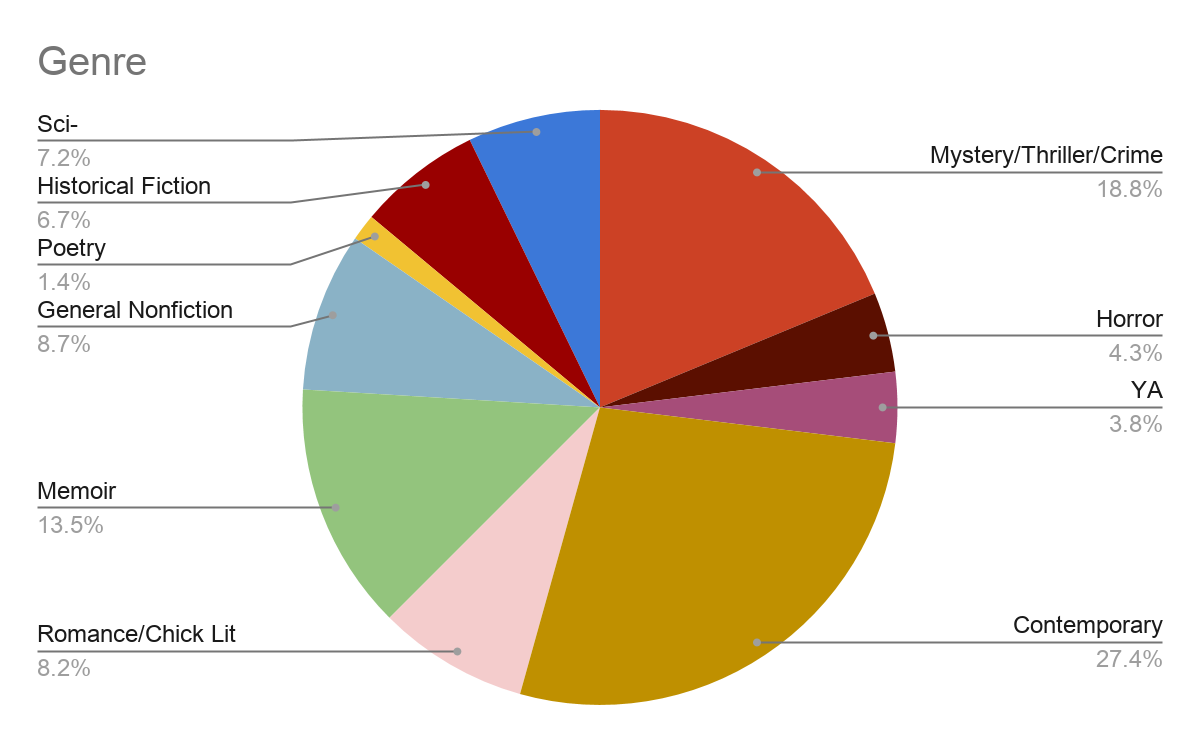
In terms of genre, 57 were general contemporary fiction or contemporary literary fiction, 36 were mystery/thriller/crime, 28 were memoir, 18 were general nonfiction,17 were romance, 15 were fantasy/sci-fi/speculative fiction, 14 were historical literary fiction, 9 were horror, 8 were YA, and 3 were poetry collections.
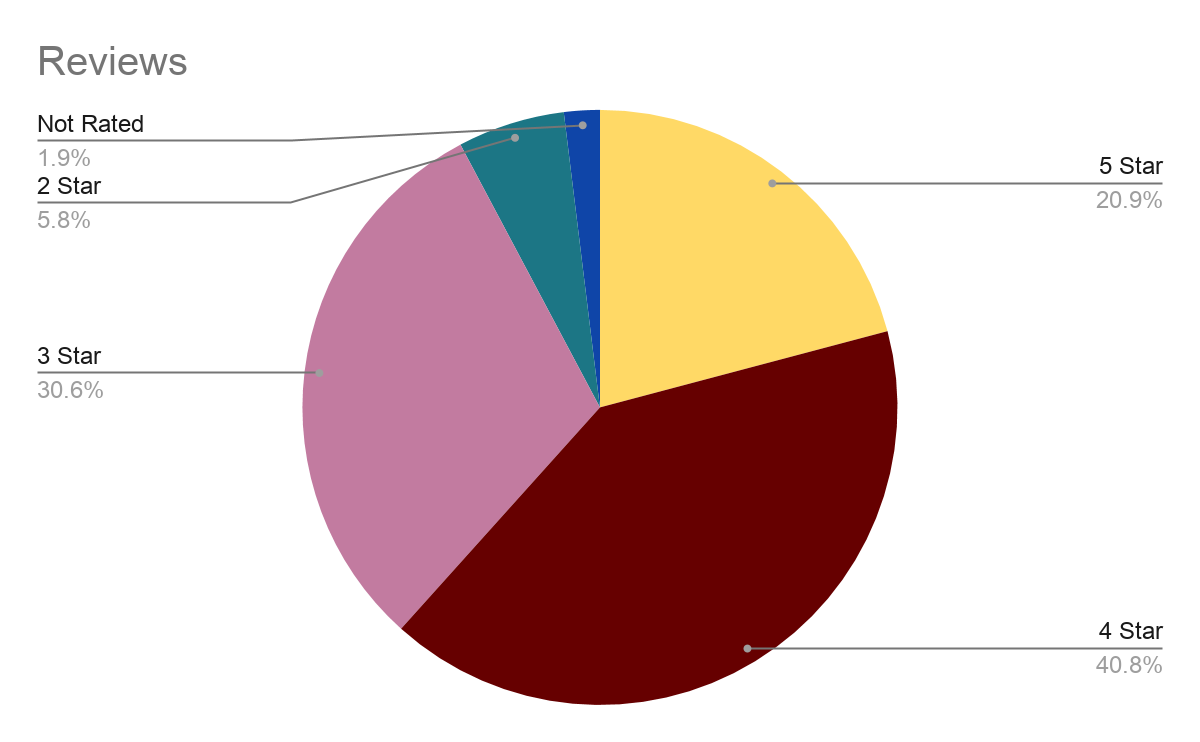
For reviews, I gave 43 5-star reviews, 84 4-star reviews, 62 3-star reviews, 12 2 star reviews, and 4 books I did not rate.
Now that my nerdiest self is satisfied, on with the rest of my favorite books of 2020!
I’ve divided my favorite literary fiction into historical literary fiction (meaning anything set before the present day) and contemporary literary fiction. I’m also tacking on my favorite romance and favorite fantastical/speculative fiction books at the end.
Best Literary Fiction (Historical)
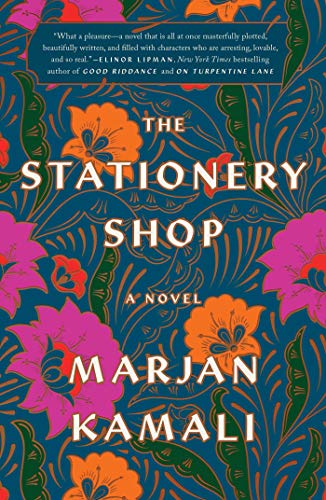
The Stationery Shop by Marjan Kamali

It’s 1953 and Tehran is a hotbed of political turmoil and activism. Mr. Fakhri’s neighborhood stationery shop is an island of calm in the middle of it all. When Mr. Fakhri introduces his two favorite customers, Roya and Bahman, romance blossoms. The teenagers are giddy with joy, but on the night before their secret wedding, tragedy strikes. The couple is caught up in the violence of the coup d’etat and are separated…possibly forever? Heartbroken, Roya moves forward, eventually moving to California and building a life there. But when a chance encounter brings Bahman back into her life 60 years later, everything comes rushing back.
The Dearly Beloved by Cara Wall

This book is not going to be for everyone, but this might have been my favorite book of the whole year.. If you have no background in the Christian church or interest in Christianity, I doubt this will interest you, but it spoke perfectly to my own spiritual history and struggles with faith. The Dearly Beloved tells the story of two couples who are brought together in 1963 when the two husbands are hired to co-pastor a church. Charles is an academic who was struck profoundly by the unwavering sense of truth . His faith transcends understanding and is strong and unwavering. Meanwhile, his wife Lily is an avowed atheist. He does not try to change Lily’s mind, and she does not try to undermine his beliefs and his career. Meanwhile, James is an activist and an idealist with a passion for social justice. Although he isn’t sure he believes all the tenets of the Christian faith, he has come to believe that the church is the best vehicle for him to serve people in need. His wife Nan on the other hand is a devout believer from a long line of devout believers. This is a quiet, but beautiful story about these two couples over a long period of time as they each wrestle with their beliefs, support and challenge one another, and experiences the trials and triumphs of life together.
The Book of Longings by Sue Monk Kidd

This book really took me by surprise. I am not typically drawn to historical fiction, particularly not set in Biblical times, but I gave this a try because I adore Sue Monk Kidd. This is the story of the fictional wife of Jesus, a woman named Anna. Not only was I engaged by the beautiful writing and storytelling, the character of Jesus the man as he is portrayed through the eyes of Anna was so compelling. I especially loved how Kidd took the words of Jesus from the gospels and wove them gently into conversations in a way that made me see Jesus as a real person instead of this disembodied voice reciting aphorisms. There is also a big feminist slant to this book since it is told from the perspective of a woman in a time when women were often treated as property. It’s really just lovely.
The Vanishing Half by Brit Bennett

I don’t know what there is to say about this that hasn’t already been said. It is worth the hype. Identical twin sisters Desiree and Stella grow up as light-skinned black girls in the small town of Mallard, Louisiana (Side note: Mallard is a fictional town, but the characters actually go to the town where I went to high school several times in the book, so that was fun). At the age of 16 the twins run away to New Orleans where they end up forging separate lives. Desiree ends up returning to Mallard with her dark-skinned daughter years later after escaping from an abusive husband. Meanwhile, Stella has made her own life in California where she has been passing as white, marrying a white man and keeping her past a secret. This book is a fascinating exploration of racism, colorism, identity, and family. It’s expertly crafted and (in my opinion) it deserves all the praise it’s been receiving.
Transcendent Kingdom by Yaa Gyasi

Gyasi’s Homegoing is one of the best books I have read in recent years, so I was eagerly anticipating her new release. Transcendent Kingdom is nothing like Homegoing, yet I found it equally moving and provocative. Gifty’s beloved older brother died from a drug overdose after getting hooked on painkillers following a knee injury. Her mother ebbs and flows through tides of severe depression. Gifty sees the way her mother suffers and the way her brother suffered and has channeled her own pain into studying the science behind addiction at Stanford Medical School. Transcendent Kingdom follows Gifty through the past and into her present as she tries to use science to make sense of what she has seen and experienced. It explores themes of grief and love, of science and faith, of addiction and depression, of despair and hope. Part of my love for this book has to do with my personal connection to some of the characters’ experiences, specifically the extremely religious upbringing and having a sibling with an addiction, but I think this would be a compelling read even without those extra connections.
The Pull of the Stars by Emma Donoghue

This was one of several eerily apt books about pandemics to come out in 2020. This follows nurse Julia Powell working on an improvised maternity/influenza ward during the Spanish Flu epidemic in Ireland as she does her best to serve her patients in the midst of utter chaos. When help arrives in the form of Bridie Sweeney, a volunteer helper who knows absolutely nothing, Julia resigns herself to making do. But Bridie surprises and inspires her with her quick intellect and unflagging energy. Set over 3 days at the hospital, the story is equal parts hope and heartbreak as patients die rapidly from this aggressive new flu and new babies enter the world, sometimes at the same moment.
The Song of Achilles by Madeline Miller

This is a gorgeous retelling of The Iliad which imagines the same events with Patroclus and Achilles as lovers. Achilles is kind of a douche, but Patroclus is such an endearing character, you can’t help but love him. The writing is beautiful and evocative and the story (especially the ending) is even more compelling and devastating than the original. I don’t think you need to be super familiar with The Iliad to enjoy this, but maybe look up a character list or something to keep all the characters straight.
Best Contemporary Literary/General Fiction
Your House Will Pay by Steph Cha

This is the story of two families in LA, one Korean-American and one African-American, who have both been rocked by the same incident. Grace Park’s sister Miriam hasn’t spoken to her mother in years, but Grace has never really understood why. She sets out on a quest to reconcile the two most important women in her life. Meanwhile, a police shooting of a black teenager has brought Shawn Matthews back to the murder of his own sister years earlier. As LA erupts in racial tensions and violence, the Matthews and the Parks are brought together in an unexpected way.
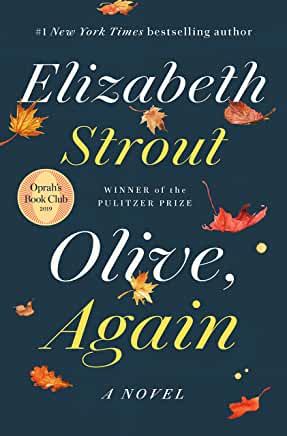
Olive, Again by Elizabeth Strout

It’s been several years since I read Olive Kitteridge and now I want to reread it. Olive, Again is Elizabeth Strout at her best. This follows her typical format, reading more like linked stories than a traditional novel. She continues the story of Olive Kitteridge, a widow and retired school teacher living a quiet life in Crosby, Maine, while weaving in stories from the members of her community. Olive is no-nonsense and even a bit prickly at times, but ultimately she is looking for what we all want – connection, community, and meaning in our lives. I think I liked this even more than the first one.
Such a Fun Age by Kiley Reid

This is another book that everyone and their mother has talked about this year. When I first read it I thought it was just OK, but over the year it has continued to stick with me. Emira is a young black woman navigating the confusing world of her early 20’s while working as a babysitter for a wealthy white family. When Emira’s boss, Alix Chamberlain, calls her on a night out with friends begging her to come over last-minute, Emira jumps at the chance to make some extra cash. Emira takes 3-year-old Briar to a local supermarket while the Chamberlains deal with a family emergency, but the night takes a turn when a security guard at the supermarket accuses Emira of kidnapping Briar. Alix Chamberlain is outraged on Emira’s behalf. Although Emira shrugs it off and moves on, Alix can’t seem to let it go. The novel turns into an interesting commentary on performative allyship and what happens when good intentions become self-serving.
Anxious People by Fredrik Backman.

Backman’s newest novel is about the world’s worst bank robber. It’s about a hostage crisis. It’s about a father and son police team learning to work together. It’s about grief. It’s about how to make a marriage last. It’s about connection and empathy and hope. It’s funny. It’s tender. It’s almost unbearably sweet. And I just loved it.
My Dark Vanessa by Kate Elizabeth Russell

It took me two tries to actually get through this book because I found it so disturbing, but it’s supposed to be disturbing. I am so glad I came back to it and finished it. When Vanessa Wye was 15-years old, she was seduced by her 42-year old high school teacher, Jacob Strane. 17 years later, Strane is being accused of sexual abuse by another former student who contacts Vanessa hoping that she will come forward as well. But even after all of these years, Vanessa is unable to accept that what happened to her could have been abuse and not a genuine experience of first love.
This book is a riveting, brutal portrayal of how trauma can shape a person’s life. It explores the psychology of grooming, the abuse that is inherent in relationships with a power imbalance, how people can become trapped in cycles of abuse and even be unable to see and understand their own trauma for what it is. It is a brilliant depiction of a topic that will (and should) horrify you.
Best Fantasy/Speculative Fiction
The Invisible Life of Addie LaRue by V. E. Shwab

I have a hard time calling this a straight-up fantasy because there aren’t like dragons or wizards or made up lands or anything like that. It is set in our world, but has fantastical elements, so I think people who aren’t into high fantasy would still like this.
It’s 1714, and Addie LaRue wants a different life from the one carved out for her – marriage, family, housekeeping. She wants something more for herself. Mostly, she wants freedom to make her own choices and live how she wants. On the day of her wedding she escapes into the forest where she begs any powers that are listening to save her. When the Darkness answers her, she trades her soul for the chance to live a free life for as long as she wants. Her dream turns into a nightmare when she realizes her bargain also includes a curse – everyone she meets forgets her as soon as she moves out of their sight. We follow Addie back and forth over 300 years as she reconciles her life of freedom with the need to leave a mark and discovers ways around the curse.
The characters (particularly Addie) were so well-drawn. The prose is lovely – immersive without being overly flowery. The magical elements weren’t too over the top. It’s a beautiful meditation on mortality and memory and to what degree the meaning of our lives lies in our connection to the world and to other people and our ability to leave a mark. I intentionally slowed down when I got near the end because I just didn’t want it to be over.
Best Romance
Beach Read by Emily Henry
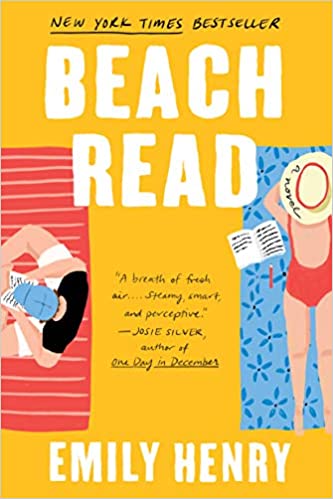
January Andrews is a best-selling romance writer who’s not sure she believes in love anymore. She owes her publisher a new manuscript, but she is grieving the death of her father and reeling from the discovery that he had been having a long-term affair with an old high school sweetheart. In his will, he left the lake house he shared with his lover to January. Now January has moved into the lake house to get it ready to sell while she works through her grief and betrayal and tries to write her book. What she isn’t expecting is for her old high school rival to end up next door.
Augustus Everett is a serious literary fiction writer who is going through his own writing slump. He’s got an idea for a novel based on a real-life death cult, but can’t seem to get it off the ground. When January and Augustus realize they are in the same predicament, they decide the best way to break their writer’s block is to try to write outside of their usual genres. Augustus will write a romance, and January will write serious literary fiction. Shenanigans ensue. It’s so great. I laughed; I cried. I already want to read it again.
And that is IT! What’s the best thing you read this year?
















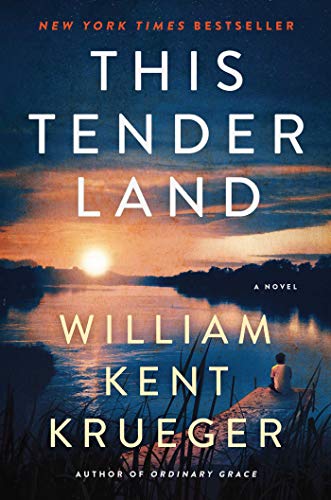 This Tender Land
 An Elderly Lady is up to No Good

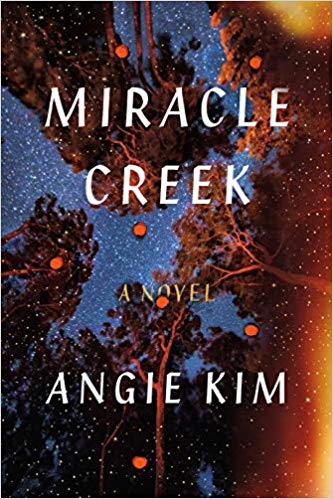 Miracle Creek
 Home Fire
 Cutting for Stone
 Where the Crawdads Sing
 American Predator




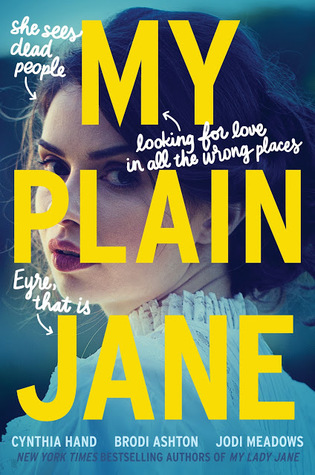 My Plain Jane by Cynthia Hand, Jodi Meadows, and Brodi Ashton. I had been waiting for this book ever since I read the trio’s first book, My Lady Jane, last year. In this re-telling of Jane Eyre, Jane is not a fictional character created by Charlotte Bronte, but instead is a real life friend of hers whose Charlotte uses as the inspiration for her classic novel. Only this Jane can see dead people. It is every bit as silly and delightful as My Lady Jane and I definitely recommend you listen to the audiobook.
 I can’t believe I only just got around to it since it is about one of my secret fascinations – fundamentalist polygamist cults. The thing that stood out to me in listening to this compelling account of the history of fundamentalist Mormonism was how similar so much of the language is to what you would hear in a mainstream American evangelical church. For example, I can’t tell you how many times in my life I heard someone say, “I prayed about it and I felt the Lord leading me to do x, y, z.” Many of the stories in this book have that same language, but, you know, the thing the Lord is leading them to do is marry 13 year olds or slay the infidels. So there’s that. Seriously though, this book is fascinating and done in Krakauer’s typical thorough and engaging style.
 La Belle Sauvage (The Book of Dust) by Philip Pullman. It was great fun to dive back into Pullman’s world and to get more of the back story on Lyra, the heroine of the His Dark Materials trilogy. Pullman’s storytelling was every bit as compelling in this book as it is in the original trilogy, though I do have to dock it a few points because I felt the last third of the book dragged on for too long.
 Unthinkable: What the World’s Most Extraordinary Brains Can Teach Us About Our Own by Helen Thomson. This book was fascinating. I’m not a scientist, so I appreciated how accessible this was for an unscientific audience. Thomson traveled the world meeting with people with rare psychological disorders and talking about those disorders both as they experienced them and in terms of what doctors and researchers had learned about the brain by studying the brains of these unique individuals. Her subjects include a man who believed he was dead for 3 years, a woman who constantly hears music that isn’t there, and a man who believes he turns into a tiger. In my opinion, Thomson was able to write about these people as real humans instead of distilling them down to their condition.
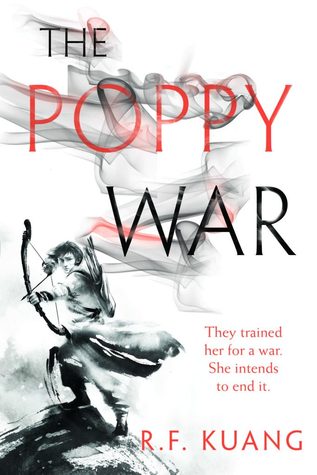 reason. If you are looking for a fantasy novel you won’t be disappointed by, look no further. Rin is a poor, dark-skinned war orphan with no prospects, but after receiving the highest score in the Empire on the entrance exam for the empire’s top Academies, she earns a spot at Sinegard, the most elite military academy. There she learns the art of war and discovers her own unique gift in shamanism, widely believed to be a dead art. When war breaks out, Rin learns the true cost of her gift and what it might take to save her people. I will say, there is a lot of descriptive violence and brutality on the page in this book, but it’s fantastic. And it’s the first in a series so there will be more to come!




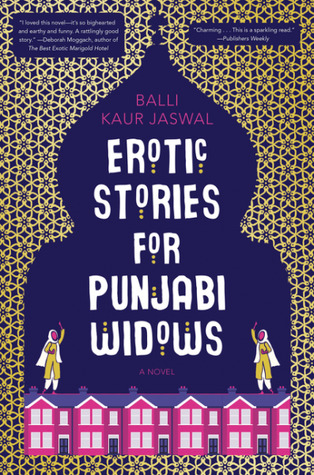 Erotic Stories for Punjabi Widows by Balli Kaur Jaswal. This was the surprise standout for me this month. I’m not even sure what made me pick it up, but this book was bomb. Erotic stories don’t do much for me (I just can’t take “sexy” descriptions seriously), but the erotic stories in this book are simply a device to talk about so much more. A group of Punjabi widows sign up for a writing class. Their teacher, a young British/Punjabi woman, thinks she will be helping these women to write the stories of their lives, but she is unprepared for the stories they truly want to tell. This is a book about a tight knit immigrant community, about female friendships, and about women who have lived their whole lives without power or agency finding ways to gain those things while still holding onto the traditions and values of their community.
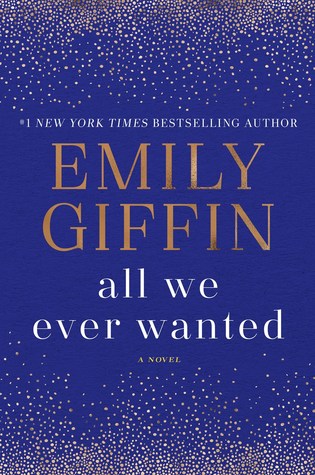 All We Ever Wanted by Emily Giffin. I’ve loved Emily Giffin for years, but I didn’t enjoy her last book (before this one), so I was pleasantly surprised by All We Ever Wanted. While Giffin’s previous books have all had some sort of romance at their core, this one didn’t. I think Giffin’s decision to steer away from that helped her showcase her skills as a storyteller and the strength of her characterizations. This book handles serious issues like how to raise teenagers (particularly sons) in the midst of rape culture and some of the less obvious ways that privilege asserts itself. It’s not a perfect book, but I found it very engaging and I liked it.
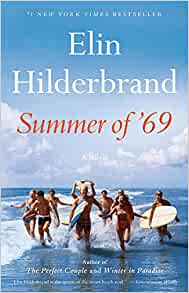
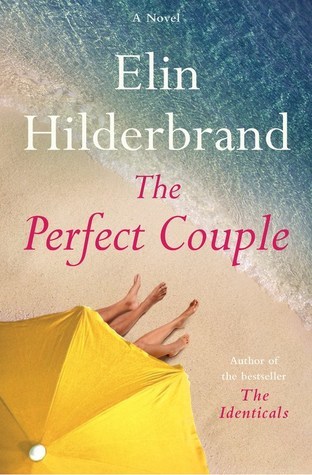
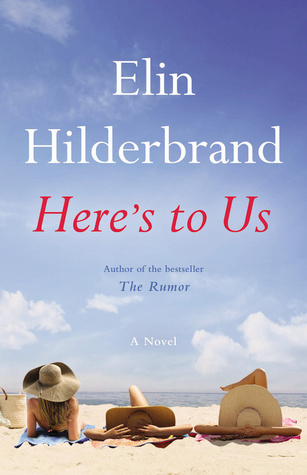 Here’s to Us by Elin Hilderbrand. Elin Hilderbrand is a new discovery/obsession of mine. I had never picked up her books before because I thought they would all be very chick-lit-y. Actually, the books I’ve read so far combine two of my favorite genres – rich white people problems and stories that look at how multiple members of a family or a community experience one event. This book tells the story of the aftermath of celebrity chef Deacon Thorpe’s sudden death as his three ex-wives and his children come together to say goodbye. To be honest, not that much happens in this book, but what I enjoyed about it was the different characters’ perspectives, interactions, and motivations. And…Nantucket.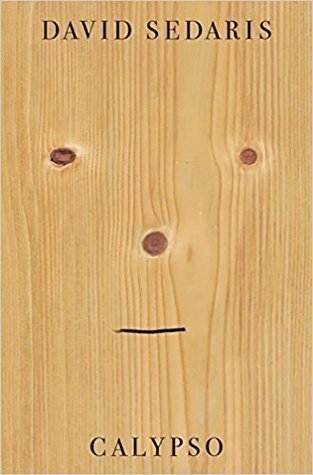
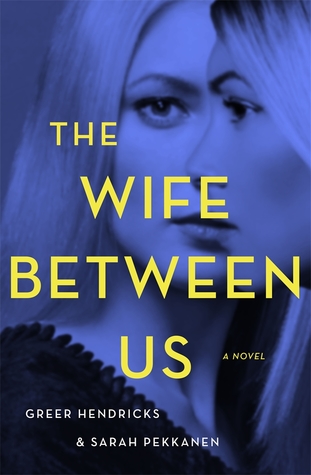 The Wife Between Us by Greer Hendricks and Sarah Pekkanen. This thriller was a rare case where I was surprised by the initial twist AND I thought it worked. Admittedly, I didn’t enjoy the parts of the book that came after the twist as much as the first portion, but it still rates as above average compared to other psychological/domestic thrillers I’ve read recently. It’s the story of a young woman preparing to marry a too-good-to-be-true man while being stalked by his ex-wife. (Or is it?)








 This book, man. It is not for the faint of heart. This book tells the life story of Cyril Avery from birth to death. Cyril Avery is born to an unwed mother in rural Ireland and adopted by an eccentric writer and her husband who really know nothing about children. As Cyril grows, we meet a cast of richly drawn characters who impact Cyril’s life, for better or worse. This book is largely focused on the horrible treatment of gay men in Ireland (and elsewhere) in the late 20th century. Because of that, some parts are very hard to read and some of it is very sad. There is also a significant amount of sexual content in the first half of the book (just fair warning if you don’t like reading that). However, the characters are amazingly vivid, unique, and quirky, and in the end, I can’t describe this book in any way other than beautiful, deeply moving, and unforgettable. The book ends on a sweet note which might strike some readers as too convenient, but I felt set up for it from early on and found it satisfying the that it ended in a place of peace.
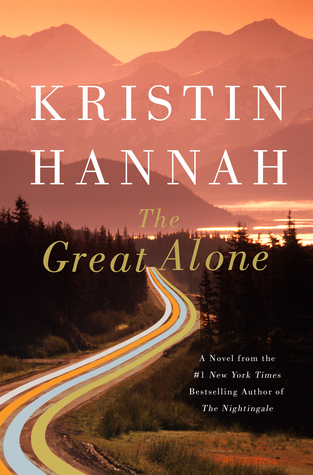 Hannah showed up on everyone’s radar after
 This memoir has exploded onto the scene and (deservingly) gained a lot of attention. Growing up in a fundamentalist, survivalist family (again somewhat a la The Glass Castle) , Tara Westover had no access to formal education. Taught that western medicine was evil, she learned to use herbs and natural remedies for everything from childbirth to severe burns. Violence and control were part of every day life, but they were all that Tara knew. At 17 she became determined to do things differently. Having never been to school, she taught herself enough to gain entrance to Brigham Young University where she learned for the first time not only math, science, and literature, but about the history of her own country and of world events (like the Holocaust) which she had never even heard of. Exposure to the world of learning sparked a hunger in her for all that she did not know and went on to study at Harvard and at Cambridge. As she gains knowledge and understanding about the world and her own upbringing, she is driven to try to forge a way back to her family, so many of whom are still living in a toxic environment.
 Kate Bowler is a professor at Duke Divinity School who has devoted her professional career to studying the prosperity gospel. At 35, she has is just hitting her stride in her career and has finally become a mother after years of trying. Then she is diagnosed with stage IV colon cancer. As she navigates the grief and pain of illness and facing her own mortality, she finds herself drawn to the reassurances offered by the health and wealth doctrines of the prosperity gospel and comes to an understanding of why people cling to these beliefs even when they seem so obviously false. As someone who grew up in an environment I would call “prosperity gospel adjacent,” I was moved by this memoir of wrestling with the harsh reality of death within this specific context. Bowler’s writing is funny and witty and heart-wrenching all at once and this book will stay with me for a long time.
 I don’t have the words. Part of what moved me so much about this book is that it was so emotionally resonant to my own family history, even though I grew up as a very conservative Christian rather than Muslim. I particularly enjoy/connect to stories that show how different family members experienced the same event in different ways. This book tells the story of an Indian-American Muslim family and their individual struggles with belonging. Parents, Leila and Rafiq have tried to instill their traditions and values in their children, but each of their three children has had to forge their own path. Leila and Rafiq have had to make difficult decisions about whether or not they can accept and embrace their children when their decisions don’t align with Leila and Rafiq’s hopes for them. The book opens at the wedding of Hadia, the family’s oldest child, who has chosen to marry for love rather than have an arranged marriage. The family are collectively holding their breath to see if the youngest sibling, Amar, will come to the wedding after being estranged from the family for three years. It’s a novel about the ways that families try (and often fail) to love each other well, and in that way, I think it is something we can all relate to. I think this book is a great choice for anyone who loved Celeste Ng’s






 Lily Ellyn