Standing at the peak, the wind whipping my hair across my cheeks, I close my eyes and tilt my face to the sun. I stretch out my arms and turn up my palms and breathe. I open my eyes and try to absorb the techni-colored panorama of jagged, white mountain peaks, emerald pastures and shimmering diamond lakes reflecting back the exact impossible blue of the New Zealand sky and I think, Heaven looks like this.
I sit on the back of a scooter, hands gripping the waist of the twelve-year-old boy who is my driver as we zip down the jungle roads to a breakfast of green leaf pancakes with palm sugar. We dodge a rooster strutting cockily across the road and I can’t stop smiling from ear to ear because heaven feels like the wind blowing past my face as we bump over potholes, winding our way through the Balinese jungle.
In Canterbury Cathedral I kneel, dappled by colored light from the stained glass windows and thinking about Augustine and about Thomas Becket, crouching on these very stones, heart pounding as he waits, pleading with God to spare his life. I inhale and imagine Becket in heaven, smelling the aroma of this same sweet incense in the throne room of the Most High God.
On a mountain in Peru a whole village of Quechuan people, dressed in layers of wool in all the colors of the rainbow, sing a song about their beloved mountain, Huascaran. They sing in high-pitched nasal tones a song that sounds like some combination of zydeco and a tribal wail. The sound is harsh and grating to my ears and yet I can’t help thinking that this is what heaven sounds like – a great cacophony of sound.
Source: Wikimedia commons
In an old Communist youth camp beside the mighty Volga River hours north of Moscow, I tuck a room full of 9-year-old orphan boys into bed. I hug Dema’s freckly face to my chest and kiss the top of his head and think, The kingdom of heaven belongs to such as these. “Spokie-Nokie,” I say, and turn out the light.
***
Once, a few years into our marriage, Jonathan and I had an argument about travel. We had hoped to take a trip, but car problems and taxes and medical bills had strained our very limited resources. It seemed like a trip was out of the question and I was profoundly disappointed. At some point during the conversation Jonathan said to me, “I know you’re disappointed, but there will be other opportunities in the future. I don’t understand why you are so incredibly upset.”
And I said (as dramatically as it sounds), “Because this is the purpose of my life!”
And he said, “You can’t be serious. You basically just told me your life’s purpose is to take vacations.”
What I was trying to say then but didn’t have the words to articulate at the time was that traveling is a deeply spiritual experience for me. Traveling moves me to worship in a way that nothing else does.
What does it mean that the mountains melt like wax in the presence of the Lord until you’ve stood at the top of a great and glorious mountain?
What does it mean that all of man’s accomplishments are like filthy rags beside God’s splendor until you’ve seen the Sistine Chapel or stood on the Great Wall of China?
Why does it matter that God is a father to the fatherless if you’ve never known the orphan?
How can you understand what it means that God holds the whole world in the span of his hand if you’ve never been outside your hometown?
What does it mean that heaven is filled with people from every tribe and tongue and nation if you’ve only known people from your own?
“The whole earth is filled with His glory,” cry the angels. I want my life to be about seeing and spreading that glory, even to the ends of the Earth.
I am linking up with Leigh Kramer for the very first What I’m Into post of 2015!
What I’m Reading:
I read 61 books in the year 2014 so this year I’ve set my sights high and set my goal at 60. Since we’ll be moving back to the US in the fall and I’ll have a few little things to do (like finding a job and a home and basically starting life over from scratch) I thought I’d be doing pretty good if I could match this year’s reading. If you count not-yet-published books (and I think we should) then I am on track so far.
Kitchen Confidential: Adventures in the Culinary Underbelly by Anthony Bourdain. I love food books and I really enjoyed Bourdain’s TV series, Parts Unknown which combines food AND travel in a completely addicting way. I enjoyed this book, though Bourdain is pretty rough around the edges. I will say, it makes me never want to work in the restaurant industry and gave me some nightmares about what’s going on in the kitchen when I’m sitting at the table of my favorite restaurant, but it was entertaining and informative and I enjoyed reading it. Be warned that it’s a little crass and vulgar at times.
Lizzy and Jane by Katherine Reay. I read some positive reviews of this book and actually read it because it was on sale for $1.99 and a book club on Goodreads picked it for their January book so I thought, why not? I was very underwhelmed. It’s got this very interesting set-up with the potential for a lot of emotional depth and tough and nuance. Lizzy and Jane are two sisters who have been estranged every since the death of their mother 15 years earlier. Lizzy, a chef in New York, comes home to Seattle for the first time in years to visit her sister who has just been diagnosed with the cancer that killed their mother. Unfortunately, the book itself falls very flat. The characters felt shallow and not well-developed for such a heavy plot. It’s not an awful book, there’s just nothing outstanding about it.
The Last Anniversary by Liane Moriarty. I would seriously read the back of a cereal box if it was written by Moriarty. I think her writing is technically very good and her stories are always unique and interesting and the characters are that perfect mix of relate-able and eccentric. Sophie Honeywell is 39, unmarried, and starting to wonder if she’s missed her opportunity to have a family when she unexpectedly inherits a house from her ex-boyfriend’s Great Aunt Connie – the woman who discovered the Munro baby. This book revolves around the secret of the Munro baby – a (fictional) famous unsolved mystery where the Munro couple mysteriously disappeared from their home with the tea kettle whistling and a warm cake fresh from the oven leaving their 2 week old baby behind. The story takes place far in the future and is centered on the family who raised the baby (now a grandmother herself) and her children and grandchildren who run a family business that capitalizes on the unsolved mystery of the Munro baby. At this point I only have one Moriarty novel left to read and I almost don’t want to because I’ll be so sad when it’s over.
Leaving Church: A Memoir of Faith by Barbara Brown Taylor. I had been looking forward to this book for a long time and I was not disappointed. Taylor’s story of her call to the Episcopalian priesthood and later her decision to leave the priesthood and become a professor was full of beautiful thoughts about how the world and the church need not be enemies – separate entities that are necessarily opposed to one another. She writes beautifully about the ways she encountered God and grace outside of the church as well as inside it. Among many great quotes, here was one I particularly enjoyed since it describes my current faith journey so well, “I wanted to recover the kind of faith that has nothing to do with being sure what I believe and everything to do with trusting God to catch me though I am not sure of anything.”
Storm Frontby Jim Butcher (The Dresden Files Book 1). The Dresden Files are the sort of books that most people either love or hate. They star Harry Dresden, a wizard who is also a private detective living in Chicago, and involve lots of paranormal activity and mystery solving. What’s not to love? I wold describe these books as a mixture of Neil Gaiman’s American Gods (with the modern myth and the fantastic woven into the ordinary) coupled with Buffy the Vampire Slayer (extremely campy until you fall in love with the characters and then the camp simply adds to the charm). If you can’t stand completely unrealistic campy books, this isn’t for you. If you can buy some of the ridiculousness in exchange for the entertainment of a detective wizard who battles vampires, demons, an the occasional gangster, you can’t go wrong with this. And the great thing is, this is an ongoing series that is already 14 books long!
Love in Fast Cars (working title) by Briana Meade. I got to read this beautiful book in manuscript form – a first draft that my dear friend Briana has just submitted to her agent (!) and that will hopefully be published later this year. I am so incredibly proud of Briana and I think her book is wise and funny and tender and resonates deeply with me and I expect many of us millenials. This is a book about growing up as a millenial and that constantly shifting line between childhood and adulthood and how we reconcile a childhood faith that doesn’t seem to fit with our adult worlds. Be on the lookout for this book and in the meantime, follow Briana’s blog and show her some love!
i, church by Brett “Fish” Anderson. I got the privilege to read another book this month that is not yet in-print, but will be self-published very soon (how amazing are my friends?!) Brett is passionate about the Church while being completely honest about some of the very real flaws with it. He writes with conviction and wisdom and what it could look like for the Church to change and grow into what it is intended to be. His book strikes that perfect middle ground between criticizing the Church’s faults and praising its virtues. I’m so proud of all the work Brett’s put into this book and am excited to see where it goes from here. I will let you all know when it is available to purchase, but in the meantime you can reads all kinds of good stuff over at Brett’s blog.
If you are on Goodreads you can follow me to see what else I’m reading.
What I’m Watching:
Our internet (read: television) has not been working well this month and we’ve been traveling, so I’ve watched less TV than usual. I normally “watch” shows while I’m cooking, doing laundry, washing dishes, etc. so being on vacation cut out chore/tv time (not that I’m complaining!) I did manage to see a few episodes of Nashville, Parenthood, New Girl, Brooklyn Nine-Nine, the Mindy Project, and Parks and Recreation now that it’s back on. We also watched the first few episodes of Friends on Netflix, which Jonathan has never really watched (though I think I’ve seen every episode).
We saw three movies in the past two months, but I don’t remember if it was December or January since I didn’t do a December What I’m Into post: The Hobbit (it was like watching the 20 minute final battle scene from a better movie stretched out for 2 hours), The Theory of Everything (cried buckets) and Into the Woods (I’d never seen it before so I can’t compare it to the play, but I liked it even though it’s a little weird).
What I’m Eating:
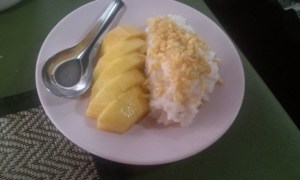
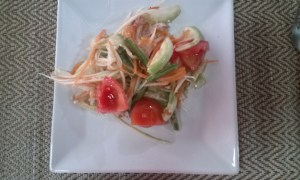
Mostly I’ve been eating out a ton since I’ve been traveling. But I did take a cooking class while in Chiang Mai, Thailand and learned to make cashew chicken, chicken in coconut milk, papaya salad, khao soi (a northern Thailand curry with egg noodles), and mango sticky rice. So delicious.
Khao Soi
Cashew Chicken
Mango Sticky Rice
Chicken in Coconut Milk
Papaya Salad
On the Internets:
This post from one of my most favorite writers, Addie Zierman reminding us that change is slow work:
“And I wonder if coming to your life is a little like coming to the page: open-hearted, brave, bringing everything you have, knowing that some days you’ll get it wrong, some days you’ll get nothing done,some days it will be the wrong words…but that it’s all part of the process. You don’t know exactly where you’re going, but you have the general idea of what you want it to feel like when you get there. So you come back again and again and again. Keep trying. Keep writing. Keep going.”
This beautiful post from my friend Karissa about death and grief and the need for people who can share our pain. “A real live person is better than a Scripture verse any day.”
Loved this post from my friend Meredith about putting up an empty frame and imagining what you’d like to fill it with.
Really needed this recent post from Ann Voskamp about letting go of perfectionism and celebrating your life.
My friend Ashleigh really inspired me with her words about how a wild and radical life doesn’t have to mean living in an exotic place.
“I tend to love extremity so then I start thinking, “Oh, we just need to move to Costa Rica. Or Hawaii. Or Australia.” I’m sure pretty much everyone who has spent an hour on instagram has thought the same thing. But that’s not the right answer for me. It’s taken me a lot of slow-growing to realize that it is also wild to stay put. It’s also radical to build a good, quiet life.”
And I just loved this fantastic clip from Dax Shepard talking about Kristen Bell’s C-Section on Ellen. (I think Dax Shepard and Kristen Bell are my all-time favorite celebrity couple, btw. Her sloth video is still my favorite thing on the internet).
On the Blog:
I started the month by writing about my One Word for 2015: wholehearted and was touched by the many comments I received from readers who were inspired to choose their own One Word for the year. I was also honored to have that post featured on Freshly Pressed.
I completed the first 4 weeks of my Fifty-Two Weeks of Adventure challenge. (Week 1, Week 2, Week 3, Week 4)
I wrote here about how faith can be so slippery and tough to hold onto at times and here about friendship and social anxiety.
I also just created a writer page on Facebook to help people who are interested in my writing and writing-related news keep up with me. If you are on Facebook, you can like my page to connect there.
Beauty Bits:
So, I don’t usually write about these kinds of things because, well, they seem really shallow and materialistic, but it occurred to me recently that admitting that I’m interested in makeup does not discredit anything more serious I want to say. Do I think makeup is super important? No, of course not. But I enjoy it the same way I enjoy movies and tv shows and reading. And maybe some of you do too. And if not, you can skip this section. 🙂
Since the beginning of the fall I’ve been experimenting with lots of Korean makeup because Korea is known for its fabulous cosmetic and skincare products. If you are in Korea or elsewhere in Asia you can probably find these. If not, you can order them online if you really want to try them.
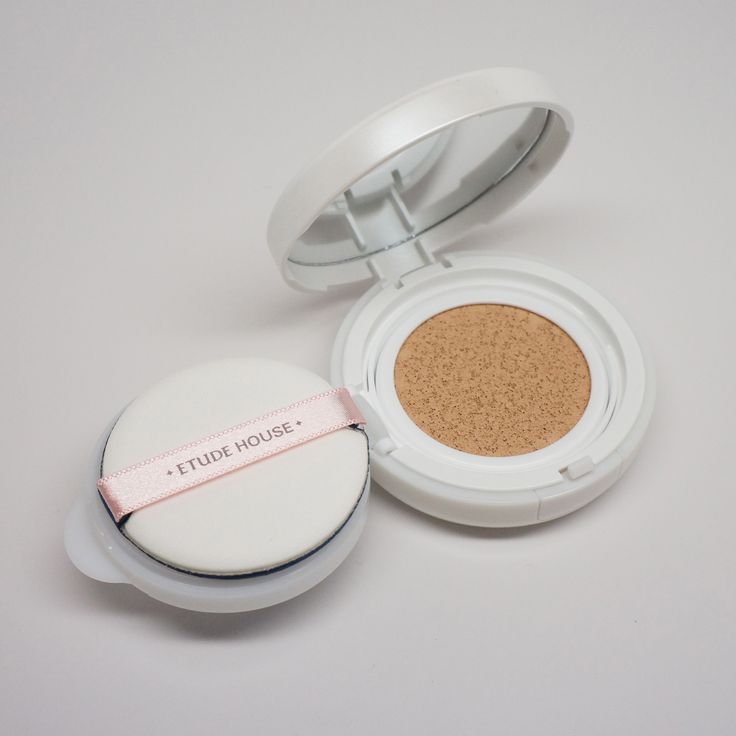
Etude House Precious Minerals Any Cushion BB cream – benefits of a BB cream (sun protection, anti-wrinkle, moisturizing, etc.) with pretty good coverage, applies flawlessly, and is not messy since the bb cream is in that sponge and you just press the sponge with the little to get the product out and basically stamp it on your face. So easy and it looks beautiful. Korea is where BB creams started and they are very different than western bb creams that are more like a tinted moisturizer. These BB creams have much higher coverage and work instead of a foundation.
Aritaum honey melting tints. These smell and taste amazing and go on like a very pigmented lip balm (more pigmented than the Revlon Lip Butters below). Very moisturizing which is important for me because my lips are like a desert!
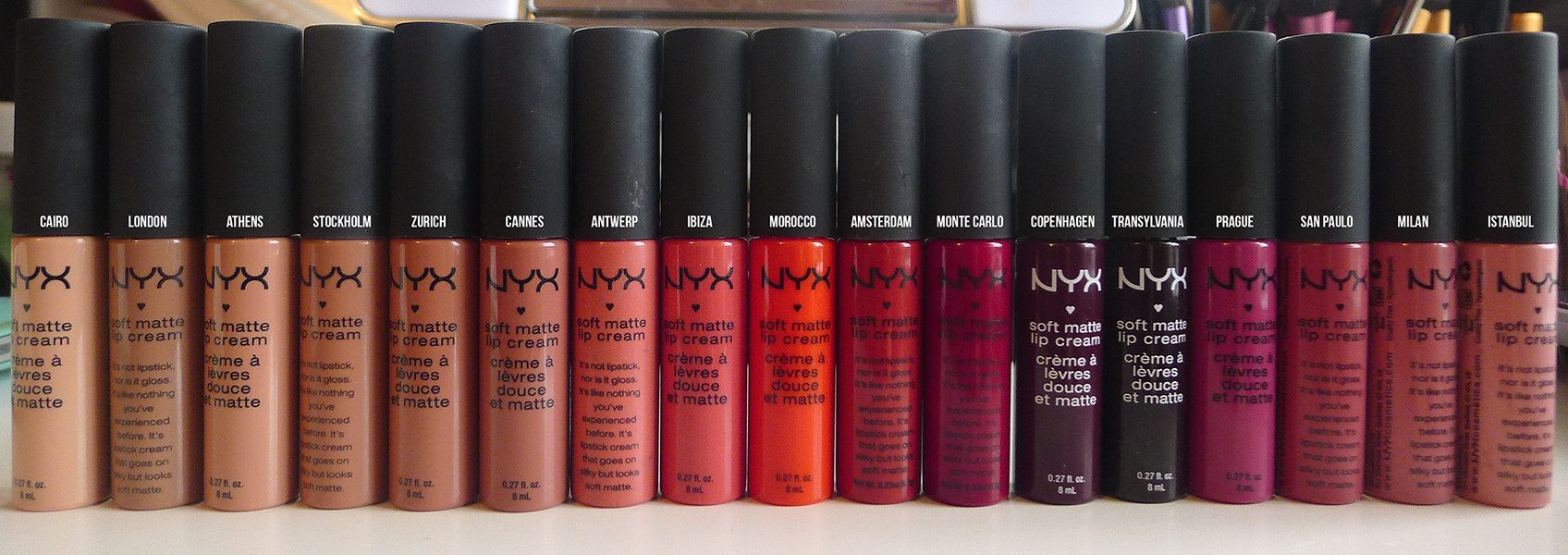
Also, during our trip to Thailand/Singapore/Malaysia I had a chance to pick up a few Western products that aren’t easily available in Korea. Some of my favorites have been the Nyx matte lip creams and butter glosses. The lip creams are like a liquid lipstick with a matte finish – they are so soft they feel like you have nothing on and stay put all day. And the lip butters are beautiful glosses with good pigmentation that go perfectly over the lip cream if you want a little shine or need some hydration. In the US they are very affordable – $6 for the creams and $5 for the butters – and I think you can buy them at Target.
There is a huge color range – this is only half of them. I have #03 Tokyo, #04 London, and #08 Sao Paolo.
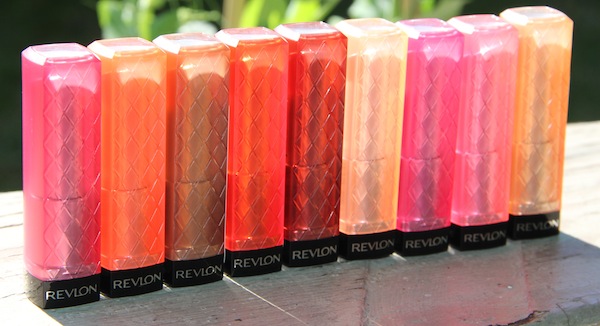
And these Revlon Colorburst Lip Butters which are like a very tinted lip balm – great for moisturizing your lips and you can wear them very lightly if you just want a little bit of color and nothing too dramatic.
You can get these at Target or any drugstore. The darker colors are more pigmented than the light ones. My favorite one that I own is Lollipop.
What I’ve Been Up To:
At the beginning of the month I finished up teaching winter English camps at school and then we spent 2.5 weeks traveling in Thailand, Singapore, and Malaysia which I’ve already told you all about.
Other than that, we’ve started to get some news on the “What Comes Next” front regarding what we’ll be doing after our contracts end in August. I’m not going to announce anything until we’ve made an official decision, but I can say that it’s looking like we’ll definitely be back in the US, at least for a while.
I also re-discovered instagram and have been trying to use it more in spite of my phone’s pitiful camera because I think it’s a fun way to document. You can find me there with the user name lilyellyn.
Sorry this post got sooooo long, but thanks for sticking with me!
Emily Dickinson calls Hope, “the thing with feathers.”* She says that Hope is like a bird that sings in your heart without stopping and without expecting anything in return.
If Hope is the thing with feathers then Faith is the thing with scales. Faith is the eel that wriggles out of your grasp. It’s that shard of eggshell trapped in slimy eggwhites that slips from your fingertip or right over of the lip of your spoon every time you try to isolate it.
Faith is rubbing alcohol with its sharp ammonia scent, disinfecting you of cynicism and doubt but then evaporating off of the warm surface of your skin and fading into thin air faster than you can catch it.
Faith is Jacob wrestling with the Angel of the Lord through the long, dark night. It’s trying to hold onto something enormous when you have such small hands.
But, like Jacob, there are brief moments when I do capture Faith and grasp it tight in my two hands. Like Jacob I say, “Don’t leave me! Or if you have to go, then mark me. Leave something of yourself with me so I can look at it and know that you are real. So I can remember this time that I caught you and looked into your eyes. So I can believe that I will find you again and again, even as you slip through my fingers.”
I am leaving for vacation tonight and will be traveling for the next two weeks with sporadic internet access so I will probably be slow with responding to messages and putting up new posts for the next few weeks. The first 52 Weeks of Adventure link-up is still open. Click on the button at the bottom of the post to add your link or to view links that others have added.
Growing up my family didn’t celebrate Advent in any traditional sense. We always attended non-denominational churches that lacked any sort of liturgical traditions. We never used an Advent calendar or lit the appropriate candles on Sundays, though we did set up a nativity scene where the baby Jesus remained conspicuously absent until Christmas morning when me or one of my siblings got to unwrap the Christ-in-manger figurine and place him between his expectant parents who had been kneeling in awe of an empty space for weeks.
Even without Advent traditions the Christmas season was always full of excitement and anticipation for me. There was something mystical and magical about the lights and decorations, familiar tastes and smells and the chance to sing Christmas carols during regular church services. But, like many people, after adolescence hit, some of the glitter started to rub off. I remember feeling a sort of let-down that for some reason even though I enjoyed Christmas, it just didn’t feel as magical as it used to. This continued year after year and despite my attempts to follow the advice of all Christmas movies everywhere to “Just believe,” I could never recapture the way I’d felt about Christmas as a six-year-old. Eventually I gave up hoping that Christmas could ever be as magical as it was back then.
I’ve noticed a lot of people this year posting blogs or statuses about feeling disappointed and discontented with the way Advent is turning out. People are angry about the injustice in the world, disappointed with circumstances in their own lives, or frustrated with their own busyness. All of this disillusionment seems to center on the idea that this is not how the Christmas season should be. I’ve seen a lot of comments along the lines of, “This is supposed to be a season of joy, a season of peace, a season of contentment and closeness to our families, a season of celebration.” Even those who don’t claim Christianity often consider this time of year a good time to remember the poor, to celebrate family, and to intentionally show more love and patience to others.
I think we may have gotten it wrong.
I don’t think Advent is primarily about peace and joy and all the other warm and fuzzies we think we’re meant to feel. I think Advent is about longing.
It is about longing for a world that is not broken. Longing for justice for Michael Brown. Longing for restored relationships with our families. Longing for a world where people cannot be bought and sold as commodities. Longing for comfort for the friend who has lost her child. Longing for rest from a world that is moving so fast we feel like if we pause for a moment we’ll get left behind. It is about longing for hope that we are not abandoned.
Most of us are very uncomfortable with longing. We live in an instant-gratification world, one where it is unacceptable for a need to go unmet or a wish to go unfulfilled, so when we feel emptiness in ourselves, we rush to fill it. Sometimes the desire to satiate longing manifests itself in materialism – the need for the next new thing. Sometimes it shows up in our relationships and we use and abuse other people in our desire to satisfy our longings.
My own attitude towards longing is usually, “How can I make this go away?” But I think we have two choices when it comes to longing – we can lament the discomfort we feel and try to make the feelings go away, or we can embrace those longings and let them change the way we live and love.
Maybe Christmas is the perfect time to bring awareness to the disparity between the world we live in and the world we long for.
O come, O come, Emmanuel, And ransom captive Israel, That mourns in lonely exile here Until the Son of God appear.
Rejoice! Rejoice! Emmanuel shall come to thee, O Israel.
This is a song about mourning and emptiness and the longing of a people for rescue and restoration. But it is also a song about hope. Yes, we are mourning in exile now, but Rejoice! Emmanuel shall come.
Calling attention to the brokenness in the world doesn’t mean that all hope is lost. As long as we continue to deeply feel this disparity, there is hope. As long as we still have the image of what peace and joy could look like in the world – as long as we live every day to bring these things to our corner of the world, there is hope.
For Christians, it is the hope of the incarnation. It is the tangible promise of God with us. It is the belief that we are not abandoned. As long as we both pray and live “Thy Kingdom come,” there is hope.
If we’re looking for a perfect time of holiday cheer this season, we can be sure we won’t find it, but that doesn’t mean we have to resign ourselves to disappointment and disillusionment the way I did when I outgrew my childhood belief in Christmas magic. We can embrace the longing and feel it deeply instead of trying to chase it away with other things or feeling guilty that we aren’t filled with peace and joy . And we can rejoice that Hope is still alive and let that longing and that hope change the way we live.
“Thankfulness is not some sort of magic formula; it is the language of love…”
A friend shared this quote with me recently and I can’t stop thinking about it. I’m completely taken with this picture of thankfulness as the language of love. I think that’s both beautiful and true.
I’m not always good at loving well –not my husband, not my friends and family, not God, and certainly not strangers. There are many moments in my life I look back on and wish I’d loved better.
The more I think about these words, the more I’m coming to believe that gratitude is an essential part of love. I’ve seen how this works in my marriage.
Jonathan and I have been together for almost eight years and while I don’t pretend that we’re perfect, one of my favorite things about our relationship is the way we still thank each other for everything. This is meaningful for us because saying thank you for things we could easily take for granted is more than just a polite habit. It is meaningful. It’s our way of saying, “I recognize that you did that chore, not because you had to, but because you love me.”
When Jonathan washes the dishes, he’s saying,” I love you,” and when I thank him I’m saying, “I see the way you’re loving me and I appreciate you.”
The thing about gratitude is that it turns our eyes away from ourselves. We can’t love well when we are focused on ourselves – when we’re immersed in our own wants and needs and worries and problems. Practicing gratitude is a way of looking outside of ourselves and recognizing both the gifts we are given every day and the givers behind them.
Gratitude isn’t about smoothing over and ignoring the evil in the world or the pain in our own lives. It isn’t about forcing a smile when our hearts are breaking or trying to put a smiley-faced band-aid on an open wound. It’s about acknowledging pain and struggle and marveling at glimmers of grace and goodness that break through that ugliness.
Gratitude doesn’t change our circumstances – it changes us.
Gratitude makes us generous because when we lose our sense of entitlement to the things we have, we no longer feel the need to hold onto it so tightly.
Gratitude combats discontentment because it reminds us how far we’ve come instead of how far we have to go.
Let us be people who let our haves count for more than our have-nots.
Let us be people who recognize the gifts strewn throughout the most ordinary moments of our days.
Let us be people who give with abandon because we are humbled by what we’ve already received.
In Jr. High I had a lime green t-shirt emblazoned with the words, “This world is not my home.” It was a billboard advertising my holy longing for heaven. My pastors would say things like, “When we suffer, we find hope in knowing that this world is not our home, our true home is in heaven and one day we will join God there and everything will be perfect.” And all God’s people said, “Amen.”
I wore my t-shirt proudly, secretly hoping that carrying the words on my body would make them true. Because, try as I might, I could never seem to muster up enough hatred for the world to really feel like I was a stranger wandering in a foreign land. I knew I was supposed to pray for Christ’s swift return, but secretly I sometimes prayed that he would wait just long enough for me to go to Jessie’s pool party, or to learn to drive, or to go to college, or to fall in love. I felt an urgency to see and experience everything I could before God took it all away.
Even as a child, I saw this desperation as a moral failing. It was undeniable proof that no matter how hard I tried to convince myself otherwise, I loved the world too much and loved God too little. “Anyone who loves their life will lose it, while anyone who hates their life in this world will keep it for eternal life,” the pastor said and I shuddered in fear.* I worried that my hunger for life meant I wasn’t really saved. I asked Jesus into my heart again and again, hoping it would stick eventually.
As the church I grew up in grew and expanded, the focus shifted from evangelistic, fundamentalist values to more seeker-friendly messages of what God can do for you (another problem for another time), but those early impressions had taken root in my heart.
My church and school weren’t alone in these beliefs. In fact, there is a whole sector of Christian merchandise that capitalizes on the concept that this world is just a temporary annoyance that we endure without investing in until we can shake the dust from our feet and move on to the place we truly belong. (The song, “This world is not my home, I’m just passin’ through,” anyone?)
Like all good Christian kids, I memorized John 3:16, “For God so loved the world that he gave his only begotten son that whosoever believes in him shall not perish but have everlasting life,” but the Christianity I grew up in only seemed to care about the second part of that, the part where we needed to believe in Jesus. How could they miss what this most foundational of evangelical Scriptures spells out?
“For God so LOVED THE WORLD,” it says. God SO loved, not just individual people, you and me, but the world itself and everything in it.
But we didn’t treat the world like something God loved, much less like something we should love too. We treated the world like a place we feared, a place we wanted to separate ourselves from, or a place we wanted to escape from, bringing as many people along with us as possible.
A few weeks ago I listened to this sermon by Australian professor Ben Myers during our house church meeting. It’s part of a guest sermon series he preached on the Apostle’s Creed, specifically the phrase, “I believe in God the Father Almighty, Maker of Heaven and Earth.” Myers points out that to treat the world as a place we need to escape from, a place where we are just biding our time as we wait to be delivered, is denying God as a good creator. He points to the Scriptures’ depiction of the end of time when there will be bodily resurrection and where Christ will bring his kingdom to earth and reign. “Salvation will never be an escape from this world, but God’s loving restoration of a good creation.”
St. Francis of Assissi (patron saint of hippies and vegetarians) understood this so well that he wrote about the natural world as if it were part of his family – Brother Sun and Sister Moon. He doesn’t say this in a pantheistic, God-is-in-everything way, but in a way that acknowledges himself as a part of this wildly beautiful and good creation that he is at home in for as long as he is on Earth. His mission isn’t to escape the world. It’s to bring redemption and healing and reconciliation, working to restore creation to the perfectly good thing it was created to be.
This really struck me because I’ve lived most of my life believing that I wasn’t really meant to love this world as much as I do. I’ve never longed for heaven as a relief from this world, even in moments of suffering. The world is far from perfect and it certainly isn’t divine. There are broken bits that make my heart ache. But I still believe that it can be redeemed. I believe this world can be restored. And I want to be part of that work.
Jesus didn’t just come into the world and head straight to the cross. He came and he lived. He healed the sick, he raised the dead, he showed compassion, he taught another way. If his purpose was only to rescue us from a world that is beyond hope, why waste his time with these acts of redemption?
I believe we have a responsibility to work for justice and restoration in the world precisely because this world IS our home and because the Creator has given it value. God said he is making all things new, NOT all new things.**
__________________
* John 12:25
** I didn’t come up with that pithy phrase – my friend Laura actually reminded me of it, but I can’t remember where it came from.
A few weeks ago I watched this video for the first time. I was a little late to the game with this one – the video had been circulating a few weeks previous, but for some reason, I hadn’t ever watched it. Until one afternoon, sitting at my desk, with my classroom full of hyper Korean kids (they’re not my class, they were just in my room). And it absolutely wrecked me. If you haven’t seen this video, watch it before you read the rest of this post.
“What is it specifically?” my mother asked when I sent her the link, weeping.
How to say, “It is everything”? It’s the words for what is wrong with me. With so many women that I know. It is the pain and the struggle of being a woman in a world that holds us to absurd standards. Expectations that fill us with righteous indignation because we know they are wrong, but still somehow leave us feeling unworthy that we don’t measure up.
This girl (her name is also Lily so it doesn’t really help to use her name in this case), is talking about traits and behaviors she saw modeled by and inherited from her mother. I don’t necessarily feel that I learned these from my mother, but from countless women who have come before me and surrounded me as I grew. These are my personal struggles, but they are the personal struggles of so many of us. We lead lives of violent inner turmoil, resenting and also being controlled by external images, expectations, and messages about our value that we have somehow internalized. These particular lines really shook me:
“And I wonder if my lineage is one of women shrinking, making space for the men in their lives, not knowing how to fill it up again when they leave…”
This made me think of my grandmother, who has lost herself in being my grandfather’s wife– a man who undoubtedly loves her, but also has her utterly convinced that she is dependent on him. That she couldn’t take care of herself if he weren’t around. She’s been schooled in her own incompetence all of her married life (and perhaps longer), even as she fixes his plate and irons his shirts. To any observer, it’s clear that she is entirely capable of self-sufficiency. She’s been made to feel less-than for the sake of his need to feel important – a strong leader in a household that no longer requires management. My grandparents are of a different generation, but still, I see the looks and hear the concerned murmurs from many younger people who look at my marriage and frown, unable to understand this relationship in which both of us lead and both of us serve.
“My brother never thinks before he speak, I have been taught to filter. ‘How can anyone have a relationship to food?’ he asks, laughing, as I eat the black bean soup I chose for its lack of carbs. I want to say, ‘We come from difference, Jonas. You have been taught to grow out. I have been taught to grow in…I learned to absorb.’”
Up until these past few years of my life, I lived in such fear of displeasing others that I could rarely express my own opinion. In the worst cases, I was afraid to express my opinion because I didn’t really believe I was entitled to one. The concept of “Authority” has always been strong in my family/school/childhood church, but in me the concept never rang true. Somehow the lines got crossed in my mind. Rather than learning what it truly meant to respect authority, I learned how to repress myself. To subjugate myself under someone else and call this good.
“Nights I hear her creep down to eat plain yogurt in the dark – a fugitive stealing calories to which she does not feel entitled. Deciding how many bites is too many, how much space she deserves to occupy.”
This makes me physically ache. For me, this isn’t about my mother – this has been the story of my own life. Possibly it started all the way back when I was 10 years old at summer camp and I overheard some boys behind me on the soccer field, “Hey, look! That girl’s butt jiggles when she runs!” Certainly it’s been my story since I was 15 or 16. Every day of my life. Frantically counting the calories. Obsessing over every bite that goes into my mouth and calling it “self-control.” Or not. Aggressively ignoring what I am eating. And later being consumed by a self-loathing that makes Hitler look like a saint. I don’t remember what it’s like to go through a day and not think about what I’ve eaten, what I’m going to eat, what I should be eating, what I shouldn’t have eaten, the size of my body, the way that I look, the way that my clothes fit, whether I can congratulate myself for having sufficient self-control or if I must shame myself into a better day tomorrow. I must force my unwilling body to run half marathons and then full marathons to prove I can be disciplined.
(I admit that there have been a few brief periods of my life when I had a short break from this – after the bout with salmonella that left me (unhealthy) but skinny, having lost 20 lbs in 10 days before my sophomore year of college. Right after I got married and found that the time I had spent worrying about my body pre-honeymoon was unnecessary because I was so unconditionally loved. And last spring after I lost 27 lbs and felt that I’d won a small victory over myself and my self-destructive habits. But that came crashing down quickly after moving to a country whose staple foods are rice, sodium, and all the meat is half fat.)
Unlike many girls, I didn’t learn to count my calories or call myself fat from my mother. From my mom I learned what I should be able to be – she has been thin for my whole life. She almost never indulges. She has always been able to say no to food with an ease that makes my all-consuming battle with it feel all the more humiliating . In my mother I saw modeled a self-control and a discipline that I simply lack. I felt that she was living proof that it was possible and I failed to measure up. Again and again and again. (And again today.)
“I asked 5 questions in genetics class today and all of them started with the word, ‘Sorry.'”
This is me. This is me. This is me. I have spent so much time apologizing for things I have no business being sorry for. Why should anyone feel sorry for needing to ask a question? Or sorry that someone else’s expectations of them weren’t met. Sometimes I think these murmured apologies that season my conversation like salt from a shaker is really me apologizing for what I feel is the inconvenience of my existence. Like my being here at all is a burden. It makes me furious that anyone should be made to feel that way. And so I am angry. But also, I am sorry for being angry.
“I don’t know the capstone requirements for the sociology major because I spent the whole meeting deciding whether or not I could have another piece of pizza.”
This made me laugh, even though it isn’t funny. I can’t tell you how many meetings, recitals, graduations, concerts, and events I’ve only been half-present for because there was a war being waged in my mind about the food. About what I could permit myself or not permit myself. My rationale behind it. “How much space do I deserve to occupy?”
Listening to Lily’s poem was like having words put on every inadequacy I have felt since I was a child and simultaneously exposing the inherently flawed basis of those inadequacies. I am angry at a world that has made me feel this way, but at the same time, this is so deeply ingrained that I don’t know how to shake it.
I shared these comments with my mother and she told me a story about herself – one she’d never told me before. The story of how 26-year-old her broke free from a life-long struggle for perfection. The struggle for a perfect body that made food her enemy and a perfect life that made her avoid confrontation by not having an opinion. The struggle to be perfectly likeable and agreeable that made her ignore her own wants and needs, pushing herself under a rug in order to please others (or often, let others stomp all over her). That at 26 (the age I am now except that she already had a 6 year old and a soft tangle of arms and legs and blue eyes that would be me in her belly) she realized that no matter how much she tried, she couldn’t change the way she felt about food or finances or keeping other people happy. And that instead of trying harder or trying to be more disciplined or more self-controlled (which inevitably leads to self-loathing), she learned to stop trying. She wrote to me, “I became humble. I had to become brutally honest with myself and admit to myself that I could not fix it/control it. I had no power over it and life had just become crazy. I realized that the ONLY person who could supernaturally ‘adjust’ me was God. But I had to let him.”
I was so thankful that my mom shared this with me. I wish I had known these things about her as a teenager and young adult (well, young-er adult). I think something many parents have been missing with my generation and possibly the current one is how valuable it is to let your children see and understand what it looks like to struggle well. Because no matter what you do, your children will struggle. And if all they’ve seen are the victories, they won’t know what to do when the time comes to struggle. It’s like the physics teacher I had in high school who was great at solving all the problems, but who couldn’t explain to me how to do them. Life is lived in the process so much more than in the conclusions.
I’ll finish this post, then, by sharing something about my process. Right now, I don’t understand what the heck it means to “Let go” of something. I can’t tell you how many times I have heard some form of “Let go and let God” in my lifetime. Most of the time it makes me want to scream. Because often it’s just code for, “I don’t know what to tell you, but this phrase is something ‘spiritual’ people say and so it sounds like a real thing.” You see, I’ve tried “letting go” in so many different situations. I’ve knelt with my arms stretched as far as they can reach or spread myself across the floor with my face pressed into rough carpet fibers, trying to find the correct posture, the arrangement of limbs that will accomplish this mysterious goal, chanting prayers over and over like a mantra, “I’m letting go. I’m giving this to you. I don’t want to carry this anymore. I can’t do it on my own. I’m letting go,” each iteration more soulful and heartfelt than the last, only to find that, in fact, this changes nothing. It simply makes me a failure at letting go. (Ha!)
I value my mother’s story. I believe her words were genuine and described a true transformative experience for her. But I admit that I have yet to figure out how to “stop trying.” So far I’ve tried it in the shower, at my desk, while running, in bed, at a temple and on a mountain. So far none of this insisting I am “letting go” has been successful. I am being a little sarcastic here – I know it’s not a magical ritual or formula. But I am admitting that I can’t seem to figure out how to do something that sounds as simple as doing nothing.
Women, so many of us are broken. But I believe (I have to believe) that we can be whole again. That we can live lives free and unashamed. That we can learn to turn our amazing capacity for love towards ourselves. I don’t know how yet, but I am hopeful we can learn together.
My sophomore year in college I lived in a suite with three other girls. The rooms were set up as two bedrooms with an adjoining bathroom, but it was fairly common to “super-suite” the rooms so that all of the beds were in one room and the other room housed desks and a couch or some type of living area. We had done this to our rooms, but had the beds set up in a unique configuration that was the envy of the whole dorm. In all fairness, I can’t take any credit for it. Two of my roommates (Julia and Christina) had arrived a day or so ahead of me and Taylor and had managed to assemble a masterpiece of bunk beds, desks, and dressers. Three of the beds were triple bunked, but the middle bunk, rather than being directly between the top and bottom bunks, was lofted perpendicularly with one end supported by the top and bottom bunk and the other end propped on top of a dresser. The fourth bunk was lofted high on top of two desks with bookshelves so that it was even with the top bunk of the triple-decker and left room for two people to sit back to back at their desks underneath. Those two highest beds were so high up that after crawling into them, there was only 12-18” between you and the ceiling. To this day I cannot figure out how those girls did it without any help.
From Left: Julia, Taylor, Christina, Me. Because it's cool to take pictures like this at 19 and think they're cute
Being very accident prone and generally afraid of heights along with my propensity to get up and pee at least 2-3 times on an average night, I happily slept on the very bottom bunk all four years of college. Except for one fateful night. I had been at the library with my then boyfriend (now husband) until it closed at midnight. As I stood outside my door, digging through my bag for my key card a note on the outside of the door caught my eye. “Face your fears,” it read in Christina’s distinctive handwriting. Having no idea what this meant, I laughed a little. Big mistake. I went in and stumbled around in the dark getting ready for bed. I had pretty much forgotten about the sign until I made it over to my bed. Just as I was about to collapse into it I realized…there was someone in my bed. Christina. I tried to move her, but was unsuccessful. I shrugged to myself and climbed up a level to Taylor’s bed. There was someone in Taylor’s bed. It was Julia. I did not consider moving Julia because it had now become completely clear to me what was going on. “Face your fears.” This was what it meant. Shaking, I climbed up a level to Christina’s bed. And there was Taylor, sound asleep. Which left Julia’s bed, vaulted to the ceiling and still missing the extra long ladder we had ordered for it. I knew I had a choice. I could have turned on the lights and yelled. I could have pushed Christina over far enough to wedge myself next to her in my own bed. I could have slept on the slightly skuzzy couch in the next room. But this was my moment. Life had handed me an opportunity and I was going to seize it. I was born for such a time as this. So, I crawled over the sleeping Taylor into Julia’s bed in the stratosphere and wedged myself between the wall and my mattress, using my (thoughtfully provided) pillow as a barrier, should I begin to roll in my sleep. The morning came as mornings do and I woke up, stiff, but victorious.
There is a point to this story (I think.) I was reminded of it because in some ways I think God has been asking me to face some fears in the last few weeks. Fears about where we’ll end up, if we’ll have good jobs, if we’ll have enough money, if we’ll be happy. Even fears about God himself and whether or not he really is good, true, and faithful. Whether or not he really has a plan. Sometimes when you are confronted with a particular fear, you realize that it really isn’t as frightening as you thought it was (i.e. me and the really high bed.) And sometimes, you realize it’s every bit as frightening as you thought it was. But that doesn’t change the fact that deep down at a core level there are things that can never be taken from you. If the worst thing that you can imagine actually happened, then what? S
ee, a lot of my fears stem from the one big fear that I will not be allowed to have good things or that the good things I have will be taken from me. And it occurred to me as my husband and I walked through this decision about moving and jobs that I am trying so hard to hold on to my good things that I don’t even recognize that I already have the best thing. I have the love of a God who poured out his life for me, regardless of whether I am in a moment of belief or of doubt. Because even if I lost all of these things I so desperately fear being separated from—my husband (not that he’s a thing:) ), my home, my family, my friends, a career, living a place I love, dreams for the future—this I could never be separated from. Nothing can separate me from the love of God. Not even me.
We have decided to stick with our original plan and move to Raleigh. Although the other opportunity offered a lot more security, we ultimately didn’t feel a strong sense of God’s calling towards it. We are scheduled to move right after the Fourth of July, but the rest is largely unknown. Thanks to all who have listened and loved and prayed. You are all evidence that when God asks us to face our fears, he doesn’t ask us to do it alone.
I feel like a rug has been pulled out from under me the last few days and it hasn’t just left me flat on my back staring up at the ceiling with a headache. When my metaphorical rug was pulled out from under me it revealed a giant hole where I thought the floor was and left me falling through it like Alice down the rabbit hole with nothing to grab hold of and no end in sight
This is my nephew, Jasper Mason Trahan, about four hours after he was born
Over this weekend my breathtakingly beautiful sister graduated from high school and I met her very first boyfriend, I got to hold my nephew when he was just 4 hours old, I got to see my family and friends from home, some of whom I hadn’t seen since my wedding last summer. I also learned some really upsetting things about people that I love. The type of things that I have no control or authority over, but that still make my heart so heavy. And while I was gone my husband received a job offer out of the blue that would move us to a place that I really don’t want to go.
In the past few days there have been three separate things that I was really excited about that I feel have now been tainted or taken from me entirely, the biggest of which being our move to Raleigh. We had already made a decision we felt good about and were making plans to move the first week of July. We even had a place to stay free of rent for the summer. I had been applying to jobs almost daily and Jonathan had made arrangements to transfer with Starbucks until he lands another job. One of my dearest friends is also moving to Raleigh this summer where she’ll be in school for the next 5 years.
And I had found a darling little cottage we were going to look into renting…a white cottage with a stone pathway and a beautiful garden and an office loft for writing
My breathtakingly beautiful sisters at graduation. Maggi (left--graduate), Anni (middle, 16) Me
.
To be asked to give all of that up for a place that holds no charm for me is staggering and painful. However. To refuse to give up my dreams and my wishes in order for my husband to walk through a door that God has opened for him is unbearable. How do you love someone selflessly and still be completely honest with them? How do you make a decision that could change the course of your life without feeling any excitement about it? How do you lay your life down so sacrificially that you never, ever regret it?
I can’t stand the feeling of regret. Just last week I got in touch with someone I hadn’t spoken to in years just because every time I thought about him I still felt regret over the memories I had from the time I knew him. It’s the worst feeling.
I briefly shared the situation with a friend of mine from home and she said, “You will never regret going where God tells you to go.” I needed those words and I so appreciate the encouragement that comes from them, but I am still at a loss. Neither of us have a clear sense of where God is telling us to go. A week ago, we obviously thought he was saying Raleigh, but now we don’t know. And my husband isn’t even sure he wants to take the job being offered to him, but doesn’t want to regret turning down a good job to go to a place where he doesn’t have a job lined up at all.
When we got married, I committed to lay my life down for Jonathan. Somehow I (foolishly) couldn’t conceive of a situation like this one in which it could really mean the sacrifice of more than my choice of movie or not complaining about him watching sports. But I really did mean it. And if God told me to do this I would. But right now all I’m hearing is heavy, heavy silence.
Thought I'd try to lighten the mood with a few more Two days old
Well, it’s been a while. In the time since my last post I’ve been to Ohio, Pennsylvania, New York, and Ontario, Canada. I have seen the Amish, been to Niagara Falls, lost two more pounds (for a grand total of 12.2, for all you Weight Watcher buddies,) watched a delightful performance of My Fair Lady, decided to move to North Carolina,and underwent minor surgery. But I don’t actually want to write about any of those things. For now, at least.
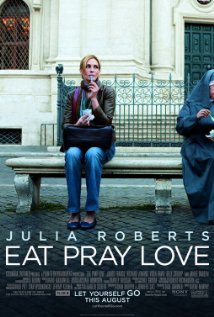
What I do want to write about is how I am borderline obsessed with Elizabeth Gilbert’s Eat, Pray, Love. My first encounter with it was last summer when the movie first came to theaters. I was mesmerized. I was literally unable to look away as I watched the movie. Since then I’ve read the book and seen the movie several more times and each viewing evokes the same response in me. Admiration. Longing. Inspiration.
For those of you who aren’t familiar with Eat, Pray, Love it is the true story of writer Elizabeth Gilbert’s journey to find peace and joy and balance in her life. Gilbert travels to Italy where she spends several months eating Italian food, learning to speak Italian, and learning to really enjoy and savor life. Then she spends several months in India at the ashram of the guru she follows, devoting herself to spiritual disciplines and making peace with God. Then she finishes her year with several months in Bali making friends with natives, and learning to love others.
It’s not that I agree with the particulars of her journey. I don’t think I should leave my husband and travel the world to find myself, I’m not Hindu so her version of spiritual truth doesn’t impact me, and I hardly think that a Balinese medicine man holds the key to balance in life. What I find so compelling about Gilbert’s story isn’t really the particulars, it is the overall sense of the journey. Besides feeding my overwhelming desire to travel and see everything in the world before I die, the thing I find most captivating is Liz Gilbert’s honesty in admitting that although her writing had won prizes and she lived a life that most anyone would have called successful, there was something missing. She recognized that she needed to find spiritual peace and that she needed to understand herself better. From the way she describes it in her book, the majority of her adult relationships had been co-dependant ones in which she lost herself in trying to become the perfect match for whomever she was with. Her journey was about self-discovery, it was about spiritual discovery, and it was about learning to balance those things in such a way as to be loving towards herself and towards the rest of the world.
Julia Robert’s version of Liz Gilbert sums up her journey here:
I admire this woman for her desire to know God and the lengths she was willing to go to to make that happen, regardless of whether or not I believe in her religion. While not many of us have the means or ability to leave everything and go somewhere new and unfamiliar to devote ourselves to nurturing our spiritual lives, I am convicted that I am rarely willing to leave anything or put anything aside for the sake of developing my spiritual life. I have many questions for God and I also want to come to peace with God and with the truth, but if I am going to be honest, I haven’t really devoted my energy to it. I have thrown up questions to the sky as though I wasn’t expecting them to be answered. This final clip of the movie about what Gilbert calls, “The Physics of the Quest” is a challenge to me. I have asked and continue to ask my questions. Getting to the point that I allowed myself to ask them in the first place was a journey of its own. But now that I’m here, I realize that I need to do that second part. To regard those I meet and the experiences I have as teachers and lessons. To acknowledge that God works in our lives through other people and through our circumstances and to pay attention to the ways in which he is offering answers. Granting peace.
This is what I wrestle with…I want to believe that God has a purpose for my life that doesn’t include wandering aimlessly through it, but lately I just can’t see it. I want to believe that God is good in such a way that I really can trust that the events of our world are in his hands, but sometimes I feel like we just attribute good things to him and write bad things off as his inexplicable sovereignty. I want to believe that God is perfectly just, even when I don’t understand how he’s displaying that in a particular situation. And finally, I want to be open to seeing and hearing the ways God meets me in my doubt in my everyday life.
I think we are all voyeurs at heart. It’s why we read people’s blogs and stalk their facebook pages, and (even if we aren’t the type to seek it out on our own) can’t help being interested when we hear a detail about the Royal Wedding or Lindsay Lohan’s arrest record. We love to take our stories and lay them beside other peoples, compare and contrast. We are comforted by finding that someone else thinks like us, struggles the way we do, wants what we want. Or we are (strangely) comforted by seeing someone doing worse than we are and pumping ourselves up about it. Whichever one you are (and don’t be ashamed because I’ve definitely been both) I want you to know that I’m inviting your voyeurism. I invite you to watch and to listen to my ramblings. And I invite you to participate.
PS. If you want to read some supremely witty and clever commentary on movies and media and life, check out my hubby’s blog, Found Footage.













 Lily Ellyn