Author: Lily

“I Sing in Gratitude for Loving This”: Words That Changed Me

Happy Thanksgiving! Celebrating holidays far from home is one of the hardest parts of expat life, but this year I am so thankful for friends who are like family and for the opportunity to participate in three separate Thanksgiving celebrations over the next few days. I also wanted to say that I am humbled and thankful for the kindness many of you have shown over the past few weeks here in the blogosphere. You have inspired me.

Every Thanksgiving for the past few years I’ve shared this passage from Andre Dubus’ essay “A Country Road Song.” It is one of the most beautiful and moving pieces I’ve ever read. At the age of 49, Dubus suffered a devastating injury when he stopped on the side of the road to assist with a fatal automobile accident. While pulling the survivor out of the wreckage, he was hit by another car. He was injured so badly that he eventually lost one of his legs and was paralyzed in the other. Dubus wrote about the consequences of his accident in many of his essays, but this particular one is about his memories of running.  I cry every time I read it because it overwhelms me that a man could feel and express this kind of intense gratitude in the face of such incredible and seemingly senseless loss.  If you have a chance, you should read the entire essay because it is so much better than just this excerpt. I share this again today because it has changed me and because I hope it might also be meaningful to you.

“When I ran, when I walked, there was no time: there was only my body, my breath, the trees and hills and sky…I always felt grateful, but I did not know it was gratitude and so I never thanked God. Eight years ago, on a starlight night in July, a car hit me…and in September a surgeon cut off my left leg… It is now time to sing of my gratitude: for legs and hills and trees and seasons…I mourn this, and I sing in gratitude for loving this, and in gratitude for all the roads I ran on and walked on, for the hills I climbed and descended, for trees and grass and sky, and for being spared losing running and walking sooner than I did: ten years sooner, or eight seasons, or three; or one day.”

Dubus

____________________________________________________

Andre Dubus, “A Country Road Song,” Meditations from a Movable Chair”

Learning to Speak the Language of Love

“Thankfulness is not some sort of magic formula; it is the language of love…”

A friend shared this quote with me recently and I can’t stop thinking about it. I’m completely taken with this picture of thankfulness as the language of love. I think that’s both beautiful and true.

I’m not always good at loving well –not my husband, not my friends and family, not God, and certainly not strangers. There are many moments in my life I look back on and wish I’d loved better.

The more I think about these words, the more I’m coming to believe that gratitude is an essential part of love. I’ve seen how this works in my marriage.

Jonathan and I have been together for almost eight years and while I don’t pretend that we’re perfect, one of my favorite things about our relationship is the way we still thank each other for everything. This is meaningful for us because saying thank you for things we could easily take for granted is more than just a polite habit. It is meaningful. It’s our way of saying, “I recognize that you did that chore, not because you had to, but because you love me.”

When Jonathan washes the dishes, he’s saying,” I love you,” and when I thank him I’m saying, “I see the way you’re loving me and I appreciate you.”

The thing about gratitude is that it turns our eyes away from ourselves. We can’t love well when we are focused on ourselves – when we’re immersed in our own wants and needs and worries and problems. Practicing gratitude is a way of looking outside of ourselves and recognizing both the gifts we are given every day and the givers behind them.

Gratitude isn’t about smoothing over and ignoring the evil in the world or the pain in our own lives. It isn’t about forcing a smile when our hearts are breaking or trying to put a smiley-faced band-aid on an open wound. It’s about acknowledging pain and struggle and marveling at glimmers of grace and goodness that break through that ugliness.

Gratitude doesn’t change our circumstances – it changes us.

Gratitude makes us generous because when we lose our sense of entitlement to the things we have, we no longer feel the need to hold onto it so tightly.

Gratitude combats discontentment because it reminds us how far we’ve come instead of how far we have to go.

Let us be people who let our haves count for more than our have-nots.

Let us be people who recognize the gifts strewn throughout the most ordinary moments of our days.

Let us be people who give with abandon because we are humbled by what we’ve already received.

Let us be people who speak the language of love.

“This World is Not My Home” and Other T-shirts I Can’t Wear Anymore

In Jr. High I had a lime green t-shirt emblazoned with the words, “This world is not my home.” It was a billboard advertising my holy longing for heaven. My pastors would say things like, “When we suffer, we find hope in knowing that this world is not our home, our true home is in heaven and one day we will join God there and everything will be perfect.” And all God’s people said, “Amen.”

I wore my t-shirt proudly, secretly hoping that carrying the words on my body would make them true. Because, try as I might, I could never seem to muster up enough hatred for the world to really feel like I was a stranger wandering in a foreign land. I knew I was supposed to pray for Christ’s swift return, but secretly I sometimes prayed that he would wait just long enough for me to go to Jessie’s pool party, or to learn to drive, or to go to college, or to fall in love. I felt an urgency to see and experience everything I could before God took it all away.

Even as a child, I saw this desperation as a moral failing. It was undeniable proof that no matter how hard I tried to convince myself otherwise, I loved the world too much and loved God too little. “Anyone who loves their life will lose it, while anyone who hates their life in this world will keep it for eternal life,” the pastor said and I shuddered in fear.* I worried that my hunger for life meant I wasn’t really saved. I asked Jesus into my heart again and again, hoping it would stick eventually.

As the church I grew up in grew and expanded, the focus shifted from evangelistic, fundamentalist values to more seeker-friendly messages of what God can do for you (another problem for another time), but those early impressions had taken root in my heart.

My church and school weren’t alone in these beliefs. In fact, there is a whole sector of Christian merchandise that capitalizes on the concept that this world is just a temporary annoyance that we endure without investing in until we can shake the dust from our feet and move on to the place we truly belong. (The song, “This world is not my home, I’m just passin’ through,” anyone?)

t-shirt

not my homeLike all good Christian kids, I memorized John 3:16, “For God so loved the world that he gave his only begotten son that whosoever believes in him shall not perish but have everlasting life,” but the Christianity I grew up in only seemed to care about the second part of that, the part where we needed to believe in Jesus. How could they miss what this most foundational of evangelical Scriptures spells out?

“For God so LOVED THE WORLD,” it says. God SO loved, not just individual people, you and me, but the world itself and everything in it.

But we didn’t treat the world like something God loved, much less like something we should love too. We treated the world like a place we feared, a place we wanted to separate ourselves from, or a place we wanted to escape from, bringing as many people along with us as possible.

A few weeks ago I listened to this sermon by Australian professor Ben Myers during our house church meeting. It’s part of a guest sermon series he preached on the Apostle’s Creed, specifically the phrase, “I believe in God the Father Almighty, Maker of Heaven and Earth.”  Myers points out that to treat the world as a place we need to escape from, a place where we are just biding our time as we wait to be delivered, is denying God as a good creator. He points to the Scriptures’ depiction of the end of time when there will be bodily resurrection and where Christ will bring his kingdom to earth and reign. “Salvation will never be an escape from this world, but God’s loving restoration of a good creation.”

St. Francis of Assissi (patron saint of hippies and vegetarians) understood this so well that he wrote about the natural world as if it were part of his family – Brother Sun and Sister Moon. He doesn’t say this in a pantheistic, God-is-in-everything way, but in a way that acknowledges himself as a part of this wildly beautiful and good creation that he is at home in for as long as he is on Earth. His mission isn’t to escape the world. It’s to bring redemption and healing and reconciliation, working to restore creation to the perfectly good thing it was created to be.

This really struck me because I’ve lived most of my life believing that I wasn’t really meant to love this world as much as I do. I’ve never longed for heaven as a relief from this world, even in moments of suffering. The world is far from perfect and it certainly isn’t divine. There are broken bits that make my heart ache. But I still believe that it can be redeemed. I believe this world can be restored. And I want to be part of that work.

Jesus didn’t just come into the world and head straight to the cross. He came and he lived. He healed the sick, he raised the dead, he showed compassion, he taught another way. If his purpose was only to rescue us from a world that is beyond hope, why waste his time with these acts of redemption?

I believe we have a responsibility to work for justice and restoration in the world precisely because this world IS our home and because the Creator has given it value. God said he is making all things new, NOT all new things.**

__________________

* John 12:25

** I didn’t come up with that pithy phrase – my friend Laura actually reminded me of it, but I can’t remember where it came from.

What Happens When You Go Viral: On Wanting to Give Up

I recently found out that the hit count on my Relevant article back in June was over 1.6 million. The editor told me it was the second-biggest traffic day in the history of their website. That’s mind-boggling to me.

If you had asked me a year ago what I thought it would mean to have a piece get that much exposure, I would have assumed it would be my big break. That it would boost my blog, lead to freelance opportunities, help connect me to the right people. That it would be my open door into the world of professional writing and publishing. That it would bring me validation and satisfaction. It would reassure me that what I’m doing here isn’t pointless and that my story matters.

Do you want to know the truth?

It hasn’t done any of those things. For a few weeks I received a lot of emails and messages from people thanking me for my story. I got to write a few guest posts on the topic. But no one has offered me a job and I haven’t landed an agent. 1.6 million people read something I wrote and my blog still has fewer than 200 followers. (If that’s not discouraging, I don’t know what is). And as much as I would love to say I don’t care about any of that, in the world of professional writing ( by which I mean writing in some capacity that pays the bills) numbers are what matter. How many subscribers do you have? How many followers on Twitter?

All I’ve ever really wanted to do since I was in kindergarten is to be a writer. I’ve tried other things and I’ve cultivated other interests, but writing is the only thing that has consistently excited me. I’m under no illusions that I could make a career out of blogging, but I would love to have enough paid work as a writer to support my family while doing something I love. And, like most writers, I would love to write a book someday. But these past few months I’ve become more and more convinced that I am not cut out for what “being a writer” means today.

Being a successful writer is no longer about craft or talent or art. It’s not about having the deepest insights or the most profound observations to share. It’s often simply about who can shout the loudest. Like high school student council elections, success in the blogosphere is a popularity contest. It’s about who is the most provocative, who is the most visible on social media, who is the most aggressively self-promoting.

I admit that I’ve dipped my toe into that pool. This summer I (very reluctantly) got a Twitter account. I hate it. I almost deleted it within 30 minutes of registering. I’ve tried to network with other bloggers, to write and invite guest posts, to comment other places, to submit pieces to other publications. But pursuing self-promotion doesn’t feel right to me. Reading someone else’s posts and looking for ways to insert myself and my work into the comments goes against some of my core values of sincerity and authenticity. These are things I’m not willing to compromise on.

In my last “What I’m Into” post I confessed that I’d been reading like a chain-smoker, using other people’s words to try to hide from own. I’ve read a few posts about this struggle lately (here and here ). Honestly, I was a little shocked and disheartened. One of my friends is working on a book and has landed a really great agent. One has a completed manuscript she’s starting to send around. I look at them and think, “If only I had an agent…” or “If only I had a finished manuscript…” Perhaps they look at me and think, “If only I had a million-view article…” And yet, we seem to have hit a collective wall. We are all struggling to feel that what we are doing matters.

I confess that I frequently get angry with popular and successful writers whose blogs I find poorly written and uninspiring. I don’t believe in quantity over quality – in pushing points that don’t need to be made just to generate content. There are a million voices out there and there are many moments when I don’t think the world really needs mine. If all I’m doing is adding to the noise then I’d rather be silent.

I want my writing to be about creating something beautiful—about art and passion and sincere wrestling with (sometimes fragile) faith. I want it to be about telling truths and naming every day grace. I want it to matter.

I’ve been rolling a book idea around in my head for at least eight months. There are some stories I want to tell, but I am afraid. This stage I’m in as a writer is one where I carve off a chunk of my heart and fling it out into the world and watch it disappear into the distance without even the consolation of hearing an echo back to let me know I hit something.

I am afraid of failing, yes, but here is an uglier truth. I am also afraid of hard work. Or rather, I am afraid of hard work that goes unrecognized and unappreciated. I am afraid of 1.6 million people who say, “Your words don’t matter.”

I want to give up.

And yet, I can’t quite do it. I can’t completely walk away. Because this space has changed me. In some ways it is healing me. I’ve made friends here. I’ve found a tiny community of artists who are fighting to say something true. These people inspire me. And I’ve experienced moments of extraordinary grace from readers, some whom I’ve never even met in real life, who have sent encouraging emails and have shared their own stories, who have sent me articles and books that are dear to them, and even one who bought the most beautiful cook book I’ve ever seen and mailed it all the way to Korea.

Jim Carrey once said, “I think everybody should get rich and famous and do everything they ever dreamed of so they can see that it’s not the answer.”

I’ve never been rich or famous, but I can tell you that as a writer, having an article go viral is not the answer. And it seems that having an agent or finishing a manuscript is not the answer. Satisfaction and conviction that this work is good and that it is worth doing has to come from somewhere else.

I don’t know what the next few months will look like here on the blog, but I’m committed to trying to figure this out. Should I write? Should I not write? What should I write? And why? And for whom?  Hopefully I will find a way forward–a way to be able to do what I love without compromising the kind of person I want to be.

___________

****EDIT: I just wanted to add a  note letting you all know how much I appreciate all of the kind and supportive comments I’ve been receiving on this post and for all of the new followers. I am really overwhelmed by your generosity and support. Online interactions can sometimes be so negative and all of your kind words have really touched me. I may not be able to respond to each and every comment, but please know that I’ve read every word and I appreciate them. I know I’ll come back to them in moments of discouragement. I’ll be checking out a lot of your blogs over the weekend. There’s a phrase we use in Korea that means “Don’t give up! You can do it!” It more or less translates to “Fighting!” in English.  So to all of my fellow writers, artists, and creators, “Fighting!”

Image source: Wikipedia.org


Extremely Quiet and Incredibly Remote: An Uneventful Climb Towards Mid-Twenties Virginity

Today’s Sex and the Church post comes from my newly-wedded friend Meredith. Mere and I went to Wheaton together. We were both on staff for the newspaper and took some of the same writing classes. It wasn’t until after Wheaton that I realized just how wildly talented she is. Meredith’s writing is witty, insightful, genuine, and often pee-your-pants funny. I’m so excited to add her voice to this series. I love this piece SO MUCH partly because I can relate to it so well, but also because it’s another story no one ever tells. I hope you enjoy it as much as I did.  For more from Meredith, be sure to check out her blog, Very Revealing  and follow her on Twitter @MeredithBazzoli.

You can check out previous posts in this series here, here, here, and here.

***

Alex D Stewart on FlickrThe CTA brown line became my converse confessional booth. Sometimes a truth wells up to the tip of my tongue and I know that in the next hour or so, I will unleash it on the innocent person sitting next to me. In this case, it was my friend Ann.

Taken out of the warm lap of evangelicalism, my pearl of great price got turned on its head. In the past, friends disclosed illicit missteps to youth pastors and close circles of friends; as an adult, I found that within my new communities I had the dirty secret.

My sin? Unlike my friends who “fell off the path” and let boys’ hands wander too far up their shirts, I carried the sin of inexperience, omission, naïveté.

My confession:

  1. To those who thought me an experienced woman of the world, I want you to know that I lost my virginity just over a month ago. And not even on my wedding night; we watched “Too Cute: Pint Sized Edition” on Animal Planet.
  1. To those of you think I completed a task of great personal will power and moral strength, I must confess that, most of my life, remaining celibate was out of my hands. It would have been much harder to abstain from gluten, dairy, or television than saving sex for marriage.

I want to talk about virginity not as prize accomplished or a misguided evangelical pursuit, but as a mundane reality, not only for those who signed pledges and sealed themselves with purity rings, but also those who just ended up that way.

I grew up in an evangelical household during the “True Love Waits” movement. No one ever presented word-for-word biblical evidence to keep my legs closed, but sex sounded scary and magical—saving myself sounded romantic.

purity ringMy parents gave me a ring on my 13th birthday. They ordered it from a Christian book distributor, and it quickly bent to the shape of my ring finger. I penned a diary to my future husband and listened to love songs from musicals before bedtime. When no teenage boys knocked down my door to have their way with me, “waiting” and “saving myself” occupied my thoughts and satisfied the unease of loneliness.

My middle school and high school years passed with little to no romantic activity, let alone sexual activity. At times I wondered if a Rumplestiltskin-esque character made a bargain with my parents to keep suitors away from my “gift” until the correct prince came to unshackle me from my obscurity and to claim his prize, a girl who mentors mused might just be “too intimidating for boys.”

Mostly, I suspected that I was an ugly, kurmugeony thing, too furry and sweaty to land myself a boyfriend, or even a date to a school event.

The summer before college, I began my first long-term relationship with a boy from my church youth group. We were longtime friends taking baby steps out of the friend zone.

Each physical mile-marker scared me, not as gateway drugs into sexual immorality but as feats of physics—two inexperienced bodies fumbling towards one another, learning to interlace fingers and willing lips to meet.

We were young and I remained pure from sheer inertia. We had few opportunities to push the envelope of our purity since I lived in a dorm room at a Christian college, and he lived with his parents. I figured that we would get married, and as we discussed timelines and dates, waiting seemed manageable.

During this time, I made my decision to remain a virgin, in part, due to my anxiety and fear. With little boy experience since an “I’ll show you mine-you show me yours” encounter with the backdoor neighbor, nakedness terrified me.

I loathed my swirling patches of body hair and the way my thighs brushed together; I worried my nipples weren’t the right size. I wore an ultra-modest, Lands-End bathing suit made for moms wanting to hide their baby bodies, complete with a mid-thigh length skirt and a control top.

I held on to my virginity long enough for my heart to get broken. The man I thought I wanted to marry walked away.

I imagined him having illicit romps with other girls, betraying what felt like our shared vow to stay virgins. He zoomed away with little explanation, and I suffocated in the dust, sure I’d missed my one chance at marriage and sex.

Shortly the break up, I got my first gynecological exam. I dutifully answered the nurse’s questions about my sexual activity:

No, I’m not sexually active.

Yes, I’m sure.

Zero sexual partners.

Is there an option for less than one time?

Yes, I’m sure.

No, there is no possibility that I could be pregnant barring being raped in my sleep or receiving the second messiah.

No, I’m not a Mormon.

In my twenties, the prospects remained equally bleak. This time around I was in the places where people meet people, bars and theatres and the parties of mutual friends.

No takers.

No one ever tried to bed me.

The closest I got was someone else thinking I was going to hook up with someone. One night at a bar, a male colleague started to interrogate me about my faith, picking obscure Old Testament passages to trap me into making broad admissions about my beliefs. As we talked about the Philistines, our friends continued to drink, and soon decided that we, being engrossed in conversation, were in the process of hooking up. Across the way I heard my friend utter, “I think he’s going to bang her.”

Um no, absolutely not.

One, Two, skip a few more eventless years…

And then, Drew.

T and C Photographie

We re-met in July of last year, we started dating last August, and we got married this September. Sexual purity was low on the list of reasons to marry sooner rather than later. However the ability to cohabitate did definitely weigh in. Mostly, we clicked, in the sort of nauseating cosmic way. We knew we wanted to spend all of life together, and we wanted to start soon.

At the end of the day, we had both committed to remain celibate until marriage. For good, bad, and negligible reasons, we came to our relationship as 25-year-old virgins, equally rejected by all possible dating scenes and goofy in love with each other.

Although the fire of our early relationship made me question whether I’d keep my teenage pledge, things got dark fast. And then darker still. My mental illness, my mother’s cancer, and the injury and trauma caused by a dog attack left us weak, and not much in the mood for hanky panky. On top of that, I spent the majority of our relationship on anti-depressants that entirely muted my sex drive.

We didn’t go without talking about these things, shutting away the physical and embodied parts of our relationship to rattle on the fringes of our consciousness. Our attraction for each other felt profound. I knew Drew desired me and I him, but we saw our sexual relationship as a journey, one we wanted to continue into our seventies; the choices we made day to day didn’t hold pressure or urgency. Many days, I just needed Drew to hold me. This intimacy cut through layers and layers of me, leaving me much more naked then I knew I could be, far past my furry belly button and possibly unattractive nipples.

I don’t want to totally underplay my commitment to stay a virgin. There are few things I’ve stuck with since the 7th grade. Since that time, I’ve fallen off the wagon on tens of diets and wellness plans, discarded a beginning of the school year ritual*, and changed my opinion on many vegetables. (*It involved candles.)

I made choices about my sexuality and took agency at pivotal moments in my life, sometimes for reason of virtue but often out of fear or inaction. Virginity happened for me, it worked out in my case. And I’m grateful. I could find no greater partner to navigate the hilarious, scary, wonderful adventure of bodies becoming one.

If there is any challenge in this piece, I’d ask people to revisit and expand their idea of virgins. I know some virgins my age, some younger, and even a few forty-year-old virgins.

Some make hard choices all the time, while others remain unwilling virgins forced by circumstance over any religious commitment. All our stories are different and very few involve pioneer dresses, homeschooler braids, or being Mormon. Well, I did wear a pioneer costume as a docent in a museum, but that’s another essay.

The brown line neared my stop, creating a timeline for the secret burning behind my lips. Ann may have been mid-sentence, or maybe she was silent, I was only listening to the anxiety cyclone twirling its way through my nervous system and back again.

“I’m a virgin!” I blurted out.

“Yeah, I know.”

***

Dith Bazolli small for web-33-2Meredith Bazzoli is a comedian and writer  living just outside Chicago. She spends her days as an instructional assistant on the west side of Chicago and her nights practicing and performing improv. She loves hosting and DIY projects and her tall, dark, and handsome husband Drew. Meredith loves hearing and recording other’s stories, finding glimmers in the mundane, and seeking what it means to love and follow Christ in the everyday.

Image Credits: L -Train by Alex D Stewart on Flickr, Drew and Meredith by T and C Photographie

What I’m Into: October 2014 Edition

Happy November! Here is my October What I’m Into post. Sorry it’s a few days late! As always, I am linking up with Leigh Kramer for this post.

What I’m Reading:

This month I buried myself in books. It was almost an addiction – the minute I stopped reading one thing I needed to pick up something else. I couldn’t tolerate any lag-time. This was partly because quite a few books I wanted to read went on sale for kindle all at once and I bought about 8 books in just a few days and then felt like I needed to justify my purchases by reading them all immediately. But mostly it was because I was hiding from writing. I kept trying to write – blog posts and book chapters and proposals –and I kept failing to write. I started to cram all of my free moments with other people’s words so I wouldn’t have to think about my own. And this is what I read:

Speak by Nish Weiseth. This is a brand new book about the power of sharing stories. The author is the founder of A Deeper Story, a website that creates space for people to tell their stories. This was a short, quick read and I really enjoyed it.

What Alice Forgot by Liane Moriarty. I had heard this book widely praised for a long time. I’ve read two of Moriarty’s other books and really enjoyed them, so I was looking forward to this one. I was not disappointed. This book is about a woman who wakes up after a fall with no memory of the past ten years of her life. While the whole “I have amnesia” trope can feel overdone or predictable, the complexity of the characters made this a much more nuanced story instead of just a cheap plot device. This was a fun, quick read, but it also left me thinking a lot about how the little choices we make in life that can add up to change the direction of your life. Little moments can pull you somewhere you never imagined going. This book also deals with infertility in a very genuine way that I’ve never quite seen done in fiction. I’m a fan.

Help, Thanks, Wow by Anne Lamott. This is a short, sweet book about what Anne Lamott considers to be her three essential prayers. I liked the idea of distilling prayer down to the core of what we are usually really praying and appreciated the reminder that simple prayers are sometimes the most powerful.

Julie and Julia by Julie Powell. I love food books and I loved the movie version of this book. Sadly , I did not love the book version quite as much. I still enjoyed it, but frankly the author is much more likeable as she is portrayed by Amy Adams in the movie than she is in real life. (Who wouldn’t be, I guess). I just found her to be very whiny and ungrateful and she joked a lot about how mean she was to her husband and how much it sucked that she’d married her high school sweetheart and so had never been with other men, etc. The parts about cooking were definitely the best parts, but overall I’d give it a 3 out of 5.

Tables in the Wilderness by Preston Yancey. Sigh. Such mixed feelings. This is a brand new book that’s been lauded by many of the bloggers and writers I admire. It’s not a bad book. But Yancey is young. He’s even younger than I am. And honestly…it shows. This is a spiritual memoir about moving from certainty about God and faith into doubt and then back again. Much of it is about Yancey’s transition from a staunch Southern Baptist tradition to exploring more liturgical traditions, specifically the Episcopal church. His reflections on the liturgy and what it can do for us are some of the best parts of the book.  But, there are many other parts that just read (to me) as incredibly un-self-aware. The basic arc of the story is of a kid who goes to college (he went to Baylor) thinking he knows everything and then comes to understand that in fact, he doesn’t have everything figured out yet. He tries to start a church at 18 and unsurprisingly, it fails. His conversations with his friends and his questions about faith remind me of my time at Wheaton and that was very relatable for me. But ultimately he tells this long story of his time in college and how he realized he didn’t know everything as though it were a very unique and original experience. I couldn’t help feeling that this is such a common story. Most of us go to college as arrogant know-it-alls and discover that we don’t know everything. It’s called maturity. And if it had been written that way – as though he was reflecting on an experience common to young adults –I probably would have liked it better. As it was, I felt like he was trying to share a super unique story and he went into great detail about his struggles and choices and emotional conflicts. And honestly, his struggles and questions were very valid, but also very common. The best way I can say it is that in the book he was not as self-aware as he seems to think he is. He seems to still have the “I’m a special millennial snowflake” syndrome common to many of us. Also, some of the writing (particularly near the beginning) was technically poor. He switches verb tenses like it’s his job. So, I didn’t love it. I feel a little ungracious writing this, but it’s also my honest opinion.

The Nesting Place by Myquillyn Smith. This is a quick, easy read about decorating and how you don’t have to have perfection to have a beautiful home. Mostly, it’s about the pictures.

Faith Unraveled by Rachel Held Evans. I read this at the exact right time in my life. This is Evans’ spiritual memoir coming from a fundamentalist evangelical “it’s us against the world” background and learning to be ok asking questions, even if you don’t find answers right away. I loved that she actually articulated some of the really hard questions of life and faith and didn’t try to smooth them over with Bible verses or trite Christian phrases. My biggest takeaway was something Evans said at the very end of the book – that there is a difference between questioning God and questioning what you believe about God. That was so profound to me and has helped me come to terms with some of my questions.

Quiet by Susan Cain. This book is soooo good. It’s completely fascinating. If you are an introvert or you love an introvert, you should read it. It taught me so much about how I work as a highly sensitive introvert in contrast with my husband who is more strongly introverted, but is not highly sensitive. I also found her exploration of Western culture’s “extrovert ideal” so helpful in understanding the ways in which I’ve trained myself to act more extroverted. This helped me make sense of why I am 100% sure I’m an introvert, but other people sometimes seem surprised by that.

The Opposite of Me by Sarah Pekkanen. An easy but unremarkable read about fraternal twins who have never gotten along and come to understand each other better. No great shakes, but it was an easy read and a nice break from all my non-fiction.

I was reading The Inner Voice of Love by Henri Nouwen devotionally over the past few months, but I’ve finished it now. I am currently using Shane Claiborne’s Common Prayer in my devotional reading. I’m nearly finished with Molly Wizenberg’s Delancey and have a few lovely novels queued up on my kindle.

I read 10 books this month for a total of 51 so far this year. You can follow me on Goodreads if you’re into that.

Also, If you would be interested in me doing more book reviews in the future, leave me a comment and let me know, especially if there’s anything in particular you want to hear more about.

What I’m Listening To:

October has been a month of long runs preparing for a half marathon at the end of November. On long runs I like to listen to podcasts. In addition to This American Life and Wait, Wait Don’t Tell Me! I’ve become obsessed with NPR’s newest podcast, Serial, which tells one long story over the course of many episodes. This story is a true crime investigation of a man who has been in prison for 15 years for a crime he still says he didn’t commit. It’s fascinating.

Also fascinating/moving/inspiring was Nadia Bolz-Weber’s interview for the On Being podcast. Bolz-Weber is a Lutheran priest and the author of Pastrix a book very high on my to-read list. If you get a chance, listen to this. There are some breathtaking moments.

What I’m Watching:

I’m on Season 5 of my re-watch of Gilmore Girls. I raced through the last season of Call the Midwife when it hit Netflix. I’ve also been watching and loving The Paradise on Netflix. I’m staying current with Nashville, Parenthood, Mindy Project, New Girl, Modern Family, and Brooklyn Nine Nine. We’ve also been watching old episodes of Frasier and just last night watched the first episode of the British show Broadchurch after which I immediately asked Jonathan if we could skip work today and binge-watch it, but he said no.

*I just edited this because I forgot the movies!*

We saw Gone Girl last weekend and I thought it was really well-done. I read the book last year and actually pretty strongly disliked it because it seemed to be trying to say something deeper about marriage and relationships, etc but epic-ly failed to do so because of the nature of the plot. (When there are psychopaths or sociopaths involved you can no longer treat any of their relationships as an effective commentary on normal society.) I thought it worked so much better as a movie where you could appreciate it as entertainment without trying to extract this deep message about marriage and society.

We also saw the Maze Runner, which was entertaining as well as long as you didn’t think about it too much.

What I’m Eating/Cooking:

Soup! I got a new thermos to take my lunch to school with me and the ability to eat hot foods is rocking my world. I make a big pot of soup on the weekend and bring it for lunch every day. Last week it was my all-time favorite chicken tortilla soup. This week it’s a chicken noodle soup with no noodles and more veggies whose recipe I just made up on the fly.

I use this recipe except I add a tsp of taco seasoning and up the other spices. And I use black beans instead of (or sometimes in addition to) corn. Photo by: Allrecipes.com

I use this recipe except I add a tsp of taco seasoning and up the other spices. And I use black beans instead of (or sometimes in addition to) corn. And I put the whole thing in my crockpot, including the raw chicken. So easy. Photo by: Allrecipes.com

Also I made my mom’s gumbo this weekend (with a bit of my own flair thrown in – let’s face it, I am pathologically incapable of leaving recipes alone) and it was like heaven.

Gumbo

I also made a pumpkin cake with cinnamon cream cheese frosting for church yesterday and it rocked my world. I don’t have any pictures because I inhaled it.

If you want to see more of what I’m cooking you can follow me on Pinterest.

What I’m Writing:

As I said above, I’ve mostly been avoiding writing, so instead I’ve been hosting my Sex and the Church guest series here including such greats as “Can We At Least Begin By Saying the Words?” “You are not a gift to be unwrapped” a post about same-sex attraction, and a post from my hubby about how sex is both dangerous and beautiful. I also wrote two guest-posts for friends’ blogs. The first was for my friend Brett about being (or not being) a mom. The second guest post was for my friend Karissa’s Where I Found God series about finding God outside of the church.

On the Internets:

This off-color, but terribly funny post (similar to last month’s) about Women Having a Terrible Time at Parties

I loved this article from my friend Briana Meade about getting how we are not special millennial snowflakes and how we have to learn to live faithfully in the small moments of life instead of constantly thinking we are too good for ordinary. I have had to come to grips with this myself over the last few years and I think this piece is so insightful.

Glennon Melton’s challenge What if Your Life Is Already the Best Thing? is worth a read. (I adore her).

This post from Lisa Jo Baker about why women don’t need to be ashamed of needing to feel beautiful stuck with me.

And this post from my friend Karissa about quitting the writing rat-race (even thought this was technically a November post, I’m including it). I second everything she says here.

And, obviously, this:

What I’ve Been Up To:

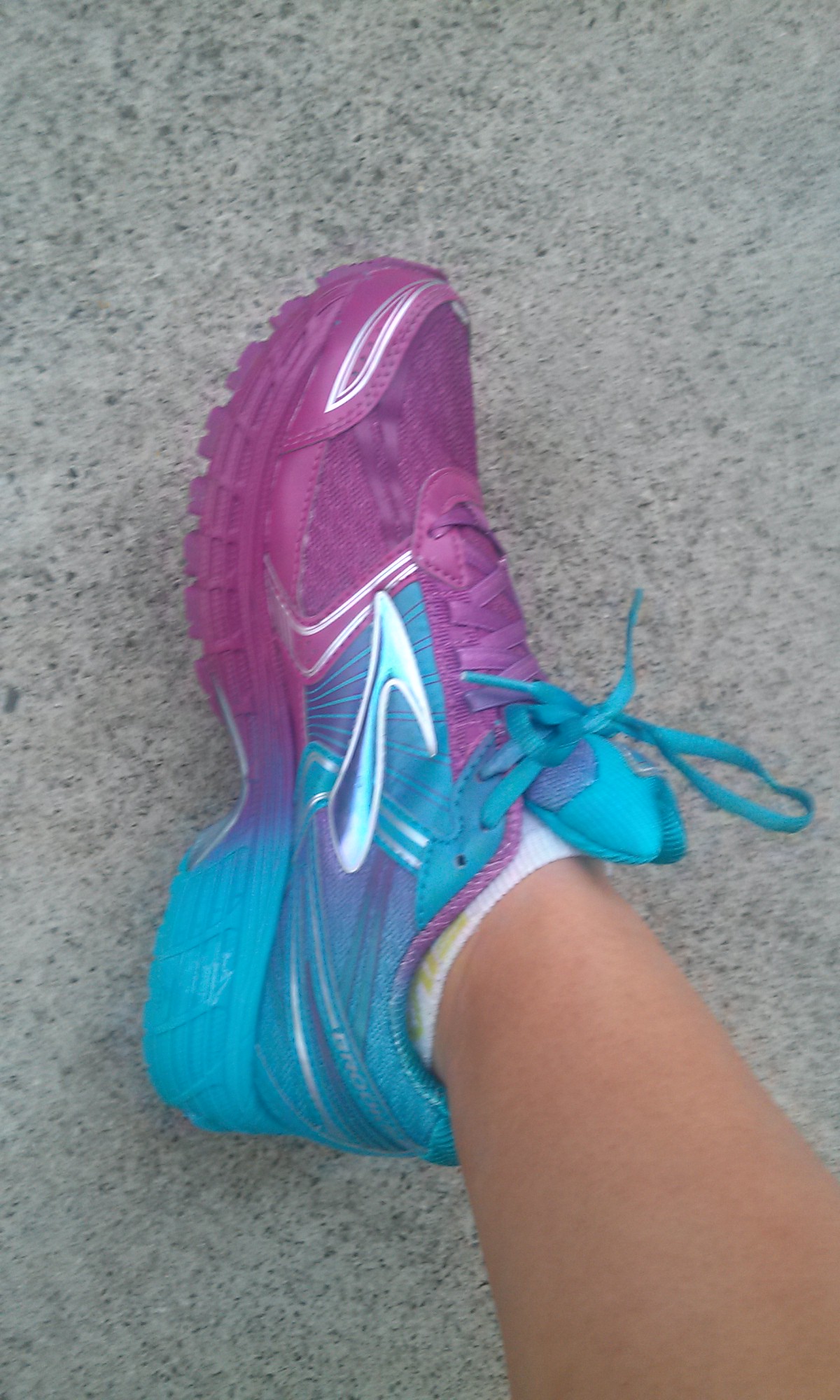
I’m training for a half marathon at the end of November so I spend about half of every weekend running and then trying to recover from running. I frequently ask myself why I am doing this, but then I remember, hey, I’ve got these awesome shoes I’ve got to justify buying, and I soldier on.

Shoes

It’s like running on beautiful pillows made of mermaid fins.

I also recently discovered the enormous Korean cosmetic and skincare industry – I was always aware that that’s a huge thing here and that they’re supposed to be really good, but I hadn’t really tried out too many products. One day it occurred to me that I basically haven’t bought new makeup in eight years and I decided to try a thing or two. I made the thrilling and dangerous discovery that I love Korean cosmetics and skincare. The packaging is ridiculously cute and everything is so cheap! AND they give you SO MANY free samples. What’s not to love?!

Samples

Seriously. All free samples. Including that toner and moisturizer that are at least half-size products.

We recently joined a few other people to start a sort of house church here in Daegu and have been really enjoying getting to know some new people and getting to have church in a more casual and comfortable setting.

The past two weeks seem to be peak fall weather/foliage time for Korea so we are trying to get out and enjoy that as much as possible. Korea lights up like New England in the fall and I can’t get enough of it.

I was loving seeing all the baby costumes on Facebook this past weekend. Baby costumes are probably the biggest pro in my mind to having a baby. If I have kids, mine are gonna wear costumes all the time. I especially like this kid in his minion costume.


Oh, and I dyed my hair. I’m no longer a red-head. I’m a raspberry-chocolate head. I keep scaring myself when I pass mirrors.

What have you been into? Anything amazing I should be checking out?


Beautiful and Dangerous: Towards a Better Way to Talk about Sex

JonathanHere it is, the moment you’ve all been waiting for! It’s the Hubby-Tells-All edition of my Sex and the Church series. Ok, not really. It’s more of the Hubby-Contributes-Some-Wise-and-Poignant-Thoughts-to-the-Conversation edition. But that’s way too long for a headline.

I am so honored to share this post from my wonderful husband. Jonathan is one of the wisest and most thoughtful people I’ve ever known. He has a way of cutting straight to the core of things.   He is also a wildly talented fiction writer and  the rocker of one sexy beard.

If you’ve missed any of the last three parts of this series, you can find them here, here,  here, here and here.

*****

“The first two facts which a healthy boy or girl feels about sex are these: first that it is beautiful and then that it is dangerous.”

G.K. Chesterton

Though Chesterton’s work often feels shockingly relevant to the present (considering he wrote almost a hundred years ago), this particular quote is one that, to me, doesn’t seem especially descriptive of us anymore, neither inside nor outside the church. A lot people might be down with the idea of sex as beautiful but don’t want to call it dangerous (not wishing to provoke judgment, guilt, or shame), while many on the flip side insist on the danger while rarely, if ever, articulating the beauty. And a wide swath in the middle seem to feel sex is as commonplace and ordinary as eating, drinking, and digesting – acts which at their core are not especially beautiful or dangerous. Yet I quite like the Chesterton quote and think it has something useful to say to us, if nothing else as an aspiration (which was maybe the point all along), so when Lily asked me to contribute to this series, my mind went here.

A lot of public debates we have in the church, by my feeble observation, force people into false binaries, requiring them to choose between a hardline A or B to the exclusion of any nuance. Maybe we’re taking a cue from most debates in the media and wider culture, or maybe debates just by their very nature split people into camps and make them fight (A: They do. B: They don’t. Debate amongst yourselves.). This isn’t to say that debate can’t occasionally be healthy, or that sometimes there aren’t situations where one side is simply wrong, or a million other things. I just mean that a lot of the time when we talk about sex in the church we seem to be asking something like, “Is sex beautiful or is it dangerous?” and I think maybe: Why not both?

Which again isn’t meant to discourage distinction, nor is it an especially easy way to dialogue. But I wonder if it shouldn’t be our goal. After all, isn’t it a sign of mature thinking to be able hold two ideas in your head without getting them confused or smushing them together? Shouldn’t this be our aim?

In this case I’d suggest that, within the Christian framework, sex is at the very least both beautiful and dangerous. Of the two it’s much easier to accept the idea of sex as beautiful, but I wonder if even in the church we sometimes lose sight of what that really means. It might seem beautiful merely because of the powerful feelings it engenders, but for Christians I think the beauty comes not from physical pleasure alone (though it’s nice, of course), but from the emotional and spiritual connection it brings with someone else, a kind of connection you can share in marriage that remains wholly unique, exclusively with you and your spouse, separate from everyone for all time. That is, I would argue, beautiful.

But for much of the same reason, it’s also dangerous. Dangerous not because sex outside of marriage is an unforgivable sin (which of course isn’t true) or even from something more immediate like the risk of unwanted pregnancy (which is unpersuasive, though does happen to be real), but dangerous because of the same emotional and spiritual forces that make it beautiful. Sex is dangerous because it’s powerful. It can ruin relationships with the ones you love, entangle you with those you don’t, and quite literally bring new people into your life. It has a fiercely potent draw on our attentions and motivations. It affects us at our core (as so much of the rest of this larger blog conversation has already testified). It can expose the things we hide. It can pull us closer to God or push us further from him.

The extreme positions in many popular Christian conversations about sex seem very interested in pushing us to one side or the other. Sex is either beautiful and should be celebrated in all forms, or it’s dangerous and should be treated with extreme caution. I think the solution is that it’s both, provided we’re willing to talk about what we mean by “beautiful” and “dangerous.”

I’m not pretending to break new ground here, and of course I say this not as any kind of expert (“sexpert”), but merely as someone else trying to reflect on sex and the church and where the dialogue might go from here. I hope we can continue to be open and thoughtful and gracious with each other, growing in our understanding without devolving into oversimplified camps, drawing closer to God day by day.

That, at the very least, should be our goal.


Jonathan lives in Daegu, South Korea, where he teaches and writes and enjoys being married to the most wonderful woman of all. You can follow him on twitter @jonvdunn

Where I Found God: A Guest Post

Today I am over at Karissa Knox Sorrell’s blog for her “Where I Found God” series.  Karissa is a friend I met through blogging and a woman I’ve come to greatly admire. She describes herself as a faith-wrestler and I strongly identify with that as I struggle to work out my own faith.  She is also a poet, a mother, an educator, an Orthodox Christian, and a beautiful, thoughtful writer. Karissa has been featuring weekly guest posts about encounters with God outside of the church. I am honored to be contributing to this series today.

The room was dark except for the stage lights illuminating the guitarist and the rest of his band. The air hummed with the trailing notes of the bass and with the murmurs of the worshippers, each muttering their own fervent praises as they swayed, lifted their hands, or bounced up and down on their toes.

The pastor bounded onto the stage, beaming. He closed his eyes and raised his hands in front of the congregation. His voice boomed out over the din as he told us to “close our eyes and feel the presence of God in this place.” I closed my eyes. I tried to breathe the Holy Spirit in through my nose. I wanted to gulp him in by the lungful – I wanted him to take up residence in that space between my chest and my belly—but I lost that sense of fullness with each exhale. I opened my eyes and looked around the room. They seemed so sure that God was with us, but I couldn’t seem to find him.

I’ve spent my whole life in the church, but I haven’t always found God there.

I’ve found God in words.

Read the rest of this post here.

Sex and the Church – So Scandalous: Guest Post on Same-Sex Attraction

I am so honored to share this story with you today. I admit that I wasn’t thinking about homosexuality when I first started thinking and writing about sex, Christianity, purity culture, and the evangelical church. Not because I didn’t think it mattered, but because my subconscious didn’t associate it with these other questions about sexuality and how churches talked about it with youth and adults. When I heard this story, I realized that I was part of this system. That I was someone who failed to even consider same-sex attraction and homosexuality as part of the conversation.

Looking back on my church experience growing up I can honestly say that in all of the many, many purity talks and True Love Waits banquets I attended I never once heard anyone address the fact that some people might not be fighting heterosexual lust. I never once heard anyone admit that it was possible that sexual struggles could transcend the question of whether or not to have premarital heterosexual sex.

The writer of this piece has asked to remain anonymous simply because she hasn’t had an opportunity to share these things with all of her friends and family members and wants to be able to have those conversations in person. I am amazed by her courage in sharing this story –particularly because she speaks from a place that almost everyone stands against.  Both the conservatives who want to pretend this isn’t an issue and the more liberal (Christians and non-Christians alike) who believe people should fully embrace their sexuality, no matter what it looks like.

If you have some encouragement to share, the writer will see the comments here. I know that you all have various opinions and beliefs about homosexuality – whether it’s right or wrong or anyone’s business in the first place. If you want to have those debates, there are lots of other places you can do that, but I do ask that you don’t do that here. Feel free to comment if this story impacted you in some way –I have wonderful readers and I trust that your comments will be kind even if you hold a different opinion from the writer’s.

If you missed the other parts of this series you can read them here, here, here, here, and here.

*****
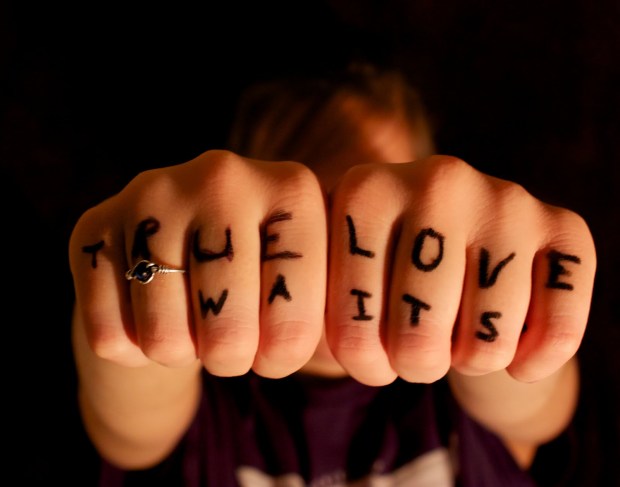
True Love Waits

I am a twenty-something single woman.  I grew up attending a southern Baptist church with my parents and my siblings. When I was 7 years old, I came to know Christ as my Lord and Savior.

I have a long history of sexual confusion that dates back to the fourth or fifth grade when I kissed my best friend at the time. Passionately. After kissing her, I felt extremely guilty like I had committed some terrible sin. I cried for days and told her “We can’t do that anymore, I think God doesn’t like it”.  I tried talking to my mom about it.  But when I told her, Mom just said “as long as you guys aren’t doing it anymore, it’s okay”.

Really? Was it? How did she know? Was I normal? I wish she had sat down with me and asked me WHY I had done that. Maybe explained to me WHY it wasn’t okay. I never knew why. I just knew it was “wrong” and it made me feel guilty.

Unfortunately, this became a cycle in my childhood. The following year I had a different best friend and we did the exact same thing. I didn’t know why I kept doing it if it was wrong. But I also didn’t understand why it was wrong in the first place. I felt like something was wrong with me.

***

That wasn’t the first time I’d tried talking to my mom about sexuality.

Me: “Mom what is sex? What does sexy mean? I heard it on Happy Days”. My best friend and I both thought that if the word was “sex-y” then root word had to be “sex”.

Mom: “I have a book about it in my closet somewhere. We will talk about it later”.

But later never came. That was third grade. We never talked about it again.

Instead, on the ride home from a long road trip, my cousin took out a notebook and drew pictures for me of the male and female body and explained to me what her mom had explained to her.

I finally understood. Sort of.

I went back to school eager to share my new-found knowledge with my best friend. “Hey Amanda, I know! I know what it means!” I yelled up to her from the ground as she climbed the monkey bars. She looked down at me and curtly said to stop talking about it, because she knew what it meant too.

We were never friends again. The shame I felt was endless.

These experiences early-on taught me that sex was something to be ashamed of. After all, the mere knowledge of it had cost me a friendship.

***

In the 6th grade I read a purity book with a friend. The author explained that if you had “experimented” with friends in the past, it was just an experiment. It didn’t mean anything. Despite what the book said, I felt different about my experience. I hadn’t even known about sex when I had first started this pattern of kissing my friends, but I still wasn’t sure that this wasn’t something more.

We never talked about it at home and the only thing my church really taught me about sex was “True Love Waits.” Apparently that was the thing to do. When I was in the 7th grade everyone my age was so excited to pick out his or her purity ring, have the ceremony, sign the card, keep it forever, and one day give it to their future spouse.

For weeks leading up to the commitment ceremony we heard lectures about how to maintain purity, how to keep your distance from the opposite sex, and what you can and can’t do with your boyfriend/girlfriend. I remember a boy raising his hand and asking in the middle of our group gathering, “Is masturbation okay?” The entire group silenced to a stunned hush. A few giggles scattered throughout the youth group. We were embarrassed for him.

Even here at church in a class about sex, there were questions we were supposed to know better than to ask. There were words and thoughts that were off-limits entirely. He had said a bad word and that was wrong.

In a private girls-only session, I also asked the wrong question. One girl raised her hand “I know we shouldn’t sleep with our boyfriends, but can we at least lay down with them?” I remember thinking Why would that even be a problem? Why would you want to have sex if you don’t want to have babies? That question came flying out of my mouth and the older kids looked at me like I was hilarious.

No one even answered me and I just didn’t get it. I felt so different.

***

Around the same time as the True Love Waits Commitment at church, we had the “sex talk” at my private Christian school. We learned abstinence again. “Just don’t do it.” But when the main teacher left the room to take a call, the assistant teacher looked around and pulled out a banana. “I know you girls are doing it anyways,” she said, “I’m not stupid, so I will show you how to use a condom.” And there, in the room, she pulled out a condom and placed it on the banana.

Girls giggled around the room, but I just felt embarrassed. Humiliated. It was becoming more and more obvious how different I was from the rest of them. Sex was something for marriage. Between a man and a woman. I believed that with my whole heart. Was I the only one who intended to keep that commitment?

***
When we were 16  my best friend got her first boyfriend. She stopped calling and hanging out with me. I sat in the car and cried to my mom, “Why can’t we still be friends even though she’s dating him?” My mom replied “She can do things with him that she can’t do with you. She can kiss him” She chuckled.

In the back of my mind, I cried, She can kiss me too!  I instantly felt shame. I caught myself in mid-thought, willing myself to NOT say it. Although it had been a long time since those elementary school kisses, those feelings had never entirely gone away. I believed I was wrong, but I still didn’t know why. And I couldn’t ask anyone. I just didn’t feel safe.

***

At the ripe age of 18 I finally got my first boyfriend. My past of kissing best friends and girls was completely behind me and I thought I had finally moved on to how I was supposed to function. I finally felt normal.

But in my relationship with this guy, I felt so uncomfortable. I was constantly being reminded by all my friends and mentors from church to “keep my distance,” not to get too physical. They explained that as a girl, it was my job to set the boundaries in the relationship, because boys can’t control themselves. I felt afraid and anxious and uncomfortable being with him.

There was so much pressure and stress and fear and shame. When I went to college we broke up.

***

Then college happened. You know what I mean, don’t you? The world of academia, the world of independent thought and constant combative skepticism that takes hold of you. I took a Bible class that left me spinning with confusion about God’s Word and His truth. The first day I entered the classroom, the professor stood in front of class, “This” he said holding up the precious scriptures I had clung to my entire life, “has many errors in it.” He let the Bible drop to the ground. I watched it fall as the slap it made against the floor echoed through the room. It rocked my world.

Needless to say by the end of that semester, I no longer believed the Bible. Intellectually, I couldn’t trust it. I didn’t know if I could trust God. I became lost and confused.

Meanwhile, I discovered alcohol, which allowed me to let loose. I drank and partied and yes, I kissed people.

Girls. Only girls. I was still uncomfortable with men. The messages I had been taught growing up were seared into my brain, and they had left me confused. It felt wrong to be with men. They couldn’t control themselves and it wasn’t safe. I knew it was wrong to be with girls too, but every time I had asked why, no one could explain it to me. “It’s just wrong,” they said. “God says so.”  I was afraid to bring it up anymore.

It wasn’t long before I identified as lesbian and started dating. I struggled heavily and wrestled with this identity for nearly two years. During that time I dated a girl for 10 months. We were sexually involved. I remember feeling sick the first time. On my way to church the next morning I pulled over and vomited. I hated myself. I felt ashamed. I knew it was wrong, but I didn’t know why and I felt like I was the only Christian in the world who was experiencing this. I felt too ashamed to talk.

Still, I attended church. I just kept it all inside. This came naturally to me. I grew up attending a Christian school and showing up for church every Sunday and Wednesday. I was told that you don’t leave your dirty laundry out. You don’t wave it around. You don’t tell people about your broken bits. You don’t talk about personal things.

My sister got drunk on Saturday night? We don’t talk about it. Even though we believe drinking is wrong.

My brother punched a hole in the door? No one mentions it. Even though it makes me afraid.

My Uncle got caught doing drugs? Don’t tell anyone. It’s no one’s business.

The message I’d received my whole life was this; “Ignore it and keep going to church. As long as you go to church, you’re doing okay.” So I kept going to church.

I was so confused. Sexually. Emotionally. Mentally. Spiritually. I felt like I was being beat up every Sunday when I showed up to church. My girlfriend looked at me one Sunday morning and said, “Don’t go, babe. It ruins you.”

But she was wrong. It saved me.

My church friends eventually found out. Living a double life caught up with me, I guess. They approached me. Slowly, over a period of 6 months, they met with me… and Christ worked in me, despite my rejection of Him.

The last meeting we had was a surprise “come to Jesus” meeting. “This is the last meeting we’re having with you, but we love you.” They said, “We will be here to walk you through this when you come back to Him.”

That night when I got in my car I surrendered to Jesus. I broke up with my girlfriend later that week. After we broke up, I lay on the floor sobbing “WHY?” and listening  to the relentless rhythm of my cries echoing down the dorm hallway. I felt so broken and so angry.

And I came back to church….

Three years have passed since that time. It has been the most painful, honest, broken, excruciating three years of my life; yet for the first time, I have had open, honest, and loving communication with my church family about Sex and Marriage. About Shame and Sin and Trust. I feel open and honest. And my shame diminishes every time I face the King.

I’ve finally been able to ask the questions I’ve wanted answers to. I’ve learned why same-sex relationships are wrong. I have been mentored closely and I’ve had to let God change my thinking. How God made me to follow Him and why He desires purity from me are still hard things to accept sometimes.

My church family, my sisters in Christ, have formed a shield of safety around me. They have walked with me arm in arm through my questions, through my temptations, through my anger, and through my unbelief. There hasn’t been anything that I am not allowed to ask them. They’ve told me in love when I’m wrong and in love they’ve led me to His cross. They’ve helped me learn what it means to take my thoughts captive. They’ve walked with me and helped point out the lies that I’d believed for so long about sex, about marriage, and about men.

I’ve let Christ into the core of my being. He is reshaping my sexuality for me. I’m no longer defined by whom I’m attracted to because He has given me a new heart and a new identity.

I’m His child.

He is my father.

He is faithful. He is true, as is His word….And He loves me.

I can’t get over it.

I can’t get over His grace.

So scandalous.

_________________________________________________________________

You can read the previous two posts in this series HERE and HERE. If  you would like to contribute to this series, you can email me at lily.e.dunn at gmail.com.

You are Not a Gift to be Unwrapped: A Letter to my Daughter (Guest Post by Briana Meade)

Briana BioFor the second part of my Sex and the Church series I am so honored to have my dear friend, Briana Meade contributing this beautiful letter to her daughter. I am so moved by her vulnerability in this post. Briana and I went to Wheaton College together and even did a study abroad together one summer, but somehow didn’t really connect until we both began writing years later. I am a huge fan of her writing and an even bigger fan of her heart. Briana is currently working with her agent on a book about millenials and blogging at http://brianameade.com

If you missed the first post in this series, you can find it here. You can also subscribe to or follow this blog (see the Subscribe via Email box on the side) to make sure you catch the rest of the awesome guest posts in this series. I am also still accepting guest posts. If you have a story you want to tell you can email me at lily.e.dunn at gmail.com.

*****

Dear Zoe,

I want to tell you a story. It starts out with a group of boys and girls. They are handed thick pledges that look like business cards.

“I promise God…” the cards begin.

There is a 5th grader in the corner. She has sparkly tennis shoes. She bites her lip in concentration, doodles sparkly pen onto the card. She whirls her signature carefully, dotting the “I” with a little star.  She giggles and turns to the girl next to her.

I remember exactly where I was. It was an air-conditioned room with pillows strewn on the floor. I had a crush on the boy next to me—another fifth grader with a cowlick haircut. I determined, in my heart, way before I knew the obstacles I would face, that I would meet my husband at the altar. That I would be proud.

That same day, I was told that I was a gift, waiting to be unwrapped. I imagined myself as a silver present with a droopy silk pink bow. What a beautiful gift I would be. My future husband would round the corner to see a shiny treasure bound with perfect execution, tiny triangles folded and taped on the edges. That was virginity. Me wrapped in a box.

This was the beginning. Over the next eight years I learned more lessons from the church – that my womanly body was dangerous and shameful and needed to be hidden.

That my body was a commodity – a wrapped gift, a perfect rose, an un-chewed stick of gum. And along with that, that I had no agency in the matter of my sexuality. It was something that would be “opened” by or “given” to someone else.

That there are two kinds of girls in the world –girls who adhered to modesty/virginity requirements and those who didn’t. That those girls would be separated like grain from chaff. That this was the ultimate value judgment. And we did not discuss what it meant in cases of sexual abuse and rape for girls to be “unwrapped” without a choice.

I lost my virginity at sixteen. I heard every single one of these messages communicated loud and clear. But I also heard very gentle messages from my parents that were affirming and compassionate.

This was a message I received from the church—your body belongs (as a gift) to your future husband, your parents, Jesus, the church.

I want you to know, darling, that this was a lie. My body belongs to me. It is me. I am my body. My self cannot be separated from it.

You are a beautiful gem. Your body is yours. That doesn’t mean that you don’t have to learn to steward it but you are not a gift for any human being, nor will you ever be. You are not a bouquet of roses or dahlias or sunflowers waiting to be “given” away. You are purely, ultimately, only you.

You with your ability to jump a foot in the air. You with your twirling on the tile at your daddy’s work like a ballerina. You with your laughter and underwater bubbling in the soapy tub. You as a stomping teenager. You someday as a spectacular, beautiful adult with a body.

The real gift, my dear, is sex. Sex is the gift, waiting to be unwrapped. Sex is lying on the table wrapped in blue paper hearts, waiting for the perfect occasion.

If you open sex early, you are still loved. You are still body. You are still you.

If you open it on time, the celebration will be easier and it will be good.

This gift is for you, dear. When you open it early, it is often disappointing. It diminishes the power of perfect timing.

Could it still be disappointing if you wait to open the gift? Maybe. I can’t promise you anything. It’s entirely possible.

Wrap your heart around the receipt of the gift and the true giver. That celebratory day will have streamers and confetti and cake.

You’ll join the person you love the most, who has shown up to enjoy your gift with you.

This man who will carry the treasure side-by-side—from apartment to house—for the rest of this remarkable short life.

What a holy, surprising, and beautiful adventure.

It is good, this gift that God has given you of sex.  I’m sorry if anyone’s told you differently, but you are not the gift. Your body is not the gift.

Don’t let anyone tell you anything else.

_______________________________________________________________________________

Briana Meade is a twenty-something mother of two toddlers who is passionate about singing “Royals,” Starbucks Salted Caramel Mochas, and learning that she is not a special millennial snowflake. Though not in that order, exactly. She writes at http://brianameade.com  and tweets @BrianaMeade.