
This year has been a wild one for all of us. Unsurprisingly, a lot of our reading lives have been affected by 2020. I have friends who have read less than ever before, and I also have friends who have read more than ever before. I’ve been on the latter end, using reading as a form of escape from all of the things that feel too much about the world right now. In fact, I just finished my 200th book of the year. With 9 days left to go, we’ll see where I end up after the holidays. Even I don’t really know how I managed to work a full-time job and raise an infant while reading that much apart from admitting I have no social life and I don’t watch TV.
With such a large pool of books to choose from, it seemed a little overwhelming to write about my best books of the year all in one post, so I’m splitting my posts into categories starting with General Nonfiction and Memoir.
This year I read 44 nonfiction books and memoirs. Most of these were genuinely 4 or 5 star reads for me. One nice thing about reading so many good books is that you know the ones that stand out even among other 4 and 5 star reads were really something special.
Best Nonfiction
How to Be an Antiracist by Ibram X. Kendi
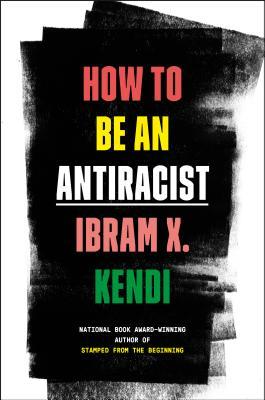
I read quite a few books this year about institutional racism and systems of oppression and injustice. This book is a fantastic place to start your antiracist education. One of the central ideas is that it is not enough to not be racist, we must be actively antiracist. Being racist or antiracist is not defined by a single action or belief, rather we are all constantly making choices that are either racist or antiracist and we all have moments of being racist as well as moments of being antiracist. Another major argument is that racism is a problem with policies and institutions as much (or more) than it is a problem with individuals. We are complicit in racism when we uncritically support and benefit from policies that marginalize others.
The New Jim Crow: Mass Incarceration in the Age of Colorblindness by Michelle Alexander

This is the seminal text for more of a deep dive into mass incarceration and particularly how the War on Drugs and unfair sentencing laws have effectively been used to subjugate a generation of Black and Brown people (mostly men). It is incredibly well-researched and detailed. It is impossible to walk away from this book without knowing that this system as it exists today is deeply flawed and inherently racist.
Hood Feminism: Notes from the Women a Movement Forgot by Mikki Kendall

If you consider yourself a feminist but you haven’t read this book, stop whatever you’re doing and go read it. This is all about intersectional feminism, and specifically reframing issues we don’t often think of in conjunction with feminism (i.e. food security, poverty, medical care, racism) as inherently feminist issues. I learned so much from this book, but in a way that was very accessible and engaging.
Invisible Women: Data Bias in a World Designed for Men by Caroline Criado Perez

This was equal parts fascinating and infuriating. It was honestly staggering to be confronted with the overwhelming number of ways women’s specific needs are not taken into consideration in so many everyday parts of society from public transportation schedules, to medical drug trials, to car safety, to the fit of standard uniforms for many jobs, to the lack of adequate maternity leave and its effect on women’s ability to be in the workforce.
One of the biggest takeaways for me was that women do 75% of the world’s unpaid labour (i.e. housework, cooking, grocery shopping, childcare, etc.) which are necessary parts of human life for men and women alike. Not only is this work often unacknowledged, but it is actually penalized in dozens of ways.
This book is chock full of facts and figures, and while it may be difficult to retain all of it, the overall message is clear – women need to be represented in decision making at all levels. Because even well-meaning men simply don’t have the same concerns and considerations. The world as it is is designed by men and for men, and that has to change.
Atomic Habits by James Clear

As far a self-help book goes, this hit all the right notes for me. It was informative, but also super practical with clear examples of how to implement each principle in your everyday life regardless of which habits you are trying to make or break. The tone is conversational and Clear comes across as confident and knowledgeable without being condescending. I did have a few moments when he was writing about his own method of self-reflection on his habits and goals that left me feeling a little like, “I don’t think that level of intensity is for me,” but as it wasn’t a major part of the book, it didn’t take away from the overall message.
Best Memoirs
The Complete Persepolis by Marjane Satrapi

I’m so glad I finally read this. I’m not super well-versed in graphic novels, but I’m starting to really love graphic memoirs. Given that it is not a medium I read often, I was amazed by how impactful this was. When I wasn’t reading it, I was thinking about it.
The art style is simple, almost cartoonish, which I felt underscored the seriousness of the topic and suited the comedic, sometimes sarcastic narrative tone. This book gave me invaluable knowledge of the history of Iran during and after the Cultural Revolution as well as the experience of those living under the regime (particularly those who weren’t drinking the Kool-aid). I loved it. My only complaint is that the ending felt abrupt.
On Living by Kerry Egan

This memoir is about Kerry Egan’s work as a hospice chaplain walking beside people who are dying and their families as they grieve. If you’re thinking that sounds super depressing, you’re not wrong. But it’s also remarkably hopeful. Full of simple, beautiful insights into what it means to live and to love and what we can learn by giving others the space to talk. It is a memoir about our shared brokenness as people, but also about the gift we can offer one another by recognizing the inherent dignity in each human and the importance of every story. This is such a beautiful, moving little book.
Inferno: A Memoir of Motherhood and Madness by Catherine Cho

Inferno tells the story of Cho’s harrowing experience with postpartum psychosis, her stay in an involuntary psychiatric ward, and her recovery, but it is so much more than that. The narrative flashes back and forth between the present timeline where she is in the psych ward and back through the events of her life that brought her to this moment.
The writing is excellent. It’s descriptive and elegant without being bogged down by lots of meaningless fluff added in to sound more poetic. What really blew me away was how well crafted it was. I read a lot of memoir and have occasional aspirations to write one myself someday, and the thing I find most difficult is how to identify the singular moments and scenes out of a whole life that will illustrate exactly what you mean to say. This book does that brilliantly. Every scene, every piece of dialogue, every snippet of Korean mythology or folktales served a precise purpose.
This book is riveting. Terrifying, electrifying, and compulsively readable. I genuinely could not put it down.
In the Dream House by Carmen Maria Machado

This raw memoir about an abusive relationship is equal parts difficult to stomach and deeply moving. The structure and the writing is immaculate. It manages to be inventive and imaginative and yet easy to understand. It’s very emotional, but feels like it’s been written from a place of healing and reflection rather than a place of active pain and anger.
Machado sheds a light on the reality that abusive relationships can and do exist between same-sex couples in the same way they do within heterosexual couples. One thing that really stood out to me was the fear the author and others in the LGBTQ community seemed to feel that exposing abuse within gay or lesbian relationships would open new doors of hatred and criticism. It shouldn’t have to be said that abusive dynamics can happen within any kind of relationship and it’s obviously not a reflection of ALL heterosexual relationships or ALL homosexual relationships. This book is a tremendous accomplishment and I cannot wait to read more from this author.
A Knock at Midnight by Brittany K. Barnett

This book gets 5 stars for the content which is important and moving. Barnett is a young black attorney who gave up a promising career in corporate law to petition for clemency and reduced sentences for incarcerated individuals serving unjustly harsh sentences for minor drug crimes. The writing is fine – very straightforward-but the individual stories and the collective argument they make for major justice system reform is compelling. I would highly recommend this as a companion read with The New Jim Crow: Mass Incarceration in the Age of Colorblindness since it is primarily about individuals affected by the issues brought to light in that book. I would also recommend it for fans of Bryan Stevenson’s Just Mercy.
I would love to chat about any and all of these books as well as anything you read in these categories that you really loved and would recommend! Be on the lookout for my favorites in literary fiction and genre fiction over the next week or two!


 This Tender Land
 An Elderly Lady is up to No Good

 Miracle Creek
 Home Fire
 Cutting for Stone
 Where the Crawdads Sing
 American Predator


 This book, man. It is not for the faint of heart. This book tells the life story of Cyril Avery from birth to death. Cyril Avery is born to an unwed mother in rural Ireland and adopted by an eccentric writer and her husband who really know nothing about children. As Cyril grows, we meet a cast of richly drawn characters who impact Cyril’s life, for better or worse. This book is largely focused on the horrible treatment of gay men in Ireland (and elsewhere) in the late 20th century. Because of that, some parts are very hard to read and some of it is very sad. There is also a significant amount of sexual content in the first half of the book (just fair warning if you don’t like reading that). However, the characters are amazingly vivid, unique, and quirky, and in the end, I can’t describe this book in any way other than beautiful, deeply moving, and unforgettable. The book ends on a sweet note which might strike some readers as too convenient, but I felt set up for it from early on and found it satisfying the that it ended in a place of peace.
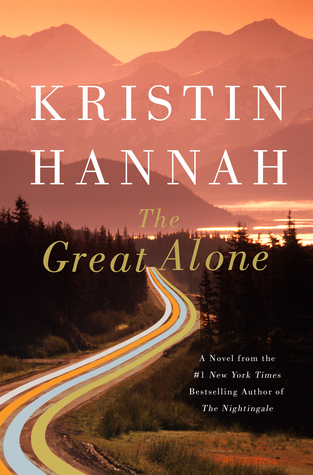 Hannah showed up on everyone’s radar after
 This memoir has exploded onto the scene and (deservingly) gained a lot of attention. Growing up in a fundamentalist, survivalist family (again somewhat a la The Glass Castle) , Tara Westover had no access to formal education. Taught that western medicine was evil, she learned to use herbs and natural remedies for everything from childbirth to severe burns. Violence and control were part of every day life, but they were all that Tara knew. At 17 she became determined to do things differently. Having never been to school, she taught herself enough to gain entrance to Brigham Young University where she learned for the first time not only math, science, and literature, but about the history of her own country and of world events (like the Holocaust) which she had never even heard of. Exposure to the world of learning sparked a hunger in her for all that she did not know and went on to study at Harvard and at Cambridge. As she gains knowledge and understanding about the world and her own upbringing, she is driven to try to forge a way back to her family, so many of whom are still living in a toxic environment.
 Kate Bowler is a professor at Duke Divinity School who has devoted her professional career to studying the prosperity gospel. At 35, she has is just hitting her stride in her career and has finally become a mother after years of trying. Then she is diagnosed with stage IV colon cancer. As she navigates the grief and pain of illness and facing her own mortality, she finds herself drawn to the reassurances offered by the health and wealth doctrines of the prosperity gospel and comes to an understanding of why people cling to these beliefs even when they seem so obviously false. As someone who grew up in an environment I would call “prosperity gospel adjacent,” I was moved by this memoir of wrestling with the harsh reality of death within this specific context. Bowler’s writing is funny and witty and heart-wrenching all at once and this book will stay with me for a long time.
 I don’t have the words. Part of what moved me so much about this book is that it was so emotionally resonant to my own family history, even though I grew up as a very conservative Christian rather than Muslim. I particularly enjoy/connect to stories that show how different family members experienced the same event in different ways. This book tells the story of an Indian-American Muslim family and their individual struggles with belonging. Parents, Leila and Rafiq have tried to instill their traditions and values in their children, but each of their three children has had to forge their own path. Leila and Rafiq have had to make difficult decisions about whether or not they can accept and embrace their children when their decisions don’t align with Leila and Rafiq’s hopes for them. The book opens at the wedding of Hadia, the family’s oldest child, who has chosen to marry for love rather than have an arranged marriage. The family are collectively holding their breath to see if the youngest sibling, Amar, will come to the wedding after being estranged from the family for three years. It’s a novel about the ways that families try (and often fail) to love each other well, and in that way, I think it is something we can all relate to. I think this book is a great choice for anyone who loved Celeste Ng’s













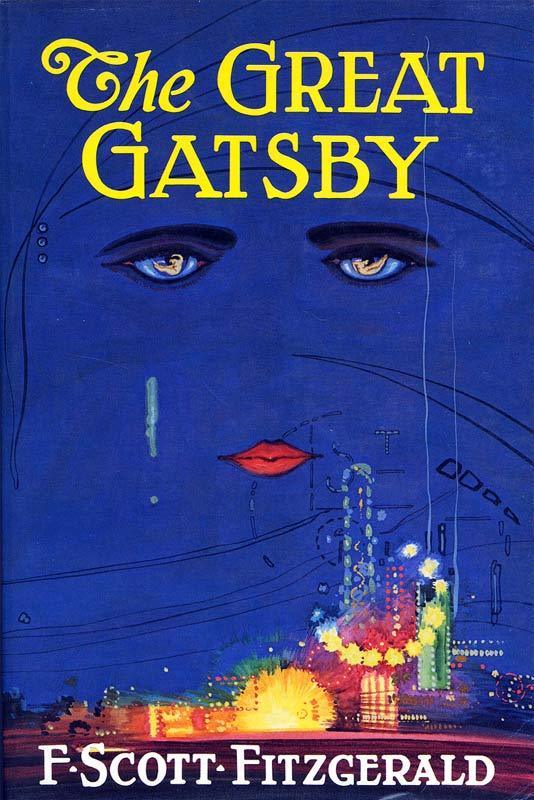
 it I’m transported to this beautiful, magical summer that’s as intoxicating as it is tragic.





 credibly Close
 Lily Ellyn