
Yesterday, I blinked back tears as I handed in my notice. The principal in her smart black blazer and Adidas sneakers stopped me and said,“No sad! You make the children here very happy. I wish you and your family to be happy. Big hugs.” Her words were spare and earnest, her kindness both a comfort and another crack in my breaking heart.
On Facetime, friends and family say, “I-can’t-wait-to-see-you,” and, “You-must-be-so-excited.” And I wonder, Must I be?
Of course I want to see them. This family, these friends—they are the entire reason we are returning to the U.S. Because we’ve found ourselves on the other side of the world with this vibrant, gorgeous, hilarious, child who has never even met most of her family. Many of our dear friends back in the US are neck-deep in the daily liturgy of keeping tiny humans alive. We always dreamed we’d do this part together with them. Because we believe that we cannot do it alone. We believe in the value of raising children in a community who will love our children like their own. And we want our daughter to know and be known by the people who have shaped us.
I believe all of these things to the core of my being. And yet…I don’t know how to explain that this does not feel like coming home so much as it feels like leaving it.
I have faith that a year from now, life will be sweet in ways I can’t even foresee right now. But believing that does not make this transition any easier.
We have done the picking up and moving thing so many times now, but each time it’s been harder. This is without a doubt the hardest one yet. I love this city. I love the mountains and the harbor and the islands and the beaches, the neon signs and the brilliant skyline. I love the dim sum and the trolley and the markets and the egg tarts. I love the women in their carefully curated, perfectly tailored outfits, each piece costing about as much as my entire wardrobe. I love the elderly people who play old Chinese pop music aloud while they hike. I love that my friends here are from all over the world, and that they constantly challenge me to think differently about politics, priorities, faith, and what deep friendship looks like.
I love all 450 sq ft of the home that we’ve built together. First as a family of two and then swelling and stretching to fit first Juniper and then our beloved auntie, Beverly. It frightens me to think of taking Juniper away from the only home she has ever known. It makes me physically sick to think of taking her away from Beverly, both for Junie’s sake and for Beverly’s. They adore each other.
Most days, sad does not feel like a big enough word for what I feel. It’s something closer to grief. It is a visceral pain in the place where my ribs join my sternum, by turns sharp and dull, like a cough drop lodged in my trachea, difficult to breath around. For more than a year now we’ve talked and prayed and talked and prayed about this decision. Even after we’d made a decision, part of me thought if I just ignored it, it wouldn’t really happen. And now it’s six weeks away.
So I move through the motions. Take pictures of items to sell online. Force myself to respond politely to a dozen messages trying to negotiate a discount on the pieces of my life. Force myself not to scream, “Don’t you understand? This is what I wore while I carried my daughter (safely inside my body) through a year of tear gas and riot gear and fire. And this? This is the mat where my baby learned to roll over, where she learned to bat at toys, her fingers splayed wide like a starfish, where she smiled at me for the first time. These moments were holy. No, you cannot have a discount on my existence.”
Today there was a moment when the grief hit me so hard it took my breath away. And then I thought, I don’t want to spend my last precious days here being miserable. And I thought of an essay by Andre Dubus that I first read eleven or twelve years ago. At the age of 49, Dubus was in an accident that resulted in the loss of one of his legs and paralysis in the other. He had stopped to assist another motorist who had been in an accident and, while pulling the survivor out of the wreckage, he was hit by a passing car. In “A Country Road Song,” Dubus writes about his memories of running, not with bitterness, but with profound gratitude.
“When I ran, when I walked, there was no time: there was only my body, my breath, the trees and hills and sky…I always felt grateful, but I did not know it was gratitude and so I never thanked God. Eight years ago, on a starlight night in July, a car hit me…and in September a surgeon cut off my left leg… It is now time to sing of my gratitude: for legs and hills and trees and seasons…I mourn this, and I sing in gratitude for loving this, and in gratitude for all the roads I ran on and walked on, for the hills I climbed and descended, for trees and grass and sky, and for being spared losing running and walking sooner than I did: ten years sooner, or eight seasons, or three; or one day.”
“A Country Road Song” Meditations from a Movable Chair
I remembered this passage and I thought, If I cannot stop the grief, let me sink into the gratitude as well.
And so. It’s time to mourn and to sing in gratitude for Hong Kong. For loving this place and these people. For the mountains and the beaches, for the monkeys and the pink dolphins, for the dazzling skyline, for the temples with their countless golden Buddhas, for my students, for my coworkers, for my friends, and for the family I grew here. I sing in gratitude for all of this and for being spared losing it any sooner than I am: two years sooner, or nine months, or three; or one day.


 My Plain Jane by Cynthia Hand, Jodi Meadows, and Brodi Ashton. I had been waiting for this book ever since I read the trio’s first book, My Lady Jane, last year. In this re-telling of Jane Eyre, Jane is not a fictional character created by Charlotte Bronte, but instead is a real life friend of hers whose Charlotte uses as the inspiration for her classic novel. Only this Jane can see dead people. It is every bit as silly and delightful as My Lady Jane and I definitely recommend you listen to the audiobook.
 I can’t believe I only just got around to it since it is about one of my secret fascinations – fundamentalist polygamist cults. The thing that stood out to me in listening to this compelling account of the history of fundamentalist Mormonism was how similar so much of the language is to what you would hear in a mainstream American evangelical church. For example, I can’t tell you how many times in my life I heard someone say, “I prayed about it and I felt the Lord leading me to do x, y, z.” Many of the stories in this book have that same language, but, you know, the thing the Lord is leading them to do is marry 13 year olds or slay the infidels. So there’s that. Seriously though, this book is fascinating and done in Krakauer’s typical thorough and engaging style.
 La Belle Sauvage (The Book of Dust) by Philip Pullman. It was great fun to dive back into Pullman’s world and to get more of the back story on Lyra, the heroine of the His Dark Materials trilogy. Pullman’s storytelling was every bit as compelling in this book as it is in the original trilogy, though I do have to dock it a few points because I felt the last third of the book dragged on for too long.
 Unthinkable: What the World’s Most Extraordinary Brains Can Teach Us About Our Own by Helen Thomson. This book was fascinating. I’m not a scientist, so I appreciated how accessible this was for an unscientific audience. Thomson traveled the world meeting with people with rare psychological disorders and talking about those disorders both as they experienced them and in terms of what doctors and researchers had learned about the brain by studying the brains of these unique individuals. Her subjects include a man who believed he was dead for 3 years, a woman who constantly hears music that isn’t there, and a man who believes he turns into a tiger. In my opinion, Thomson was able to write about these people as real humans instead of distilling them down to their condition.
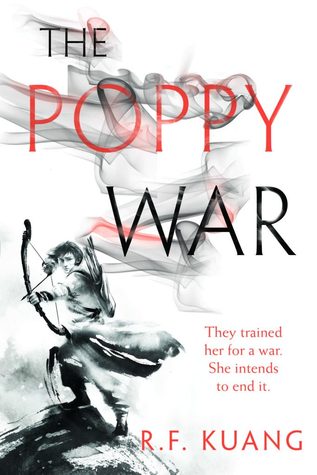 reason. If you are looking for a fantasy novel you won’t be disappointed by, look no further. Rin is a poor, dark-skinned war orphan with no prospects, but after receiving the highest score in the Empire on the entrance exam for the empire’s top Academies, she earns a spot at Sinegard, the most elite military academy. There she learns the art of war and discovers her own unique gift in shamanism, widely believed to be a dead art. When war breaks out, Rin learns the true cost of her gift and what it might take to save her people. I will say, there is a lot of descriptive violence and brutality on the page in this book, but it’s fantastic. And it’s the first in a series so there will be more to come!











 Irish woman because she was Irish. They sent her a letter that said, “We cannot hire you do to the alcoholic nature of your kind.” Which is shocking on its own, but is ten times more ridiculous if you know anything about Korean drinking culture in which it is standard for businessmen to be passed out drunk together on weeknights. During last year’s ebola outbreak, a bar in Seoul put up a sign that said, “Due to ebola, no Africans are allowed here.” As though you could contract ebola just from being African. All of these things can be frustrating and disheartening as I have seen them being passed onto the next generation.







 Lily Ellyn