Vulnerability

I Woke Up Like This: Why I’m Not “Faking It Til I Make It”

Some days you wake up and feel like you’ve forgotten how to “adult.” You burn the toast and put on two different socks and let your kid go to school without brushing his teeth. Your soda explodes all over your pants, you’ve got deodorant on your shirt, and you realize after your big presentation that you had lipstick on your teeth the whole time.

You try to “fake it til you make it,” because you’re embarrassed to admit that you don’t have it all together.

Let me break the ice for you.

I don’t have my s&*% together.

I woke up this morning and made a pot of coffee, but forgot the coffee grounds and ended up with a pot of yellowish hot water.

I fill an old milk jug with water every morning to take to school with me for the day. This morning I poured water into our actual milk jug which was still half full of milk.

I lost my thermos this morning. Twice. It was in the same place both times.

A few hours ago I sent Jonathan a message about a company that was “highering.”

It has taken me three hours to write this post because I’ve apparently forgotten how to string words together into sentences.

I think it’s safe to say that I did not bring my “A” game today.

And that’s OK.

Because we are worth more than what we bring to the table. Because real life is messy and imperfect in a thousand ways, but that’s what makes it REAL.

I don’t want to “fake it til I make it.” I want to change the definition of “making it.”

Some days, “making it,” is simply showing up. It’s about presence, not perfection. It is about being engaged with where you are and what is in front of you today, not about having all your ducks in a row. As Glennon Melton says, “A good enough something is better than a perfect nothing.”

Some days, “making it” is choosing to make your haves count for more than your have-nots.

Some days, “making it” is extending grace to the people who are on your last nerve, or extending grace to yourself because you’re human, and humans are pros at making mistakes.

Some days “making it” is admitting, “I don’t have it all together,” and using that as an opportunity to make much of God and the way he sustains you, even in your brokenness.

Some days “making it” is acknowledging that you don’t do it on your own, that you can’t do it on your own, and that there are people who pick up your slack, who forgive you when you lose it, and who love you even though you ate all of the ice cream (sorry, Babe!)

I don’t have it all together and I’m not going to pretend that I do. But I AM making it. Moment by moment. Day by day. Grace by grace. No faking required.

Image credit: Lifeloveyoga.com 

New Year: My One Word for 2015 and Why I Can’t Leave 2014 Behind

In Korea people don’t stay up until midnight to ring in the New Year. Instead, they get up in the middle of the night and they hike a mountain. They climb through the dark, snowy pre-dawn hours and when they reach the top they stand with their faces to the sky to greet the first sunrise of the New Year.

What a contrast to how we in the West often enter the New Year – stumbling out of bed at noon, tired and quite possibly hungover. For many, January 1st is a day of recovery. We spend New Year’s Eve celebrating the ending of something and the beginning of a new thing. We bombard the internet with reflections on the previous year. Even the less introspective among us take a moment to declare the past year, “the best” or “the hardest” or “the craziest” year of their lives.

I can never bring myself to make those kinds of statements. Because I don’t believe a year can ever be just one thing. Life is never just one thing, and what is a year besides a microcosm of an entire life?

Elaine’s comment on my Year in Review post explained this perfectly. She said she was struck by “how every year is a little life – with birth, death, family, love, travel, new things, familiar things, difficulties and good friends all swirling through it.” I thought this was profound because of what it says about the year we’ve just lived and what it means for the year ahead.

2014 had a life that is both self-contained and part of a larger whole. Entering the New Year doesn’t mean we’ve finished with the old one. We can’t discard it like a worn-out pair of shoes. We carry our past years deep inside our bones. They make up the very DNA of our lives.

The person I was as a child is markedly different from the person I am today, but I could never say I’ve left her behind entirely. You never completely stop being the person you were at 8 or 18 or 28. You carry all of these selves inside of you and they shape who you become. In the same way, we each carry dozens of lives with us –the lives we lived in our previous years – and these lives become part of our future.

But carrying the past year with you doesn’t mean you have to be weighed down or shackled by it.

In the past, I’ve looked back on my previous year and made some promises. I’ve set goals for the year ahead that were largely lists of how I would do better, be better than I was the previous year. I used to think that doing this was a way of leaving the previous year behind, but maybe all that is is a way of letting the previous year enslave me.

I don’t think we have the choice to throw out the previous year or any year of our lives. But we do have a choice about how we let it shape our lives. I can either look at the previous year and allow my mistakes and disappointments and perfectionism drive me to guilt-ridden resolutions, or I can look at the previous year and simply embrace it all, both the proud moments and the parts I wish I could undo, thank God for them, and let them be part of my story.

This year, instead of making a list of resolutions, instead of thinking of all the ways I failed in the last year or all the things I want to do better, instead of making 2015 a giant to-do list, I’ve decided to join the many people I know who choose One Word. The idea of One Word is to get rid of your list and to choose just one word to focus on for a whole year. “One word that sums up who you want to be and how you want to live.”

I’ve been thinking about my word for several weeks. At first I thought about “Belief,” because it’s something I desperately want more of – in God, in myself, in the world. And then I thought about “Present,” the practice of being fully engaged where I am instead of constantly thinking of the next thing or the last thing. Both of these are important to me, but when I really considered what summed up who I want to be and how I want to live one word rose to the top. My word for this year is Wholehearted.

Wholehearted is about sincerity and commitment. For me this means authenticity in my life and my writing. It means commitment to continue my faith-wrestling and to asking sincere questions. Being Wholehearted is also a commitment to courage, compassion, and connection. It is the courage to be vulnerable despite the risk, the compassion to love other people well and to extend grace quickly, both to myself and to others, and the choice to develop genuine connections with others. Wholeheartedness means committing to being fully present, to showing up for every day of my life instead of checking out when things are hard or boring. It means engaging with Today and believing that every day is a gift. And Wholehearted means believing that I am worthy of love and belonging – not because there is anything especially great and deserving about me, but because we are all worthy of love and belonging and because we can’t fully accept love and belonging unless we believe we are worthy of it.

This year I want to step into the New Year with intention. I want to turn my face towards the sun and say, “I’m here. Whatever you have to offer, I am fully present and ready to receive it. The births and the deaths. The joys and the fears and the disappointments. The beauty and the brokenness. The faith and the doubt. The longing and the contentment. The adventure and the mundane.” May 2015 be a step on the journey towards Wholeheartedness.

Happy New Year.


Image Credit: Iamidaho at Deviantart.com

Does It Have to Be Public to be Real? Social Media And Authentic Community

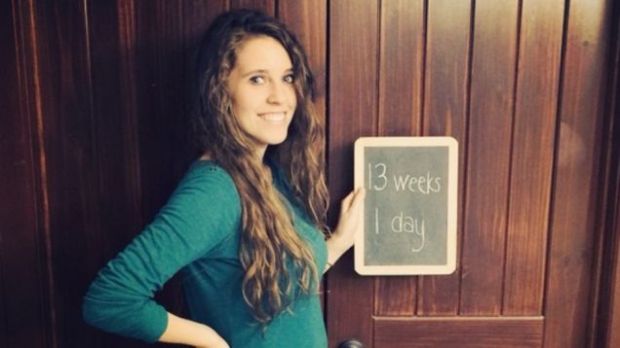
Recently Jill Duggar brought down public speculation when she announced her pregnancy a mere two months after her wedding to Derick Dillard . She defended the purity of her relationship and their decision to announce their pregnancy at only eight weeks, saying, “Understanding that the majority of miscarriages happen within the first trimester, and believing that every life is precious no matter how young, we decided to share our joyful news as soon as we could.” Pro-life conservatives raved.

Jill Duggar

Photo credit: jezebel.com

Reading this story brought up two issues for me. First, her defense of her early announcement (and conservative reactions to it) implies that the reason others might choose to wait to make a public announcement of a pregnancy is because they don’t value the life of the child until they are past the stage where miscarriage most commonly occurs. For most people, this couldn’t be further from the truth. Many people choose not to publicly announce a pregnancy early on because they greatly value that life and having to share the grief of losing that life so publicly if something were to happen would be unbearably painful.

My other problem is something I touched on in my last blog post. I am uncomfortable with the implication that unless something is public knowledge, it isn’t being celebrated – at least not properly. Pro-life conservatives applaud Jill for making a statement about the value of human life from the moment of conception, but my question is why does all of America have to know about it for it to be valued?

In our technology-dependent world I wonder if we’ve come to rely too heavily on the response of others for affirmation of our own emotions and experiences. Many of us act like nothing we think or feel is valid unless someone else says it too or at very least acknowledges and affirms what we’ve said. I’m not saying this from a lofty place of judgment. I am a blogger. I want people to read what I write and validate me too. It’s because I see this in myself that I want to bring attention to it.

I don’t think it’s necessarily wrong to share news on social media – to celebrate important moments in our lives or to seek encouragement in times of struggle. I just want to push back against the attitude I see subtly taking hold at times – even in myself- that real celebration can only happen in the public sphere.

I think there is something important about sharing God’s work with the people in our lives. I just don’t think that has to take the form of a public announcement. There are many benefits to social media and I don’t think it’s bad or wrong to participate in. The problem comes when we make social media a false substitute for authentic community. We deceive ourselves into thinking these people on Facebook and Twitter are our community, when, largely they are people who really haven’t earned the right to access our intimate thoughts and feelings. (And whom we haven’t earned the right to demand that they care about our intimate thoughts and feelings).

After reading my last post, the friend I wrote about in it sent me these thoughts. I had already written this post before she sent this and I loved how she put a lot of what I have been trying to say:

“Here’s the story: I’m not a super thoughtful, loving person. In fact, the main reason I did what I did was to avoid being a terrible hypocrite. After trying for a few months to get pregnant, we were told in December I have PCOS, a hormonal condition that makes it very difficult to get pregnant along with a host of other discouraging symptoms. Miraculously, we got pregnant that same month, only to lose the baby in February. Meanwhile, all our friends announced pregnancy or popped out kids. I was consumed by grief, but even more by envy. I unfriended or unfollowed people who I previously counted as good friends. And at least publicly, I suffered silently. 

So after countless doctor’s visits and fertility treatments when I finally got pregnant again and we managed to make it to the 12 week mark, how could I plaster my Facebook page with indiscriminate joy? I imagined myself reading my own page and crying herself to sleep every night, feeling that she’ll never be a mother. I couldn’t do that in good conscience, considering the miracle God had given me with this second baby.

My experience made me realize that Facebook is not a good place to share either joy or grief with other Christians. I don’t think the verses about mourning and rejoicing together refers to social media, I think it refers to real live relationships with other Christians. I poured out my grief and my joy in heaps on my closest Christian friends in all sorts of life situations, and all of them mourned and rejoiced with me. But Facebook is too contrived, too easy to manufacture. Not only that, but I never mourned on Facebook. I never announced my miscarriage. I never let social media see the reality of my suffering. So it feels very imbalanced, and very contrived, to ask Facebook to rejoice with me. Besides, only my friends and family who walked with me through my grief can fully celebrate with me in my joy. In just that handful of people I’ve received more than enough validation; I just don’t need any more from social media. 

Because really, are we looking for rejoicing and mourning with other Christians on a deep level when we post a status? Or are we just looking for the superficial validation of popularity represented by a number of likes?

I made an Instagram account solely for the purpose of sharing pregnancy updates for those who DO want to rejoice with me in that way. Also I send my mom, my sister in law, and a few of my best friends pictures of me in maternity clothes, weird craving updates, and ultrasound pictures nearly every other day. Even people who weren’t suffering would unfriend me out of annoyance if I thought it was appropriate to put all that on Facebook.  so not posting all that to Facebook doesn’t not equal not going crazy with joy in a community, mine is just a select community of those who don’t mind and understand the crazy.

I think [the problem] comes from this expectation to treat Facebook like a community, when really it’s more like a bulletin board. I’m sharing my pregnancy joy with my community, but not on Facebook, because the two are not synonymous. We should not feel shame about sharing either joy or sorrow with a community we trust, but Facebook is not a community. For people in our generation, sometimes it can be difficult to understand the difference.”

I thought her words expressed what I was feeling beautifully. I’m continuing to work through the question of how to balance rejoicing and mourning with others with sensitivity and compassion. I am finding that in my life that also means asking the question of who truly is my community and what role  the internet and social media should play as I seek to live out that question with authenticity.

_____________________________________________________________________________

*As a disclaimer – I have nothing against Jill Duggar Dillard and I certainly think she and her husband are entitled to their own decision about what information to share and when. I really don’t have an opinion on whether she should or should not have announced her pregnancy so early. I don’t think it’s anyone’s business. My beef was purely with the responses I saw to her reasons.  I also think as someone who spent a lot of time in the public eye while growing up, Jill’s perspective on public and private information is probably different than many people’s.

What Makes You Vulnerable Makes You Beautiful: A Review of a Book That’s Changing My Life

daring greatly

A Review of Daring Greatly: How the Courage to Be Vulnerable Transforms the Way We Live, Love, Parent, and Lead.

I’ve spent the past few weeks telling everyone I know to read this book, so I thought I would put together some sort of official book review. Although I mention the books I’ve read or recommend in my monthly “What I’m Into” post, this is the first book review I’ve ever done on the blog. I think this book is powerful and I hope if you haven’t read it yet, that you will soon.

Brené Brown is a skilled researcher with a Master’s and PhD in social work. She has dedicated the last decade of her professional life to studying shame and vulnerability. Her two TED talks on these topics have been viewed by over  This book is the perfect mixture of hard data and personal stories and her message is one that I believe every human being can relate to. This book does not apply to people of one particular religion, race, family demographic, or socioeconomic status. It is a book for everyone.

The title of the book comes from this powerful quote from Theodore Roosevelt,

“It is not the critic who counts; not the man who points out how the strong man stumbles, or where the doer of deeds could have done them better. The credit belongs to the man who is actually in the arena, whose face is marred by dust and sweat and blood; who strives valiantly; who errs, who comes short again and again, because there is no effort without error and shortcoming; but who does actually strive to do the deeds; who knows great enthusiasms, the great devotions; who spends himself in a worthy cause; who at the best knows in the end the triumph of high achievement, and who at the worst, if he fails, at least fails while daring greatly, so that his place shall never be with those cold and timid souls who neither know victory nor defeat.”

Brown began her research by studying human connection, but very quickly discovered that there was something that kept coming up when she interviewed people about connection. She would ask for stories of connection, and inevitably, people would share the opposite – what disconnection felt like. She noticed a common element among the stories of disconnection and that element was shame, which she defines simply as the fear of disconnection. “Shame is the intensely painful feeling or experience of believing that we are flawed and therefore unworthy of love and belonging.”

Brown differentiates between shame and guilt in one of the simplest and yet profound ways I’ve ever encountered:

Guilt = I did something bad.

Shame = I am bad.

She explains how this sense of shame stems from the feeling that “I’m not enough.” Not pretty enough, thin enough, smart enough, rich enough, successful enough, funny enough, etc.

Brown states that shame blocks our ability to make meaningful connections with others, and the only way for connection to happen is through vulnerability – allowing ourselves to be truly seen.

Vulnerability has such a negative connotation for many people. In our culture, we often equate vulnerability with weakness. Brown defines vulnerability as “uncertainty, risk, and emotional exposure” and argues that vulnerability is a risk, but it is not a weakness. “Vulnerability sounds like truth and feels like courage. Truth and courage aren’t comfortable, but they’re never weakness.”

Unlike how many of us think of vulnerability, Brown reassures us that vulnerability does not mean “letting it all hang out,” but is instead about “sharing our feelings and experiences with people who have earned a right to hear them.”

Brown goes on to identify the “vulnerability-shields’ people put up to protect themselves from being real with others (perfectionism, forboding joy, and numbing being the major ones) and to give the “daring greatly” alternatives to these behaviors (embracing the beauty of our cracks, practicing gratitude, and finding true comfort).

Through the book Brown explains how developing shame-resilience and practicing vulnerability has the power to radically transform our relationships and our lives. She gives practical examples of what this could look like in a business or work environment, in the other leadership roles we fill, and in parenting. Although I’m not a parent yet myself, I found the section on parenting particularly interesting and inspiring. This section was full of good, practical examples of how we can break the cycle of shame in our homes and teach shame-resilience for the things that happen outside of our homes. We can cultivate empathy, self-compassion, and a profound sense of belonging in our children by first cultivating these things in ourselves.  Brown explains that being vulnerable is one of the most powerful ways we can parent children, “…the question isn’t so much, ‘Are you parenting the right way?’ as it is ‘Are you the adult that you want your child to grow up to be?’”

In her previous book, The Gifts of Imperfection, Brown explored the concept of “Wholeheartedness” which she defines as living with a sense of worthiness – of love and belonging. She interviewed hundreds of people and studied what separated those with a sense of worthiness from those who struggled for it. She talks about this research in one of her TED talks. Brown says that the difference between these two groups of people was only one variable. “And that was, the people who have a strong sense of love and belonging believe they’re worthy of love and belonging. That’s it. They believe they’re worthy.”

“And so these folks had, very simply, the courage to be imperfect…The other thing that they had in common was this: They fully embraced vulnerability. They believed that what made them vulnerable made them beautiful… They talked about the willingness to say, “I love you” first, the willingness to do something where there are no guarantees, the willingness to breathe through waiting for the doctor to call after your mammogram. They’re willing to invest in a relationship that may or may not work out. They thought this was fundamental.”

I think Christians (in the Reformed tradition especially) have some push-back against the idea of our own worthiness. We balk at expressing what we perceive to be an overly high opinion of ourselves. What about being hopeless sinners in need of Christ’s grace? I would argue that Christ’s grace is exactly why we need to see ourselves as worthy. That we are worthy because of the work of Christ. Maybe failing to see our worthiness is really a failure to understand and accept the work that Christ has done for us. Maybe combatting shame and embracing vulnerability are essential to how we live the gospel.

This book is making me consider the kind of person I want to be. It has challenged and encouraged me to identify places of shame in my life and to combat them. Embracing our imperfections and our messiness is something I had already been thinking about and writing about a lot over the past year, and this book has confirmed for me that this is crucial to living an abundant life and to becoming the people we want to be.

****

If you don’t feel like you have time to read the book, or just want to hear more before you do, here are Brené Brown’s two TED talks. They are well-worth the 18 minutes of your time.


Daring Greatly: Hugging Strange Old Men and Living With Extravagant Generosity

Once when I was around ten years old, my mom and I were at the eye doctor. As we were leaving, an elderly man came into the doctor’s office alone. He looked pale and sad and lonely and I just wanted to hug him. My mom and I left and I told her as we walked to the parking lot that I thought he’d looked like he needed a hug. My mom said, “You can go back in and hug him if you want. I’ll wait right here.” So I did. I went in and said, “Excuse me, sir. But you look like you could use a hug.” And I wrapped my chubby arms around him and hugged him.

Obviously, he freaked out. His body went rigid and his face went from looking tired and sad to totally panicked. His eyes bulged out a little. It’s possible he had a mild stroke or something, but I’ll never know because I promptly got freaked out when I realized that his gruff exterior was not melting from my kindness like Daddy Warbucks’s did with Annie and I turned around and ran out of the doctor’s office.

****

I’m an idea person. I’ve been this way since I was a child.  I am relatively aware of what’s going on around me (which is a nice way of saying I’m nosy) and I frequently have ideas about things I could do for other people – a physical act of service, a gift I could give, a message I could write, a contribution I could make to a cause. I don’t say that to wow you with my holiness – it certainly doesn’t make me some amazing person that these things occur to me, especially since I rarely act on them. But I recognize that not everyone is this way. For example, my husband, who is a much more generous person than I am and will do anything you ask of him without complaining, doesn’t think this way. He is much more willing than I am to serve others if he is aware of a need, but the ideas of what these needs are and how he could meet them just don’t naturally occur to him. I don’t think there’s anything wrong with that – it’s just not how he’s wired.

I, on the other hand, am both perceptive (again, read: nosy) and a planner, which means I more naturally see needs and have ideas out the wazoo for ways I could help meet them. But I’m not so good with following through on those ideas. Which somehow seems a lot worse.

A few weeks ago at Bible study we were talking about what it looks like to have faith when you feel God is prompting you to do something and you don’t exactly know how to do it. We talked about the excuses we make for not following those promptings.

These are some of my most common excuses:

  • “What if it really creeps them out and they take it the wrong way? I mean, I’m pretty sure I gave that old man a heart attack that one time.”
  • “But I can’t do everything. It’s just not possible to give in all of these ways. I’m just ONE woman!”
  • “I’m sure they are getting tons of encouraging messages from other people – it probably won’t even mean anything to them to get a note from me. Actually, they will probably think I’m a weird stalker.”
  • “I can’t contribute enough to this need to make much of a difference. Better to put my money towards a smaller need where it will really matter.”
  • “I mean, I don’t want to exhaust myself. I’ve had a really long week at work. This will probably put me over the edge and then I’ll be mean to my husband. So really, by not doing this, I’m thinking of my husband. Best wife ever.”

I mean, they’re pretty bullet-proof, right?

****

I’ve been reading Brene Brown’s book, Daring Greatly, which is about the power of vulnerability to transform our lives. Brown is a sociologist who has been researching shame and vulnerability for more than a decade. I haven’t finished the book yet, but one of the most thought-provoking points I’ve come to so far is the link between shame and scarcity. Scarcity is this idea of “never enough” that permeates Western culture. It plays out differently for different people, but it hits most people in some form or fashion. It’s the idea of “I am never                                enough.” Never good enough, never successful enough, never smart enough, never pretty enough, never funny enough, never interesting enough, never rich enough, never thin enough, etc. (I actually wrote a post about that about 3 years ago). I’ve been struck with how this internal monologue of scarcity shows up in the ways I love and serve others.

I want to live a beautiful life – to be a generous person who gives freely and who makes others feel seen. But I am full of excuses and full of fear. Fear of how giving that way to others will affect ME. Because if I follow through on all of those promptings to give to others, who will be looking out for ME? How will there still be enough for ME?

I wonder, what would happen if I stopped making those excuses? What would happen if, to the best of my ability, I just went ahead and did each of those things when they popped into my mind? What would it look like to give extravagantly -of my time, my gifts, my energy, my intellect, my love, and even my finances? This summer I am daring myself to let go of my excuses and my rationalizations and my scarcity-driven fears, and instead I am going to try to do one simple thing. Whenever that idea pops into my head – to buy someone’s coffee or make cookies for my coworkers or to send a Facebook message to a girl I haven’t talked to since high school to let her know that I was thinking of her the other day and hoping that she’s doing well – that I will just DO it without giving myself the time to make excuses. (I mean, I’m probably not going to hug any strange old men. Not every idea is a good idea. But many ideas are both good and possible if I just keep myself from getting in the way.)

I have a 5th grade student named You Min. Every day she greets me by saying, “Hello Teacher, I am wonderful, smart, beautiful You Min.” At first, I thought she was confused – maybe she meant to be giving me a compliment? Or maybe she’s asking me to give her one? But then I realized, nope, she’s just pretty kick-butt and she knows it. Maybe that’s what living without scarcity looks like – it’s ok for her to be awesome and know it, because that’s not taking away from anyone else. There’s enough awesome to go around. And maybe it’s ok for me to give extravagantly when I feel the nudge to do so. Because there’s enough love to go around. There’s enough joy and grace and hope and beauty and goodness and freedom to go around. So let’s spread it around.

****

PS – When we talked about his in Bible study, my friend Laura said, “I feel a blog-post coming on!” So, Laura, it’s ok if you take credit for this one. There’s enough credit to go around. You can have this one. ; )

The Morning After: Things You Learn When Half a Million People Read About Your Sex Life

Three days ago I had an article published by Relevant magazine online. I had submitted the article a few weeks before and knew it was coming out sometime this week, but didn’t know when. I was excited to have something published at Relevant, but nervous because of the highly personal content. I hoped my words would be meaningful for others who had had similar experiences and felt alone in them. I was also excited for an opportunity to potentially gain a few more blog readers and make some new friends. I expected a few thousand people to read it. I figured some people would identify with it and others wouldn’t. I was not prepared for 60,000 shares and half a million people to read and comment and debate and argue and praise and judge my very personal story.

Here’s how Wednesday went down for me:

Wednesday, June 11th

6am – Wake up before my alarm, check the time on my phone. Phone is exploding with messages. Immediately wonder if North Korea has attacked us (unlikely, but valid concern). Realize these are responses to my article which had been published while I was sleeping. Abandon sleep and get up to read messages.

6:15am – Drinking coffee, reading messages. Amazed by number of responses. 8,000 shares? Really? Hurray! Start to read comments.

6:30am – Read some negative comments. That’s to expected, but I’m frustrated by comments aggressively criticizing things I never said. Fight urge to write defensive response to each comment.

7:00am – Receive email from Relevant editor thanking me for the piece and letting me know they’d already had 200,000 page views and it seemed to be sparking good discussion. Mind boggled thinking about that many people reading this.

7:30am – People I don’t know are sharing my article on Facebook. My friends are commenting like crazy, “Hey, I know the girl who wrote that!” Decide this makes me official internet celebrity.

8:00am – A friend tells me the article has been re-posted to Reddit. I am shocked. I walk to work trying to figure out how that happened. I check Reddit. Interestingly, article has been posted to both “Christianity” and “Atheism” feeds.

8:30am – I get to work and check out Relevant’s Facebook page where another 300 comments have been made. I am Queen of the Internets! Hurrah!

9:00am – Read one too many cruel comments. Decide to stop reading comments altogether

10am – 3pm: In between teaching classes, try to respond to as many people as I can who have sent me encouraging messages and emails or who have asked important questions.

4:30pm- 30,000 + shares. Overwhelmed by the sheer number of responses, comments, and messages I have received. Know that I invited this on myself, but feel slightly like Professor Xavier with thousands of voices in my head all at once. Too much to handle. Want to hide or breathe into a paper bag. Instead go home and eat ice cream straight from the carton.

****

The thing about the internet is that while there’s the opportunity for an extreme amount of exposure in a short time, internet fame is also fleeting. No matter how much attention a particular article or video or game or whatever is getting, it only takes a few days for it to become old news. My 15 minutes of (relative) fame are nearing an end, but I certainly feel like I’ve learned a few things from this experience.
1. I am incredibly small and inadequate I NEED God. There is a terrifying weight that comes when you suddenly realize people are LISTENING TO WHAT YOU HAVE TO SAY! That it might actual have an impact on someone else’s life. And all you can do is say, “God, this is so far out of my control. It’s in your hands. Do what you want with it.”

2. I don’t have to respond to every piece of criticism. Some of the criticism I’ve received was certainly fair- (example the title saying “the” Church when that hasn’t been every single person in the Church’s experience. That’s fair. If I could change one thing about my article it would be the title. In fact, here’s a great and gracious argument for why.) Many people do not share my experience or have experienced negative consequences from the other side of things and are upset by the negative aspects of my story. And some of the criticism was incredibly personal, illogical, and ad hominem. Regardless, I can’t get bent out of shape about every person who disagrees with me or is upset by something I wrote. I’m not right about everything. My article wasn’t right about everything. But God can still use it and I’ve just got to trust that.

3. No matter how careful you are about your words, people will still read into it what they want to read into it. I spent days editing this piece. My husband helped me with the final edits and told me he supported everything I had written. Despite that, I had many people contact me in outrage for telling people it was OK to have sex before marriage. Wait, what? Did they miss that final paragraph where I explicitly said,

“I don’t regret waiting until I was married to have sex, and I’m not advocating that churches stop teaching that sex is designed for marriage.” ?

Many people were also incensed about what they perceived was me saying that people shouldn’t be concerned about their physical relationships pre-marriage. Again this outrage, in spite of the fact that I explicitly said,

“If you are committed to waiting until you’re married to have sex, there are many valid reasons to set boundaries on your physical relationship, but the fear of accidentally having sex shouldn’t be one of them.”

I said exactly what I meant – there are reasons you SHOULD set boundaries in your physical relationship, but you SHOULDN’T do it out of fear.

My intention with the entire piece was to call into question the REASONS we are teaching abstinence in churches and whether those reasons are right. Do those reasons reflect the  truth about our sexuality and our relationship with God? Allow me to quote me,

“If our reason for saving sex until marriage is because we believe it will make sex better or easier for us, we’re not only setting ourselves up for disappointment, but we’re missing the point entirely. Those of us who choose to wait do so because we hold certain beliefs about the sacredness of marriage and about God’s intentions and wishes for humanity, and we honor these regardless of whether they feel easier or harder.”

We need to re-examine our REASONS. I am far from perfect (as anyone who has read my “introducing the real me” post knows). I know that I probably didn’t communicate everything I wanted to say perfectly. I think God’s grace is big enough to work through my words in spite of that.

4When I comment on things in the future, I want to ALWAYS remember that there is a real person behind this piece. I feel that many people lose sight of that fact. The writer is a real person who, even if I disagree with them, has chosen to be honest and vulnerable with total strangers and deserves to be respected and given the benefit of the doubt.

These are examples of actual comments I received before I stopped reading them:

“Have to say I’m disappointed with relevant magazine here. I think in an effort to be cool and ‘relevant’ you sacrificed integrity. who exactly is Lilly Dunn, and why are we listening to her single narrow ( bitter) opinion? Can anyone write for relevant and get published?”

Nope, not bitter. Quite joyful, actually. I laugh all the time. Laughing’s my favorite. And I’m oh-so-happily married. Just, you know, being very vulnerable here, hoping to restore life to some broken places. And also, yes, anyone can submit to Relevant. Even you, my friend. Perhaps a piece about how Relevant shouldn’t publish the narrow, bitter opinions of others.

Or this stunner: “This is absolutely the worst thing I’ve ever read. This girl so annoying and just sounds like an entitled little complaining bitch. I’m sorry but I’m embarassed to have read this. The whole article i just wanted to punch the writer in the face.”

I mean. Not much to say here, you make a solid argument. But if you’re so embarrassed to have read it, why did you comment on it, letting thousands of people know that you read it?

This experience has also made me want to give others the benefit of the doubt about things that aren’t crystal clear. I think it bears pointing out that Relevant (and I’m sure many other similar sites) has a strict word limit. In fact, my original piece was 600 words longer than this and might have been more nuanced in some of the areas people were concerned about. I know I didn’t make a list of solutions or go into detail about all the wonderful things about my marriage. There was only so much room and this piece had to be extremely focused. Of course there is more to be said on this topic and I would love for this to open the doors for people to respond. Actually, here’s one person who did just that.

Please, if you’re reading this, take this vow with me: “When I comment on other people’s writing I will remember that they are real people with feelings. If I disagree I will make sure I have fully read their words first, then I will make an argument based on the specific things I disagree with, not general attacks on who they are. Wherever possible I will give the writer the benefit of the doubt, taking into account word limits and editorial decisions beyond their control.” Wait a sec, this sounds familiar…wasn’t there somebody somewhere who said something about “Doing unto others”?

****

Thank you to the many people who took the time to send me kind and encouraging messages. They went a long way to treat the sting left by others. Seriously, if you ever think about sending a writer an encouraging message and then think, “They probably have heard this from enough people, they don’t need to hear from me” you’re wrong. They always need to hear from you.

And now, if you’ll excuse me, it’s my husband’s and my anniversary and I’m going home to do some “celebrating” if you know what I mean. ; )

*****

UPDATE: If you are interested in hearing some more in-depth thoughts about this topic, check out my guest series, “Let’s Talk About Sex” over at my friend Brett “Fish” Anderson’s blog.

I also wrote another article for RELEVANT in March of 2015 about overcoming shame.

True Confessions: I Have Cellulite and It’s Not From Having Babies

Yesterday I found some new stretch marks -thin white lines running parallel to each other like the rungs of a ladder climbing up my outer thigh. My heart sank and my shoulders sagged involuntarily under the weight of yet another imperfection.

I’ve seen a lot of articles and videos lately about women embracing their post-baby bodies. About society learning to respect the body of a woman who has stretched herself around another human life. Who has willingly allowed her own body to be “wrecked” for the sake of another person. These articles and videos urge us to see their sagging breasts and wrinkled bellies as beautiful symbols of strength and sacrifice. I applaud that. It’s beyond time that society honored women, especially mothers, for who they are and what they do instead of making any kind of statements about how their bodies should look.

But every time I read one of these articles or watch one of these videos, I experience an underlying sense of guilt and shame. What about those of us who haven’t birthed children and still have hopelessly flawed bodies? What about those of us who can’t look at our veiny legs and count these as something we have embraced in order to create new life? It’s embarrassing to admit this, but I have often dreamed about the day when I can embrace my mess of a body as “post-baby.” People understand that. Other mothers, particularly, have great compassion for that. I have great respect for that.

But what about the 26-year-old woman who has never had a child, who is healthy and active, but whose knees are still dimpled with cellulite? The angry purple lines that criss-cross my inner thighs don’t mark my body’s anguished and miraculous journey to produce a new life. The cellulite that ripples my skin from my hips to my knees is not from the strain of carrying another human’s body inside of mine. These are the marks of an adolescent girl whose body stretched into a woman’s before she was ready for it.

Here is a short list off the top of my head of things I am ashamed of about my body and that I actively try to correct where possible:

  • Stretch marks
  • Unfeminine body hair Thick, dark, impossible-to-get-rid-of hair.
  • Razor burn from removal of unfeminine body hair
  • Bushy eyebrows
  • Uneven skin tone/acne
  • Flat chest – but not flat enough to just be super thin and shapeless like the Korean girls, just flat enough to make me pear-shaped.
  • Possible improper ratio of breast to areola to nipple (I just found out that that’s a thing recently, so naturally now I’m worried about it.)
  • Cellulite
  • Hair that is simultaneously dry and greasy
  • Belly down – (what I call that very light layer of hair over my belly that makes it look pudgy even when you can clearly see the outline of my abs)
  • Saddle-bags
  • Chunky calves that make it impossible to buy boots
  • Short, stubby fingers with short stubby nails
  • That one weird mole on my back

After reading that list you probably think I am obsessed with my body image and spend way too much time thinking about this. Maybe that’s true, but I really don’t think I spend any more time thinking about this than the average woman does. In fact, these are all the flaws I noticed this morning during my 12-minute shower.

As a society, we are starting to speak out against “body-shaming” mothers and against the promotion of unrealistic and hyper-sexualized expectations for women’s bodies. We, as a culture, still have a long way to go, but we are making some noise. And this is a good thing.

On Saturday I ran six miles on my solid, muscular legs, and on Sunday my thick calves and cellulite-y thighs carried me to the top of a mountain. I didn’t feel particularly proud of either of those things, but when I saw those silvery lines stretching up the side of my thigh yesterday I felt defeated and ashamed. So today I am wondering, is there grace for me too? Is there a way to love my flaws when I can’t explain them away with the sacrificial love of a mother? Can I still be beautiful and strong and proud if I didn’t earn these imperfections in a noble way? Can I let you see my scars and not feel ashamed?

To Tell You the Truth: In Which I Introduce the Real Me

I often have readers comment on my blog with something along the lines of, “Thank you so much for your honesty.” Or “Thanks for being willing to be so open and honest.” I am very moved when people take the time to comment on my blog and to tell me that something I wrote was meaningful to them. I often feel like I’ve left my heart here on this webpage, never really knowing if it’s going to reach anyone much less if it will mean anything. And sometimes it feels especially risky since what I write is often deeply personal. It can be incredibly discouraging to pour your heart into something and get no response—or worse, a very negative response. I am so thankful to the people who encourage me that my story matters.

I’ve been thinking a lot about this whole idea of honesty. I write openly about fears and struggles and doubts and opinions, even the ones that don’t show me to be the intelligent, thoughtful, grace-filled person I wish I was. I write this way because in many ways, this blog is for me. It is my space to wrestle. I write this way because I deeply value authenticity and because I don’t know any other way to be.

Lately though, I’ve begun to wonder if I have misrepresented myself here. See, it’s relatively easy to tell the truth about what you think and it’s easy to tell truths about other people. It’s easy to have an opinion about what other people should or should not be doing. It’s easy to be honest about things that annoy you or things you find very meaningful. It’s especially easy to do this from behind a computer monitor. You can write exactly what you think, hold nothing back, and send it out onto the interwebs. People you know and people you don’t know can read your truths and respond. Some will agree with you, affirming you in your righteousness. Some will disagree, and you will feel indignant or misunderstood. There is certainly risk involved in sharing your thoughts and your feelings. Especially if they don’t line up with the standard opinions of your particular culture. But these things are still relatively easy (for me) to be honest about.

What isn’t easy for me is being honest about who I am. Because when I am honest about who I am, it scares people. Sometimes they actually run away, but sometimes they just ignore me. Like if they pretend they didn’t hear me it will go away.  So I’ve learned to be honest about what I think and what I feel, but to be guarded about who I am. Because who I am is just too much for most people.

But the more I write and the more readers I get, the more compelled I feel to present myself as I really am. I don’t know what’s going to happen when I do this. Probably some people will be uncomfortable and some people will laugh it off and not care about what I’m offering. Maybe some people will decide I’m not worth listening to anymore or will call me needy or self-indulgent. But maybe one or two people will see me and love me anyway. Because to be fully loved we have to be fully known.

Who I am is messy. Who I am is broken. And who I am is also glorious. Who I am is sometimes-hopeful, sometimes-depressed, sometimes-angry, sometimes-thankful, sometimes-ugly, sometimes-gracious, sometimes-wrong, sometimes-smart, sometimes-selfish, sometimes-patient, sometimes-loving, sometimes-beautiful, sometimes-cruel.

Here are the things you probably know about me:

I love my husband, I love to write and read. I love to travel. I love both making and eating food (also smelling food and thinking about food and writing about food). I love Disney. I love my family. I have a lot of questions about God and my faith and about the church and I’m asking them. I believe in Grace – for myself and for others. I love beautiful things. I am conflicted about having kids. I don’t know what I want to be when I grow up. I hate cable cars. I sing all the time.

Here are some things you probably don’t know about me:

I crave approval. I care A LOT about what people think of me and there are very specific qualities I want them to see in me. For example, I would rather people think I’m smart and authentic and a good writer or a good cook/hostess than think I am kind or gentle (though obviously, that would be good too.) I am so concerned with people not seeing me as judgmental that sometimes I am not honest with them.

I also crave appreciation and if I don’t feel appreciated enough, I stop working hard, even though it’s the right thing to do.

I complain. A lot.

I insist on believing (although he has many times told me this is not true) that my husband can and should read my mind and meet all of my needs without me having to verbally express them. And I get angry when he doesn’t.

Yesterday I waited until my coteacher left the classroom and then wolfed down the entire strawberry cream cheese muffin I brought from home while she was in the bathroom so I wouldn’t have to share it.

Before I left for Korea I met my birth dad who I hadn’t seen in 17 years. He said, “I love you.” I didn’t say it back.

When something doesn’t work out the way I planned it to (the movie is sold out, we missed the bus, the plane tickets are too expensive) I blame someone else. Usually my husband.

I get incredibly annoyed anytime someone states their opinion as though it is the incontrovertible truth. EVEN IF I AGREE WITH THEM. If I think they are arrogant and judgmental I won’t listen to a word they have to say. Which I guess makes me arrogant and judgmental

Sometimes I lie. (That wasn’t a lie just now, btw).

There’s a part of me that still thinks, contrary to all evidence, that I’d be sublimely happy if I were skinny. Not like, “A healthy size for my body type,” or “lean and well-toned.” Just straight-up skinny.

Sometimes (God-forgive me) I DO think I’m better than other people.

Sometimes when my husband or a friend is talking, I nod and smile at the right times, but I’m really just thinking about what I want to say next.

I still get jealous when my parents seem more interested in one of my siblings than they are in me. Because I genuinely believe (though it’s a deeply hidden and seldom acknowledged) that I deserve to be their favorite. That’s not a knock against my siblings at all (because they are awesome). It’s a sort of embarrassing admission that I still think that following all the rules, having a college degree and a job, marrying an approved spouse, and never going to jail should have earned me the most love points.

I resent being told what to do. Especially by men.

I am so self-centered that I just made a list of my positive and negative attributes, convinced that I am interesting enough for all of you to want to read about me.

Also last night I left dirty dishes in the sink because I was hoping if I just left them there dear husband would do them for me.

Hi, I’m Lily. It’s nice to meet you.

*****

P.S. I tried to figure out how to format this into a cool dance/song like  this one from Bring it On so you would think I was funny and awesome and had a lot of skills and ignore the rest of what I said, but I couldn’t think of any good rhymes for “selfish.” And also I am the Very Worst Dancer and my husband says there are some things even a very honest person should keep to themselves.


Everything Makes Me Cry and I’m Not Ashamed to Admit it

I used to be ashamed of crying. I’ve known girls who were what you’d call “sensitive.” The kind of girls who get their feelings hurt so easily that everyone walks on eggshells around them. When I was young my cousin showed me how to make little rockets by filling plastic film canisters with water, dropping in an alka seltzer, shaking vigorously, and setting the canister cap-down on the pavement. After a few seconds the pressure would build inside of the little canister and blow the plastic body up into the air, separating from the lid. That’s what these girls remind me of. That plastic canister full of fizzing alka-seltzer water, poised to explode at any moment.

When I first started dating Jonathan I felt it was incredibly important not to be a “sensitive” girl. I would be cool. I wouldn’t get my feelings hurt easily or be whiny or clingy. And I certainly wouldn’t be one of those girls with extreme emotional highs and lows that affected everyone around her. I would be even-keeled. Steady. Relaxed. Hah.

Here is the truth about me. I cry all the time. In the shower. At my desk at school. At the movie theater. At coffee shops and restaurants. In the fitting room at department stores. At church. In the kitchen. At the beach. On the bus. Into my pillow. Actually, it might be easier to make a list of places I haven’t cried. When I say I cry, I don’t always mean hours of gut-wrenching sobs (though sometimes that is the case and when it is, it’s UGLY). And it’s not always because I am sad or my feelings are hurt. In fact, I’d say I cry less often out of sadness than for any other reason.

I come by all this crying honestly. A few years ago, my mom came to visit Jonathan and me when we lived outside of Chicago. We went to see the Lion King musical which was playing in the city. The moment the cast started singing the first note of “Circle of Life,” both my mom and I instantly burst into tears. Jonathan thought this was both weird and hilarious.

Most of my family is hyper-emotional. Sometimes going home is hard for me just because being around other people who feel so much makes every conversation potentially gut-wrenching. Because we love each other so deeply that we cry. Or we feel so proud that we cry. Or we feel misunderstood so we cry. Or we feel nostalgic for something that’s been lost so we cry. Or we laugh at each other so hard that we cry. And then it turns into more crying because we miss each other so much. Here is a short list of things that make me cry:

  • Anything involving soldiers being reunited with their families
  • Anything really sweet – old people who still love each other, sweet romantic gestures, random acts of kindness
  • Spoken-word poems (Like this one. Or this one I wrote myself and cried while writing).
  • Babies being born
  • Adoption
  • Talking about my family
  • Talking about God
  • Incredible food
  • Social injustice/violations of human rights, particularly towards women and children
  • Books or movies in which the characters suffer some sort of significant loss or fear or experience some sort of great triumph.
  • The following TV shows: The Voice, the Biggest Loser (though I don’t necessarily condone it), What Not to Wear, So You Think You Can Dance or any other show that involves people accomplishing something they never thought they could, or coming to feel proud of themselves for the first time in their lives.
  • The Olympics – Again, it’s the great human achievement thing. Basically, I am moved to tears anytime I see anyone do something hard particularly well.
  • Running. In particular, running my first half marathon and marathon were very emotional experiences for me. I cried all along the way as well as when I crossed the finish line.
  • Talking about anything that’s really important to me
  • Being surrounded by friends
  • The moment when you get to the top of the mountain
  • Witnessing accidents or people getting hurt in some way
  • Music, especially bluegrass/folk music for some reason. So basically every time I hear Mumford and Sons played anywhere.
  • Watching dancers
  • Traveling and experiencing new cultures
  • Missing my cats.
  • Seeing people getting engaged (even rando strangers)
  • Weddings (even the weddings of rando strangers or fictional characters)
  • The time I saw the Shamu show at SeaWorld (I was 18)
  • Disneyworld. And Disney movies. And Disney songs.
  • Seeing The Lion King (or many other musical productions) onstage
  • Also this video of the Lion King cast singing on an airplane

I used to be deeply ashamed of this. I spent a long time trying to hide those unwelcome tears. But I’ve learned something about myself in the past few years. Crying is my physical response to any overwhelming emotion – frustration, sadness, pain, anger, exhaustion, confusion, anxiety, fear, joy, excitement, pride, tenderness, compassion, empathy. I cry equally for the things that are broken and for the things that are too impossibly beautiful. Crying is the response of my body to truths in my soul – often truths I feel too deeply to articulate well with words. If part of who I am, deep in my core, is best expressed through tears, why would I try to suppress that?

Admittedly, crying so much can be exhausting. It is emotionally draining. And it can be overwhelming to the people closest to me. Particularly Jonathan, who I have known for seven years, but have seen cry only once (and by cry I mean the corners of his eyes became moistened). But here is the thing—I cry because I am moved. Because I am human and because there are moments when I feel so deeply connected to the world around me – to beauty, to God, to grace, to the suffering or the triumphs of other humans like me—that I am moved and it wells up inside of me and leaks out of my eyes and onto my face. And I am not ashamed of that.

I want to be moved by this wondrous and brilliant, aching and breathtaking world. So let the day that I am not moved by a haunting melody, by an act of courage, by a shattered heart, or by a sky full of stars, be my last. And until then let me live a rich, gorgeous, marrow-sucking life with tears dripping off my cheeks.