Faith

Geronimo: On Falling With Style

There’s an old Michael W. Smith/Rich Mullins song called “Step by Step” that I remember singing often as a child. If you were a child (or parent) of the 80’s and 90’s chances are you are familiar with it. The lyrics, borrowing from the Psalms, go like this:

“I will seek you in the morning. And I will learn to walk in your ways. And step by step you’ll lead me. And I will follow you all of my days.”

The song makes it all sound so gentle. I picture those early morning rays on a peaceful beach, Jesus walking just a step or two ahead with me taking small steps into the footprints he’s left behind. The camera pulls back and we see an endless stream of footprints behind me and the horizon ahead, stretching on into eternity. It’s like a motivational poster in an elementary school classroom.

But let’s get real here. For about the last ten years I don’t think God has been leading me step by step. It’s been more like cliff dive after cliff dive. I feel like old-school Mario, you know, before he could fly or turn into a penguin and skim across the ice on his belly. Old-school Mario had to jump to get anywhere and most of the time he was jumping from one inexplicably floating block of brick to another with lots of empty space in between.

mario

My friend Karissa recently wrote a post about some “Geronimo” decisions she’s been making. She explains these as the kinds of decisions that would normally require lots of planning, pro and con lists, internal debates, and lots and lots of detailed information. But lately, she’s found herself making some big decisions quickly and choosing not to regret or second-guess them.

Decisions are hard for me too. I am often plagued with the fear of making the wrong decision. I’m afraid of making the wrong decision and regretting it later, but I’m also afraid of not choosing something and always wondering, “What if?” It’s hard for me to pick the restaurant for dinner or the movie we should watch or which jeans look better, so it’s surprising that most of my biggest life decisions have been Geronimo moments. They were moments where I took a flying leap and never looked back.

At eighteen, I chose to go to college near Chicago, even though I’d never lived outside of Louisiana and had much better scholarship offers elsewhere.

Jonathan and I got married at twenty-two with nothing but a crazy amount of love and two degrees that the ink hadn’t even dried on yet.

The next year we decided to leave Illinois and picked a place on the map where we thought we might like to live. We showed up in Raleigh, NC, a city we’d never even seen before, with two cats, no jobs, and lots of dreams and it quickly became “home” to us.

A few years later, we put all of our things into storage, found a long-term cat-sitter for our fur babies, said good-bye to our friends and family and got on a plane to Korea. We moved to a new country and a new culture that we knew next to nothing about and where we didn’t speak the language.

Each of these were big decisions that we thought about and prayed about beforehand, but when it came down to it, we knew we just had to leap and trust that we’d make it to that next floating rock.

Now we are preparing for another giant leap and somehow this feels like the greatest leap of trust I’ve ever taken. I’ve written a little about the anxiety I’ve been dealing with lately, but I am more afraid of returning home to America than I ever was of moving to Korea.

More than all of the practical elements of our move to yet another new city, making friends, finding a new job and a new place to live, my biggest fear is that I’ll discover that I no longer belong. Already I have been struggling with feeling distant and disconnected from my friends. I have been coming to terms with the fact that going back to America will not just be like coming home. It will be the start of an entirely new adventure. And as much as I love a good adventure, this is the 4th time we’ve moved in 5 years and I’m tired of starting over.

And yet, this is so clearly the path we are meant to take. It’s the next cliff we’re meant to dive off of.

If there’s one thing I know about trust, it’s this. Trust doesn’t necessarily mean that you aren’t afraid. Trust simply acknowledges that there is something bigger than your fear. It recognizes that your fear is not the only thing and also that it’s not the strongest thing.

Karissa writes, “But some days, you need to live a Geronimo life. You need to make a Bombs Away decision. You need to believe that your gut feeling is enough, that you are enough, that you will dive through that waterfall, be baptized by its drops, and come out on the other side knowing that you survived free-fall. So here’s to you, to both of us, to our fear, to our bravery, to our confidence.”

Sometimes I wonder if we’re even moving forward. It feels like we just keep falling off things. And then I remember the immortal wisdom of Toy Story and think that maybe what we’re really doing is flying. Because we know that flying is just falling with style.
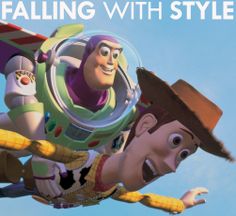
falling with style

This post is part of a link-up over at Karissa’s blog about Geronimo moments. If you have your own Geronimo story, write about it and join the link-up!

Image credit: Ryan C Wright, Flickr

Getting Pumped for Judgment Day: From Fundamentalist Fear to Extraordinary Grace

If I had to choose a least favorite hymn, it would probably be “It Is Well With My Soul.”

As a child, I would sometimes sing this song at school or at a summer camp at the Baptist church. My understanding of this song was that lots and lots of bad things will probably happen to you, but you should still be glad as long as your soul is OK. Since this song reads like a list of awful things (sorrows like sea billows, Satan buffeting, etc.) I also interpreted that last verse “the trump shall resound and the Lord shall descend” as a bad thing. After all, the songwriter said, “Even so, it is well with my soul.”

Although I understand the theology of this song better now, I’ve never been able to shake to connotations of my childhood. Whenever I hear it, I am gripped with a sense of sorrow and of fear.

When I was a child I believed in Christ’s return the way I believed in the rising sun. I took for granted that it would happen. I expected it at every moment. Whenever  the sun burst through the clouds after an afternoon storm I would turn my face to the sky, heart racing, wondering, “Is this it? Is He coming now, riding on those clouds, shining like the sun?” and I would be filled with fear.

***

In elementary school chapel I sat with my classmates in my scratchy plaid jumper and white oxford shirt and listened to our principal explaining judgment day. On that day, she said, all of our worst sins, even the ones we thought no one knew about, would be displayed in front of the whole world. For people who weren’t believers, this would be a horrible day, but for Christians, this would be a great day because after the whole world had watched that movie reel of our very worst moments, Jesus would step forward and erase the tape.

These words were meant to encourage belief, but they filled me with terror. I chewed my fingernails down to the quick while I imagined everyone I knew watching a video of my sins. I wasn’t comforted by Jesus erasing the tape. I was too busy panicking about everyone knowing I peeked at my spelling book for just a minute during the last test. And even at that young age, my fear worried me. Did this mean I wasn’t really a Christian? If this was meant to be a great day for Christians, then why was I so afraid of it? Shame pounded in my temples as I sent up fervent prayers to combat those of generations of saints, “Please, Jesus, won’t you tarry just a little longer?” I pleaded.

***

When I was in jr. high and high school I encountered a new theology of judgment. Judgment, I heard, was for the wicked, not for those favored of the Lord. When Christ returned in all of his glory, he would separate the righteous from the unrighteous like grain from chaff or sheep from goats. We need only worry that we were counted among the righteous.

On the surface this was comforting since Christ was my salvation. But over time, righteousness became equated with our good works. It was Christ’s righteousness that counted, but the only evidence of that was my actions. There were a dozen interwoven reasons why I was a perfectionist, but on a spiritual level, it was because I feared judgment – first and foremost from my church community and eventually from Christ himself.

I was a model child. I had perfect grades. I helped around the house. I babysat my sisters. I didn’t listen to secular music and I didn’t watch PG-13 movies. I never smoked, I never drank, I never even held hands with a boy. I didn’t even have a curfew to break because I was never out late enough to warrant one. I served in the youth group. At sixteen I was in charge of a whole cabin of girls at church camp who were only a few years younger than me. I played violin for the worship band. I ran the school’s mission team doing local and international outreaches. I can’t remember a single time that outright disobeyed my parents.

And yet, I was wracked with guilt for all the ways I failed. When I was sarcastic, when I used a disrespectful tone with my parents, when I was impatient with my sisters, when I lied because I was afraid of getting in trouble, when I got in a car accident, when I said mean things to make people laugh, when I tried to make myself feel smarter by making others feel dumb.

With a theology of judgment where God was like Dr. Jekyll and Mr. Hyde and my actions would determine which character I ended up with, how could I possibly think about judgment without fear? How could I ever be good enough to feel secure in my righteousness?

***

When we say The Apostle’s Creed we affirm that, “He will come to judge the living and the dead.” For most of my life I didn’t know how to rejoice in this judgment. I didn’t understand how this could be part of the good news.

But then grace broke in. And grace came in the words of Augustine.

See, Augustine had a different idea about this. He said what if judgment isn’t about God separating the righteous people from the wicked people? After all, who of us is 100% righteous or 100% wicked? Aren’t we all a mixture of both? What if our lives are like two plants that grow up side by side – one good and the other bad – and as they grow, they intertwine so much that you couldn’t separate the bad one without damaging the good one?

When asked about their biggest regrets, many people will say something like, “I don’t regret anything because even my mistakes were things that helped me to grow.” Our lives are full of both glory and suffering and sometimes the two are so closely linked that we can’t separate them even in our own minds. Sometimes our worst mistakes or experiences ultimately lead us to some of our best moments.

Augustine says, What if God lets the good and the bad grow up together for a time and judgment is when he separates them, once and for all, at the end?

We cannot perfect our lives. We cannot expunge all the evil that exists in the world. But maybe THAT’S what judgment day is for. Maybe it is about God extracting the bad, the evil, the sin, and the brokenness that is woven into our lives, and throwing it to the fire, leaving our lives perfect and whole. Wouldn’t this be the best thing that could ever happen to us? Wouldn’t this kind of judgment be the cause of great rejoicing?

Maybe judgment isn’t about shame. Maybe it isn’t God projecting a film of all our failings on a jumbotron. And maybe judgment isn’t about God choosing to bless some and judge others. Maybe judgment has nothing to do with our works of righteousness.

Maybe judgment is our deliverance. Maybe judgment is when we can finally stop wrestling with sin, when we can stop experiencing brokenness, when we can finally be pure. Maybe judgment is the greatest grace of all.

***

This essay is a little excerpt from the book I’ve been working on writing. I hope it’s something you could connect with!

I Woke Up Like This: Why I’m Not “Faking It Til I Make It”

Some days you wake up and feel like you’ve forgotten how to “adult.” You burn the toast and put on two different socks and let your kid go to school without brushing his teeth. Your soda explodes all over your pants, you’ve got deodorant on your shirt, and you realize after your big presentation that you had lipstick on your teeth the whole time.

You try to “fake it til you make it,” because you’re embarrassed to admit that you don’t have it all together.

Let me break the ice for you.

I don’t have my s&*% together.

I woke up this morning and made a pot of coffee, but forgot the coffee grounds and ended up with a pot of yellowish hot water.

I fill an old milk jug with water every morning to take to school with me for the day. This morning I poured water into our actual milk jug which was still half full of milk.

I lost my thermos this morning. Twice. It was in the same place both times.

A few hours ago I sent Jonathan a message about a company that was “highering.”

It has taken me three hours to write this post because I’ve apparently forgotten how to string words together into sentences.

I think it’s safe to say that I did not bring my “A” game today.

And that’s OK.

Because we are worth more than what we bring to the table. Because real life is messy and imperfect in a thousand ways, but that’s what makes it REAL.

I don’t want to “fake it til I make it.” I want to change the definition of “making it.”

Some days, “making it,” is simply showing up. It’s about presence, not perfection. It is about being engaged with where you are and what is in front of you today, not about having all your ducks in a row. As Glennon Melton says, “A good enough something is better than a perfect nothing.”

Some days, “making it” is choosing to make your haves count for more than your have-nots.

Some days, “making it” is extending grace to the people who are on your last nerve, or extending grace to yourself because you’re human, and humans are pros at making mistakes.

Some days “making it” is admitting, “I don’t have it all together,” and using that as an opportunity to make much of God and the way he sustains you, even in your brokenness.

Some days “making it” is acknowledging that you don’t do it on your own, that you can’t do it on your own, and that there are people who pick up your slack, who forgive you when you lose it, and who love you even though you ate all of the ice cream (sorry, Babe!)

I don’t have it all together and I’m not going to pretend that I do. But I AM making it. Moment by moment. Day by day. Grace by grace. No faking required.

Image credit: Lifeloveyoga.com 

On Prayer, Lost and Found

I once believed that ancient, corporate prayers were for those of shallow faith. I thought that written prayers were a cop-out for those too lazy or uncreative to pray on their own. At best, they were the training wheels of prayer—the “Now I lay me down to sleep,” prayers we were meant to outgrow as our faith deepened and swelled into something vibrantly alive. At worst, they were an indication of a faith that was not your own. A faith you’d borrowed from those who came before you. A faith you claimed because it was comfortable and required little of you.

In the church I grew up in, we often prayed out loud, everyone at the same time, a clamor of voices crying out to God together, but individually. It was a charismatic gathering where people prayed in tongues which we were taught to view as private prayer languages between a person’s spirit and God. Every prayer language was different, unique, a sign of the Holy Spirit’s presence in that person.

While I no longer hold to the faith of my childhood, I have no wish to disparage these people or their undoubtedly earnest prayers. I simply reject the accompanying belief that prayer must be original to be sincere. As if a hundred “Father God, we just ask that you just…” ‘s were more authentic than St. Augustine’s prayer, “Breathe in me, O Holy Spirit, that my thoughts may all be holy,” simply by virtue of their spontaneity.

How can these old words spoken and written by people whose bodies withered away before you were even thought of accurately represent what you need to say to God today?  I once asked with scorn. And now, in this season, those ancient words have come to stand in the gap for me.

How strange, to turn from a faith where prayer was a private language of syllables that spoke from my heart straight to God’s ear, to a faith where prayer is grounded in the repetition of words set out for me by men and women who lived long before I, or my mother, or my grandmother or her grandmother, had taken our first breaths on this earth.

I am not alone in this. Many of my generation who were raised in evangelical traditions are turning now towards more liturgical gatherings. Anglican and Episcopalian churches are filling with those who long for a sense of rootedness they felt they lacked in the churches of their parents. Some have moved away from Protestantism altogether and have embraced the Orthodox or the Roman Catholic church.

I don’t know what I am right now. I don’t know that I’m evangelical and I don’t know that I’m not. In some ways living overseas has exempted me from making that decision. My local church community is a house church made up of people from various traditions and there is no label on our gathering.

What I know is this – at some point I lost prayer. I ran out of words or out of the will to form new ones. And it has been the prayers of the saints, past and present, that have given me the words I couldn’t find on my own. These words have an integrity that is entirely independent of me. These words are pillars that stand even when my faith feels frail and brittle.

I pray the words of St. Francis or of St. Benedict,  of Mary’s “Magnificat” or Anne Lamott’s “Help. Thanks. Wow.” and I find myself standing in the presence of God once again, on the shoulders of those who stood here before me.

 Image Credit: John E Lamper on Flickr.

Why I Travel: In Defense of Wanderlust

Standing at the peak, the wind whipping my hair across my cheeks, I close my eyes and tilt my face to the sun. I stretch out my arms and turn up my palms and breathe. I open my eyes and try to absorb the techni-colored panorama of jagged, white mountain peaks, emerald pastures and shimmering diamond lakes reflecting back the exact impossible blue of the New Zealand sky and I think, Heaven looks like this.

New Zealand

I sit on the back of a scooter, hands gripping the waist of the twelve-year-old boy who is my driver as we zip down the jungle roads to a breakfast of green leaf pancakes with palm sugar. We dodge a rooster strutting cockily across the road and I can’t stop smiling from ear to ear because heaven feels like the wind blowing past my face as we bump over potholes, winding our way through the Balinese jungle.

Bali

In Canterbury Cathedral I kneel, dappled by colored light from the stained glass windows and thinking about Augustine and about Thomas Becket, crouching on these very stones, heart pounding as he waits, pleading with God to spare his life. I inhale and imagine Becket in heaven, smelling the aroma of this same sweet incense in the throne room of the Most High God.

Canterbury

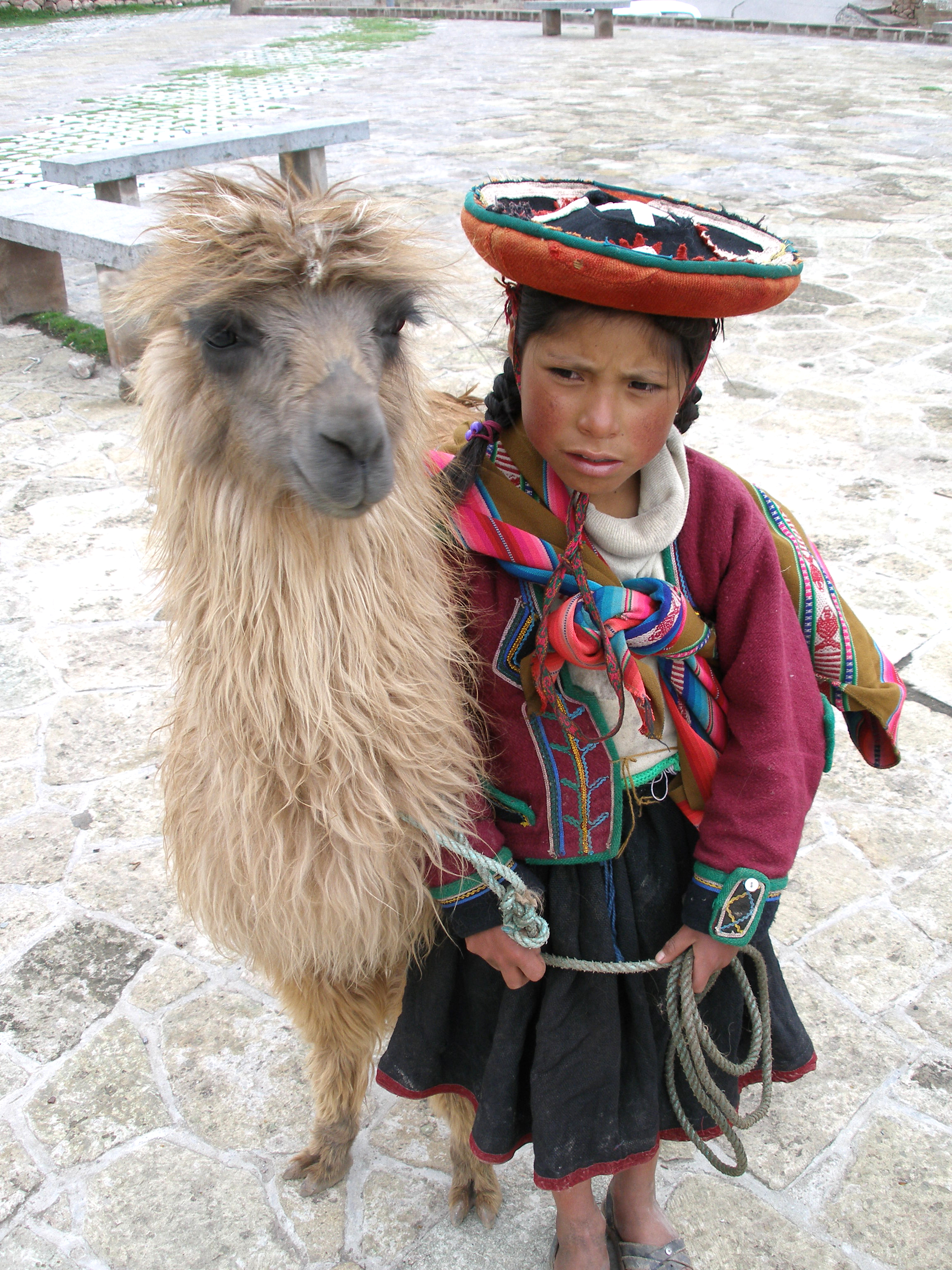
On a mountain in Peru a whole village of Quechuan people, dressed in layers of wool in all the colors of the rainbow, sing a song about their beloved mountain, Huascaran. They sing in high-pitched nasal tones a song that sounds like some combination of zydeco and a tribal wail. The sound is harsh and grating to my ears and yet I can’t help thinking that this is what heaven sounds like – a great cacophony of sound.

Source: Wikimedia commons

Source: Wikimedia commons

In an old Communist youth camp beside the mighty Volga River hours north of Moscow, I tuck a room full of 9-year-old orphan boys into bed. I hug Dema’s freckly face to my chest and kiss the top of his head and think, The kingdom of heaven belongs to such as these. “Spokie-Nokie,” I say, and turn out the light.

Dema

***

Once, a few years into our marriage, Jonathan and I had an argument about travel. We had hoped to take a trip, but car problems and taxes and medical bills had strained our very limited resources. It seemed like a trip was out of the question and I was profoundly disappointed. At some point during the conversation Jonathan said to me, “I know you’re disappointed, but there will be other opportunities in the future. I don’t understand why you are so incredibly upset.”

And I said (as dramatically as it sounds), “Because this is the purpose of my life!”

And he said, “You can’t be serious. You basically just told me your life’s purpose is to take vacations.”

What I was trying to say then but didn’t have the words to articulate at the time was that traveling is a deeply spiritual experience for me. Traveling moves me to worship in a way that nothing else does.

What does it mean that the mountains melt like wax in the presence of the Lord until you’ve stood at the top of a great and glorious mountain?

What does it mean that all of man’s accomplishments are like filthy rags beside God’s splendor until you’ve seen the Sistine Chapel or stood on the Great Wall of China?

Why does it matter that God is a father to the fatherless if you’ve never known the orphan?

How can you understand what it means that God holds the whole world in the span of his hand if you’ve never been outside your hometown?

What does it mean that heaven is filled with people from every tribe and tongue and nation if you’ve only known people from your own?

“The whole earth is filled with His glory,” cry the angels. I want my life to be about seeing and spreading that glory, even to the ends of the Earth.

Featured Image Credit: Grain & Compass

Faith is the Thing with Scales

Faith is a slippery thing.

Emily Dickinson calls Hope, “the thing with feathers.”* She says that Hope is like a bird that sings in your heart without stopping and without expecting anything in return.

If Hope is the thing with feathers then Faith is the thing with scales. Faith is the eel that wriggles out of your grasp. It’s that shard of eggshell trapped in slimy eggwhites that slips from your fingertip or right over of the lip of your spoon every time you try to isolate it.

Faith is rubbing alcohol with its sharp ammonia scent, disinfecting you of cynicism and doubt but then evaporating off of the warm surface of your skin and fading into thin air faster than you can catch it.

Faith is Jacob wrestling with the Angel of the Lord through the long, dark night. It’s trying to hold onto something enormous when you have such small hands.

But, like Jacob, there are brief moments when I do capture Faith and grasp it tight in my two hands. Like Jacob I say, “Don’t leave me! Or if you have to go, then mark me. Leave something of yourself with me so I can look at it and know that you are real. So I can remember this time that I caught you and looked into your eyes. So I can believe that I will find you again and again, even as you slip through my fingers.”

I am leaving for vacation tonight and will be traveling for the next two weeks with sporadic internet access so I will probably be slow with responding to messages and putting up new posts for the next few weeks. The first 52 Weeks of Adventure link-up is still open. Click on the button at the bottom of the post to add your link or to view links that others have added. 

Image Credit: Jennifer O’Kelly on Flikr

_______________________________________________________________________________

*
“Hope” is the thing with feathers –
That perches in the soul –
And sings the tune without the words –
And never stops – at all –

And sweetest – in the Gale – is heard –
And sore must be the storm –
That could abash the little Bird
That kept so many warm –
I’ve heard it in the chillest land –
And on the strangest Sea –
Yet – never – in Extremity,
It asked a crumb – of me.

New Year: My One Word for 2015 and Why I Can’t Leave 2014 Behind

In Korea people don’t stay up until midnight to ring in the New Year. Instead, they get up in the middle of the night and they hike a mountain. They climb through the dark, snowy pre-dawn hours and when they reach the top they stand with their faces to the sky to greet the first sunrise of the New Year.

What a contrast to how we in the West often enter the New Year – stumbling out of bed at noon, tired and quite possibly hungover. For many, January 1st is a day of recovery. We spend New Year’s Eve celebrating the ending of something and the beginning of a new thing. We bombard the internet with reflections on the previous year. Even the less introspective among us take a moment to declare the past year, “the best” or “the hardest” or “the craziest” year of their lives.

I can never bring myself to make those kinds of statements. Because I don’t believe a year can ever be just one thing. Life is never just one thing, and what is a year besides a microcosm of an entire life?

Elaine’s comment on my Year in Review post explained this perfectly. She said she was struck by “how every year is a little life – with birth, death, family, love, travel, new things, familiar things, difficulties and good friends all swirling through it.” I thought this was profound because of what it says about the year we’ve just lived and what it means for the year ahead.

2014 had a life that is both self-contained and part of a larger whole. Entering the New Year doesn’t mean we’ve finished with the old one. We can’t discard it like a worn-out pair of shoes. We carry our past years deep inside our bones. They make up the very DNA of our lives.

The person I was as a child is markedly different from the person I am today, but I could never say I’ve left her behind entirely. You never completely stop being the person you were at 8 or 18 or 28. You carry all of these selves inside of you and they shape who you become. In the same way, we each carry dozens of lives with us –the lives we lived in our previous years – and these lives become part of our future.

But carrying the past year with you doesn’t mean you have to be weighed down or shackled by it.

In the past, I’ve looked back on my previous year and made some promises. I’ve set goals for the year ahead that were largely lists of how I would do better, be better than I was the previous year. I used to think that doing this was a way of leaving the previous year behind, but maybe all that is is a way of letting the previous year enslave me.

I don’t think we have the choice to throw out the previous year or any year of our lives. But we do have a choice about how we let it shape our lives. I can either look at the previous year and allow my mistakes and disappointments and perfectionism drive me to guilt-ridden resolutions, or I can look at the previous year and simply embrace it all, both the proud moments and the parts I wish I could undo, thank God for them, and let them be part of my story.

This year, instead of making a list of resolutions, instead of thinking of all the ways I failed in the last year or all the things I want to do better, instead of making 2015 a giant to-do list, I’ve decided to join the many people I know who choose One Word. The idea of One Word is to get rid of your list and to choose just one word to focus on for a whole year. “One word that sums up who you want to be and how you want to live.”

I’ve been thinking about my word for several weeks. At first I thought about “Belief,” because it’s something I desperately want more of – in God, in myself, in the world. And then I thought about “Present,” the practice of being fully engaged where I am instead of constantly thinking of the next thing or the last thing. Both of these are important to me, but when I really considered what summed up who I want to be and how I want to live one word rose to the top. My word for this year is Wholehearted.

Wholehearted is about sincerity and commitment. For me this means authenticity in my life and my writing. It means commitment to continue my faith-wrestling and to asking sincere questions. Being Wholehearted is also a commitment to courage, compassion, and connection. It is the courage to be vulnerable despite the risk, the compassion to love other people well and to extend grace quickly, both to myself and to others, and the choice to develop genuine connections with others. Wholeheartedness means committing to being fully present, to showing up for every day of my life instead of checking out when things are hard or boring. It means engaging with Today and believing that every day is a gift. And Wholehearted means believing that I am worthy of love and belonging – not because there is anything especially great and deserving about me, but because we are all worthy of love and belonging and because we can’t fully accept love and belonging unless we believe we are worthy of it.

This year I want to step into the New Year with intention. I want to turn my face towards the sun and say, “I’m here. Whatever you have to offer, I am fully present and ready to receive it. The births and the deaths. The joys and the fears and the disappointments. The beauty and the brokenness. The faith and the doubt. The longing and the contentment. The adventure and the mundane.” May 2015 be a step on the journey towards Wholeheartedness.

Happy New Year.


Image Credit: Iamidaho at Deviantart.com

Year in Review: Best Books of 2014

Today I am continuing my Year in Review by revisiting my favorite books of the year. (I am doing this series instead of my regular What I’m Into post that I normally do with Leigh Kramer) I read a total of 61 books this year (I am currently reading Kitchen Confidential by Anthony Bourdain, but I don’t think I’ll be able to finish it in the next two days so 61 it is). Most of them were good books because, let’s face it, if it’s really awful I probably won’t bother finishing it. Ain’t nobody got time for that ;). Several of the books I read this year have made it onto my Best Books of All Time list.

One of the things I most enjoyed about my reading this year was the opportunity to read lots of different genres. I learned so much about the world and about myself from the books I read this year. The downside to the wide spread of genres is that it made it difficult to compare books when trying to choose favorites, so instead I made it easier on myself by breaking it down.

Best Fantasy:

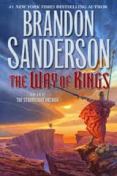
Words of Way of KingsThe Way of Kings  ($7.68 for Kindle) and Words of Radiance (still on sale for Kindle for $3.75) by Brandon Sanderson. I wrote about these on my recent Kindle deals post, so I’ll just reiterate – these are the first two books in a series that is still being written and they are two of the best books I have ever read in this or any other genre. I cannot say enough good things about them. They are masterpieces. This is a fantasy epic that will appeal even to those who aren’t huge fantasy readers. This is a story about honor and justice and revenge. The characters are fantastic and the world with it’s various people groups and magic system, etc is captivating. If I could recommend just one book from this year’s reading to everyone I know it would be this book. (PS- If you get it, stick with it through the prologue. It’s a weird start to the book but I promise after you get past those first two chapters you’ll be hooked).

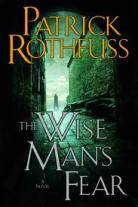
wise man's fearName of the WindThe Name of the Wind by Patrick Rothfuss (Only $1.99 right now!): This is also one of the best books I’ve ever read. If you are into fantasy at all, you must read this book and the sequel The Wise Man’s Fear ($5.99!) The prose is gorgeous. The world-building is phenomenal, the characters will become dear friends. I really can’t say enough positive things about this book. This is the first-person narrative of a terrifically gifted young man who grows to be the greatest wizard the world has ever seen.

Best Mystery:

secret placeThe Secret Place by Tana French ($11.99 on Kindle, $16.06 hardback) I love, love, love Tana French. She and Kate Atkinson are my favorite mystery writers, hands-down. This book did not disappoint me. I will say – this was the first of her books that I guessed who the murderer was pretty early on, but I don’t really think it was because it was too obvious. I just had a good gut instinct on this one. The Likeness  is still my favorite French book, but I really enjoyed this one. As a warning – this is an Irish Detective novel so the language is pretty salty.


silkwormThe Silkworm by J.K. Rowling under the name Robert Galbraith. ($10.99 for Kindle and $16.09 in hardback) This is the second of Rowling’s Cormoran Strike mystery novels. It did not disappoint. Rowling is, of course, a master storyteller and the mystery was intriguing, the characters were well-developed, and the plot was engaging and unpredictable. I thought this book was great fun, though I probably liked the first Cormoran Strike book (The Cuckoo’s Calling ) slightly better.

Best Spiritual Memoirs:

Faith unraveledFaith Unraveled: How a Girl Who Knew All the Answers Learned to Ask Questions by Rachel Held Evans (still on sale for Kindle for $2.99): Evans’ story about coming from a fundamentalist evangelical “it’s us against the world” background and learning to be ok asking questions, even if you don’t find answers right away resonated deeply with me. I love that she actually articulates some of the really hard questions of life and faith in this book and doesn’t try to smooth them over with Bible verses or trite Christian phrases. My biggest takeaway was something Evans said at the very end of the book – that there is a difference between questioning God and questioning what you believe about God.

FoundFound: A Story of Questions, Grace, and Everyday Prayer by Micha Boyett (still on sale for Kindle $3.03). This is a story for tired Christians who need to experience God in the ordinariness of life. It particularly resonates for those of us who grew up evangelical and have always felt burdened by the need to pray more, read more, do more. This book will probably be especially meaningful for those who feel they’ve lost themselves in parenthood, but even as someone who is not a mother I could relate so well.


PastrixPastrix: The Cranky, Beautiful Faith of a Sinner & Saint by Nadia Bolz-Weber ($8.89 for Kindle and $12.97 in paperback) I just finished this book at the beginning of December which is why you haven’t heard me talk about it before, but it was profound to me in many ways. I read this after listening to a podcast interview she gave a few months ago. I admit that it’s not for everyone, but I am not the kind of person who has to agree with everything someone else says in order to appreciate the truths they share. Bolz-Weber is the pastor of an unconventional Lutheran church in Denver, Colorado called the House for All Sinners and Saints known for such things as the blessing of the motorcycles and the chocolate fountain in the baptismal on Easter Sunday. She writes beautifully about how she came back to faith by believing that there was a place in the Church for someone like her—covered in tattoos and recovering from addictions. One of the most beautiful bits of her book to me was when she talked about falling in love with the liturgy. She says she loved it, “because the liturgy has it’s own integrity. It doesn’t depend on mine.”

Best Non-fiction

QuietQuiet: The Power of Introverts in a World that Can’t Stop Talking by Susan Cain (still on sale for Kindle for $2.99) I found this book completely fascinating. If you are an introvert or you love an introvert, you must read this. It taught me so much about how I work as a highly sensitive introvert in contrast with my husband who is more strongly introverted, but is not highly sensitive. I also found her exploration of Western culture’s “extrovert ideal” so helpful in understanding the ways in which I’ve trained myself to act more extroverted. This helped me make sense of why I am 100% sure I’m an introvert, but other people sometimes seem surprised by that.

DaringDaring Greatly: How to Courage to be Vulnerable Transforms the Way We Live, Love, Parent, and Lead, by Brene Brown ($10.99 for Kindle and $14.66 for hardback). I believe everyone struggles with shame and vulnerability and I also believe the ideas and strategies in this book about embracing vulnerability and developing shame resilience has the power to change people’s lives. I encourage you to read it and be open to finding yourself in it. You can read my full review of this book here or watch Brene Brown’s TED talks on this topic here and here.
Best Food Writing

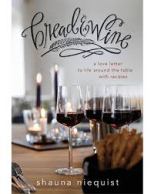
bread and wineBread and Wine: A Love Letter to Life Around the Table by Shauna Niequist (Still $1.99 for Kindle right now): This book is about food and hospitality and about the table as a place for building community. I wrote more about what this book meant to me here. This book fit into two genres since it’s part spiritual memoir part culinary book (with recipes!) and makes the list in both.


19715106Delancey: A Man, A Woman, A Restaurant, A Marriage by Molly Wizenberg ($12.99 for Kindle  or $15.18 in paperback). I love books about food and the food industry and this one – about a young couple opening a specialty pizza restaurant in Seattle, both satisfied my voyeurism about that world and broke down some of my romanticized notions about what owning a restaurant is like.


OmnivoreThe Omnivore’s Dilemma: A Natural History of Four Meals, Michael Pollan ($7.99 for Kindle and $9.60 in paperback). This book follows the food chain from one end to the other for four different meals. The industrial food chain which produces the McDonald’s chicken nugget (which, you will learn, is largely composed of corn, rather than chicken). The industrial organic food chain where grass-fed beef and non-chemical fertilizers and pesticides are used to mass-produce organic food for places like Whole Foods. The local organic food chain where all of the food is raised locally using sustainable practices and intentionally not traveling far from where it was produced. And finally a meal from a forager’s food chain where all of the food was personally grown or collected by the consumer. This book was fascinating and enlightening and convicting and will certainly challenge you to think about where you food is coming from and what you are putting into your body from an ethical standpoint more than a health one. I genuinely think this book will impact my food choices in the future.

 Best Contemporary Fiction

Big Little LiesBig Little Lies by Liane Moriarty (still on sale for Kindle for $3.99). I read four books by Liane Moriarty this year. Also, she’s Australian, so I feel cultured reading about people in Sydney. 😉 This is her newest release and probably my favorite. I think she’s a great contemporary writer, writing about complex family relationships and suburban drama in a fresh way. Her characters are always interesting and fully-formed. This particular novel revolves around the death of an elementary school parent at a school function, but who died and how it happened remains a mystery until the very end. It’s a fun, engaging read.

What Alice ForgotWhat Alice Forgot also by Liane Moriarty ($7.99 for Kindle and $8.70 in paperback). This is probably Moriarty’s most popular book – it’s about a woman who wakes up after a fall with no memory of the past ten years of her life. While the whole “I have amnesia” trope can feel overdone or predictable, the complexity of the characters made this a much more nuanced story instead of just a cheap plot device. This was a fun, quick read, but it also left me thinking a lot about how the little choices we make in life that can add up to change the direction of your life. Little moments can pull you somewhere you never imagined going. This book also deals with infertility in a very genuine way that I’ve never quite seen done in fiction.

Best Historical Fiction

book thiefThe Book Thief by Markus Zusak ($7.99 for Kindle and $8.52 for the paperback).  I’m sure you’ve heard of this book or maybe seen the movie, but this book is a gem. The characters are unique and interesting (especially the choice to have it narrated by the character of Death) and the story is moving. I sobbed through the ending. It’s one of the best WWII fiction book I’ve ever read. I suppose some people would complain that they felt “emotionally manipulated,” but, I mean, it’s a WWII book – if you don’t have an emotional response to it there’s probably something wrong with you. (Just kidding, sort of).

19398490-1All the Light We Cannot See by Anthony Doerr ($10.99 for Kindle  and $17.16 in hardback). This book is gorgeous and haunting and will stay with you long after you finish it. In alternating chapters the book tells the story of a blind French girl whose father is the Keeper of the Locks for the Museum of Natural History in Paris and a German orphan boy whose talent with engineering gets him recruited into an elite military academy and then sent into the field tracking the Resistance during WWII. As WWII progresses their paths collide as each deal with the aftermath of one of the most terribly times in human history.

I recently bought a ton of books with the Amazon gift card my parents sent for my birthday and I am looking forward to doing lots of reading over my winter vacation which starts next Friday! (I know, I know, I have a problem!)

Disclaimer: Amazon Affiliate links included in this post.  If you click through to Amazon, any purchase you make supports this site.

Holy Longing: Why Advent Isn’t about Peace and Joy

Growing up my family didn’t celebrate Advent in any traditional sense. We always attended non-denominational churches that lacked any sort of liturgical traditions. We never used an Advent calendar or lit the appropriate candles on Sundays, though we did set up a nativity scene where the baby Jesus remained conspicuously absent until Christmas morning when me or one of my siblings got to unwrap the Christ-in-manger figurine and place him between his expectant parents who had been kneeling in awe of an empty space for weeks.

Even without Advent traditions the Christmas season was always full of excitement and anticipation for me. There was something mystical and magical about the lights and decorations, familiar tastes and smells and the chance to sing Christmas carols during regular church services.  But, like many people, after adolescence hit, some of the glitter started to rub off. I remember feeling a sort of let-down that for some reason even though I enjoyed Christmas, it just didn’t feel as magical as it used to. This continued year after year and despite my attempts to follow the advice of all Christmas movies everywhere to “Just believe,” I could never recapture the way I’d felt about Christmas as a six-year-old. Eventually I gave up hoping that Christmas could ever be as magical as it was back then.

I’ve noticed a lot of people this year posting blogs or statuses about feeling disappointed and discontented with the way Advent is turning out. People are angry about the injustice in the world, disappointed with circumstances in their own lives, or frustrated with their own busyness. All of this disillusionment seems to center on the idea that this is not how the Christmas season should be. I’ve seen a lot of comments along the lines of, “This is supposed to be a season of joy, a season of peace, a season of contentment and closeness to our families, a season of celebration.” Even those who don’t claim Christianity often consider this time of year a good time to remember the poor, to celebrate family, and to intentionally show more love and patience to others.

I think we may have gotten it wrong.

I don’t think Advent is primarily about peace and joy and all the other warm and fuzzies we think we’re meant to feel. I think Advent is about longing.

It is about longing for a world that is not broken. Longing for justice for Michael Brown. Longing for restored relationships with our families. Longing for a world where people cannot be bought and sold as commodities. Longing for comfort for the friend who has lost her child. Longing for rest from a world that is moving so fast we feel like if we pause for a moment we’ll get left behind. It is about longing for hope that we are not abandoned.

Most of us are very uncomfortable with longing. We live in an instant-gratification world, one where it is unacceptable for a need to go unmet or a wish to go unfulfilled, so when we feel emptiness in ourselves, we rush to fill it. Sometimes the desire to satiate longing manifests itself in materialism – the need for the next new thing. Sometimes it shows up in our relationships and we use and abuse other people in our desire to satisfy our longings.

My own attitude towards longing is usually, “How can I make this go away?” But I think we have two choices when it comes to longing – we can lament the discomfort we feel and try to make the feelings go away, or we can embrace those longings and let them change the way we live and love.

Maybe Christmas is the perfect time to bring awareness to the disparity between the world we live in and the world we long for.

My favorite Christmas song has always been “O Come, O Come, Emmanuel.”

O come, O come, Emmanuel,
And ransom captive Israel,
That mourns in lonely exile here
Until the Son of God appear.

Rejoice! Rejoice!
Emmanuel shall come to thee, O Israel.

This is a song about mourning and emptiness and the longing of a people for rescue and restoration. But it is also a song about hope. Yes, we are mourning in exile now, but Rejoice! Emmanuel shall come.

Calling attention to the brokenness in the world doesn’t mean that all hope is lost. As long as we continue to deeply feel this disparity, there is hope. As long as we still have the image of what peace and joy could look like in the world – as long as we live every day to bring these things to our corner of the world, there is hope.

For Christians, it is the hope of the incarnation. It is the tangible promise of God with us. It is the belief that we are not abandoned. As long as we both pray and live “Thy Kingdom come,” there is hope.

If we’re looking for a perfect time of holiday cheer this season, we can be sure we won’t find it, but that doesn’t mean we have to resign ourselves to disappointment and disillusionment the way I did when I outgrew my childhood belief in Christmas magic. We can embrace the longing and feel it deeply instead of trying to chase it away with other things or feeling guilty that we aren’t filled with peace and joy . And we can rejoice that Hope is still alive and  let that longing and that hope  change the way we live.

Learning to Speak the Language of Love

“Thankfulness is not some sort of magic formula; it is the language of love…”

A friend shared this quote with me recently and I can’t stop thinking about it. I’m completely taken with this picture of thankfulness as the language of love. I think that’s both beautiful and true.

I’m not always good at loving well –not my husband, not my friends and family, not God, and certainly not strangers. There are many moments in my life I look back on and wish I’d loved better.

The more I think about these words, the more I’m coming to believe that gratitude is an essential part of love. I’ve seen how this works in my marriage.

Jonathan and I have been together for almost eight years and while I don’t pretend that we’re perfect, one of my favorite things about our relationship is the way we still thank each other for everything. This is meaningful for us because saying thank you for things we could easily take for granted is more than just a polite habit. It is meaningful. It’s our way of saying, “I recognize that you did that chore, not because you had to, but because you love me.”

When Jonathan washes the dishes, he’s saying,” I love you,” and when I thank him I’m saying, “I see the way you’re loving me and I appreciate you.”

The thing about gratitude is that it turns our eyes away from ourselves. We can’t love well when we are focused on ourselves – when we’re immersed in our own wants and needs and worries and problems. Practicing gratitude is a way of looking outside of ourselves and recognizing both the gifts we are given every day and the givers behind them.

Gratitude isn’t about smoothing over and ignoring the evil in the world or the pain in our own lives. It isn’t about forcing a smile when our hearts are breaking or trying to put a smiley-faced band-aid on an open wound. It’s about acknowledging pain and struggle and marveling at glimmers of grace and goodness that break through that ugliness.

Gratitude doesn’t change our circumstances – it changes us.

Gratitude makes us generous because when we lose our sense of entitlement to the things we have, we no longer feel the need to hold onto it so tightly.

Gratitude combats discontentment because it reminds us how far we’ve come instead of how far we have to go.

Let us be people who let our haves count for more than our have-nots.

Let us be people who recognize the gifts strewn throughout the most ordinary moments of our days.

Let us be people who give with abandon because we are humbled by what we’ve already received.

Let us be people who speak the language of love.